
Slow travel means taking your time: fewer destinations, more time in each place, low-impact transport and genuine immersion in local life. A world away from mass tourism that ticks off capital cities in a week, this philosophy meaningfully reduces your environmental footprint while offering richer, more memorable experiences that respect the places you visit.
The roots of slow travel: a legacy of Slow Food
Slow travel didn’t emerge from nowhere. It draws directly from the Slow Food movement founded in Italy by Carlo Petrini in 1986: a response to the standardisation of food, a defence of the local, the seasonal, the flavourful. Through the 1990s, that same spirit extended to travel with the Cittaslow movement, which certified towns as alternatives to overcrowded flagship destinations.
Credit: Image from page 417 of ’Locomotive engineering - a practical journal o by Internet Archive Book Images, CC CC0 1.0, via Openverse.
The central idea has remained unchanged: quality over quantity. Where conventional tourism is about ticking off as many sights as possible in the shortest time, slow travel encourages you to linger, to pick up a few words of the local language, to visit the same market two Saturdays in a row, to take a back road rather than a tourist shuttle.
It is not a call to do nothing, either. Slow travel can mean hiking, cycling, sailing, language immersion or volunteering: what matters is choosing depth over surface.
Transport: the choice that really changes everything
This is often the first lever to pull, and by far the most impactful. Tourism accounts for around 8% of global greenhouse gas emissions, and nearly 70% of those emissions come from how travellers get around, with the journey to and from the destination alone accounting for roughly 60% of the total.
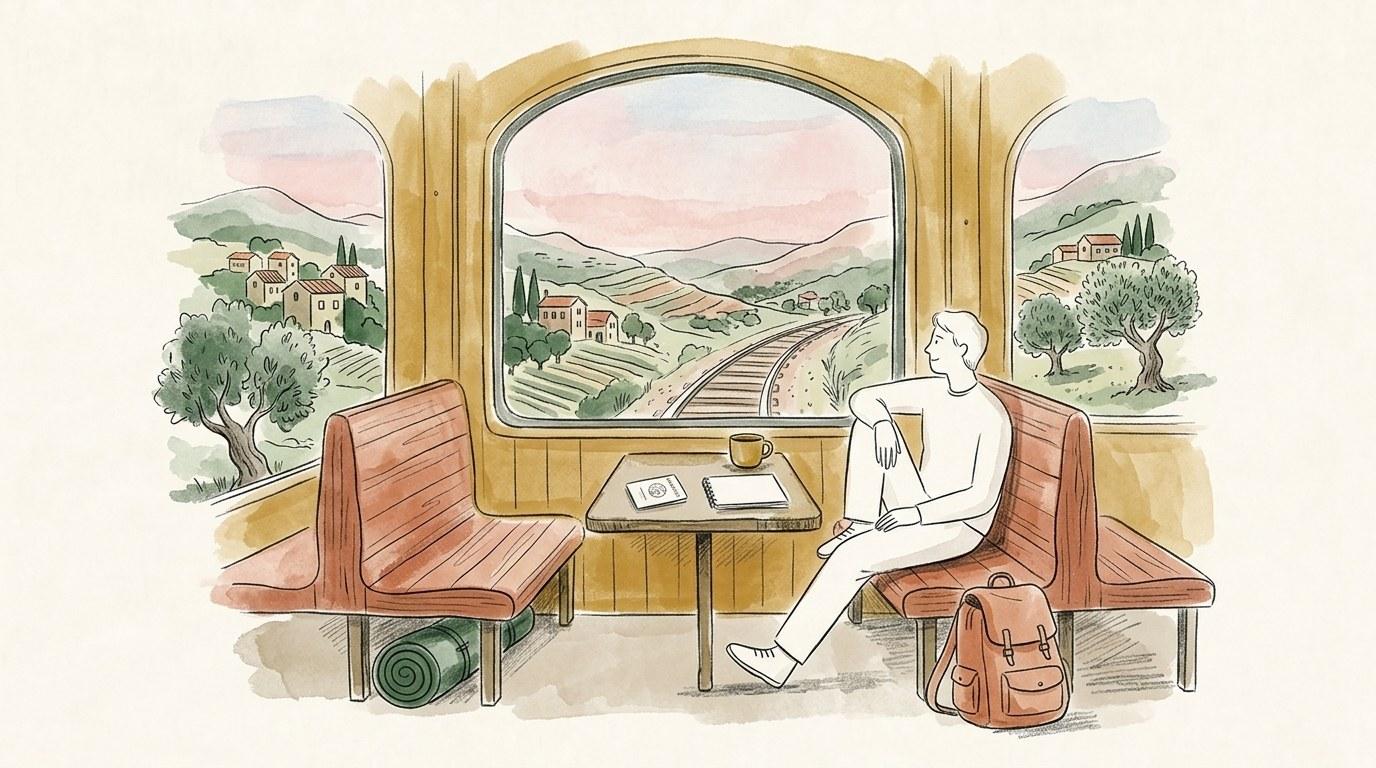
The train-versus-plane comparison shows just how wide that gap is: flying from Paris to Lyon emits more than 90 kg of CO₂ per person, compared with just 0.69 kg by train. A ratio of 1 to 130 on a single journey.
Slow travel draws the natural conclusions from this:
- Choose the train, long-distance coach or ferry over flying for destinations reachable by other means.
- Limit the number of flights per trip (one return rather than several short hops with layovers).
- Get around locally on foot, by bike or using public transport rather than hiring a car.
- Stay longer in each country to spread the carbon cost of the initial journey.
No trip is ever carbon-neutral. But every transport choice counts, and low-impact mobility is at the heart of slow travel.
Get the right travel insuranceReal immersion: the slow traveller’s anti-checklist
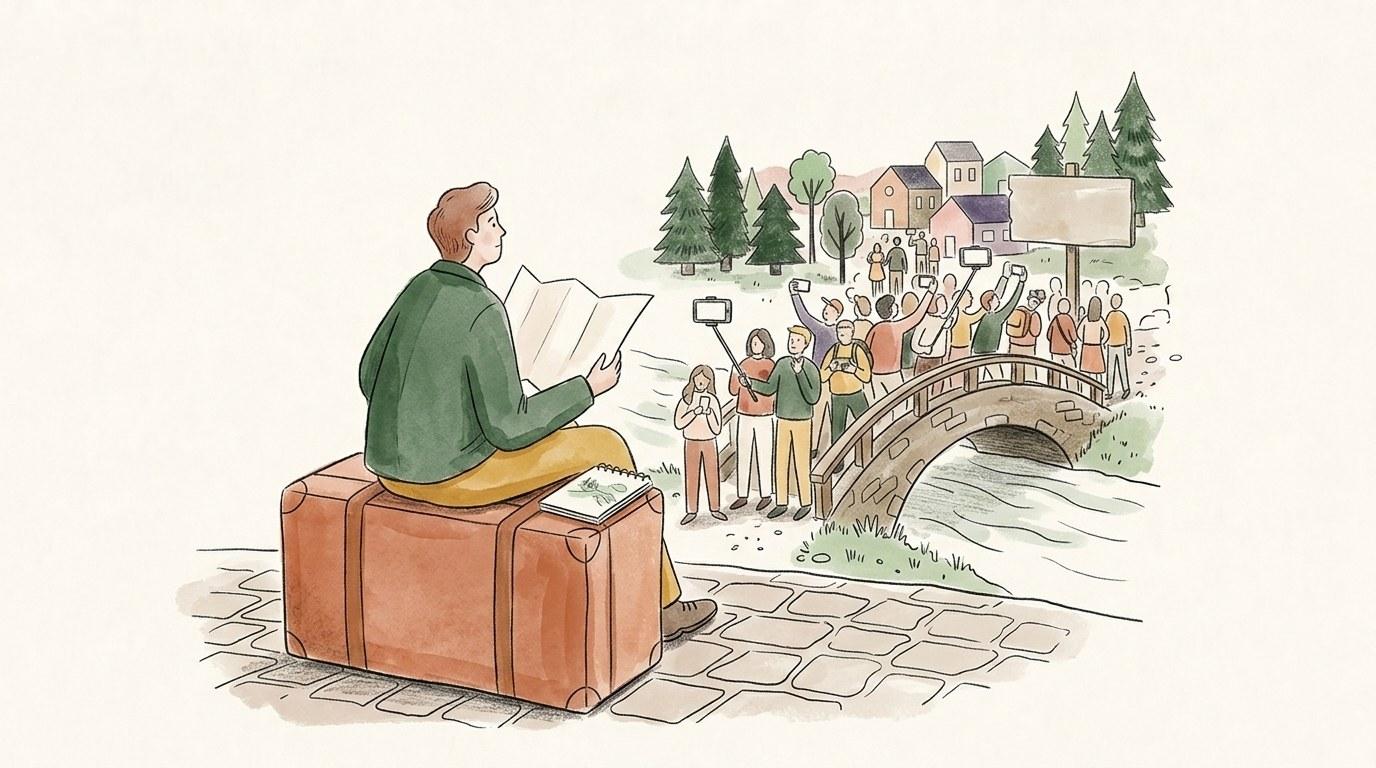
Conventional tourism can feel like ticking boxes: Colosseum ✓, gondola ✓, selfie in front of the Leaning Tower ✓. Slow travel offers something different: letting a place work on you, rather than simply consuming it.
In practice, this means:
- Staying with locals or in independent accommodation (bed and breakfasts, small family-run hotels, rural cottages) rather than standardised chains.
- Eating at local restaurants, at the market, from artisan producers, and asking questions about what you are eating.
- Learning a few basics of the local language: even rudimentary phrases open up conversations and show genuine respect.
- Respecting local codes of behaviour in places of worship, natural sites and residential neighbourhoods, and finding out the rules before you arrive, not after.
- Avoiding activities that exploit wildlife: walking or vehicle safaris (without contact with the animals), diving without touching corals, refusing attractions that use captive or performing animals.
Immersion cannot be forced: it comes from time given freely and curiosity kept alive.
Supporting local economies, not global chains
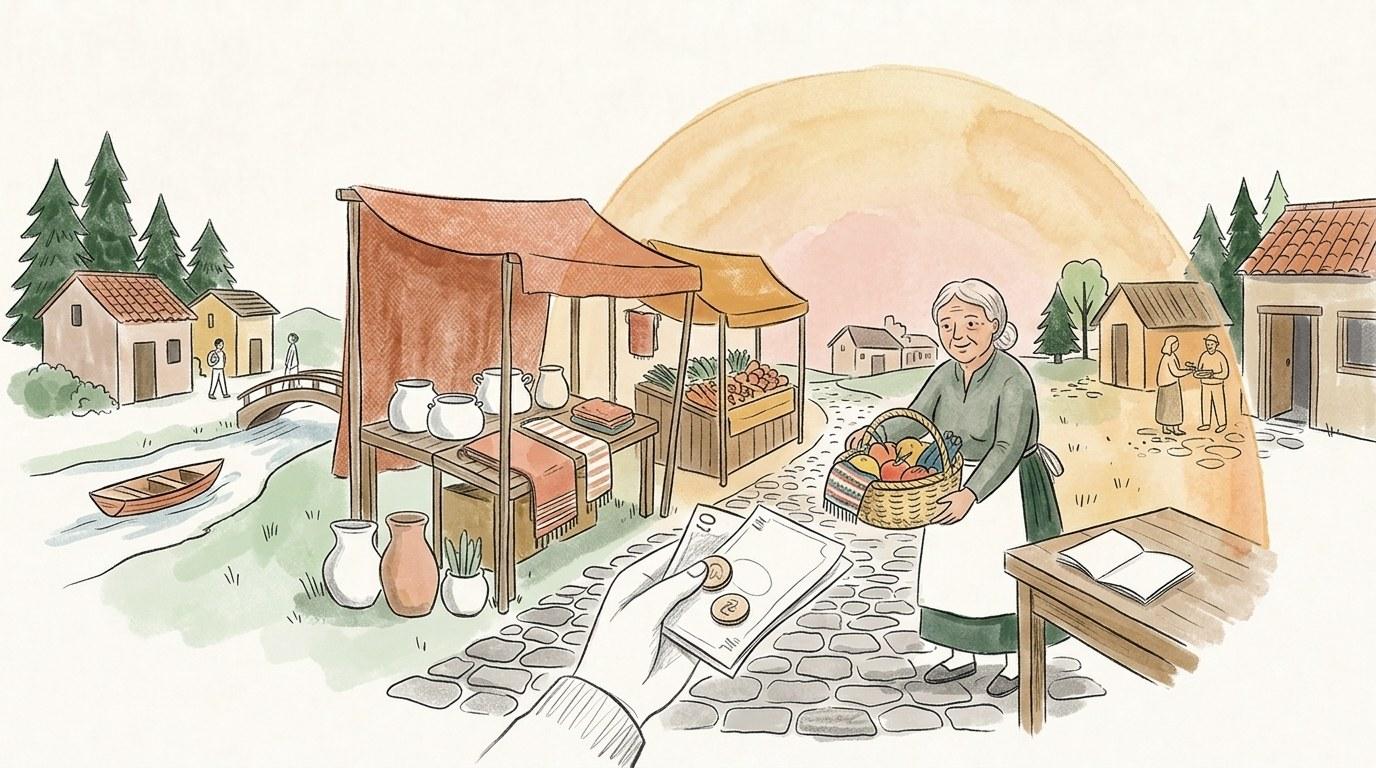
Slow travel has a direct impact on the income of local communities. By choosing accommodation run by a local owner, buying crafts directly from the maker, eating at a neighbourhood restaurant, you keep money circulating where it will be reinvested in the community.
Choosing a multinational hotel group or an all-inclusive package, on the other hand, concentrates the profits away from the destination. This is not a question of financial sacrifice: local options are often cheaper as well as more authentic.
To explore this dynamic further, find out why spending at a local business really does make a difference for the destinations you visit.
Fighting overtourism: travel differently, go elsewhere
One figure says it all: 95% of the world’s tourists crowd into just 5% of the planet. Venice, Barcelona, Dubrovnik, Bali: these destinations are under unsustainable pressure on their infrastructure, rents, wildlife and residents.
Slow travel is structurally an antidote to overtourism:
- Travel off-peak: sites are less crowded, prices more accessible and contact with locals far easier.
- Choose lesser-known destinations: neighbouring countries often harbour places just as beautiful as the classics, without the queues.
- Avoid Instagram hotspots in favour of places you discovered yourself, or that were recommended by locals.
- Respect carrying capacity: if a trail is closed for regeneration, take another. If a beach is packed, come back at dawn or find a different one.
On this subject, the question of how social media shapes tourist flows is worth thinking about: are influencers travel’s worst enemy?
Practical steps to start your slow travel journey
No need to reinvent the wheel: a few adjustments are enough to transform the experience entirely.
Before you go:
- Choose a destination reachable by train or coach from home, or limit yourself to a single long-haul flight instead of several short hops.
- Book local accommodation (not an international chain), ideally for at least a week.
- Research local customs, seasons, protected species and areas to avoid so you do not damage local ecosystems.
On the ground:
- Resist the urge to fill every hour. Leave some half-days completely free.
- Walk or cycle rather than ordering a taxi for every journey.
- Buy from local producers (markets, cooperatives, artisans) and avoid souvenirs made on the other side of the world.
- Leave no waste in nature. Even an apple core in a national park can disturb local wildlife.
- Do not feed wild animals, and stay on marked paths in nature reserves.
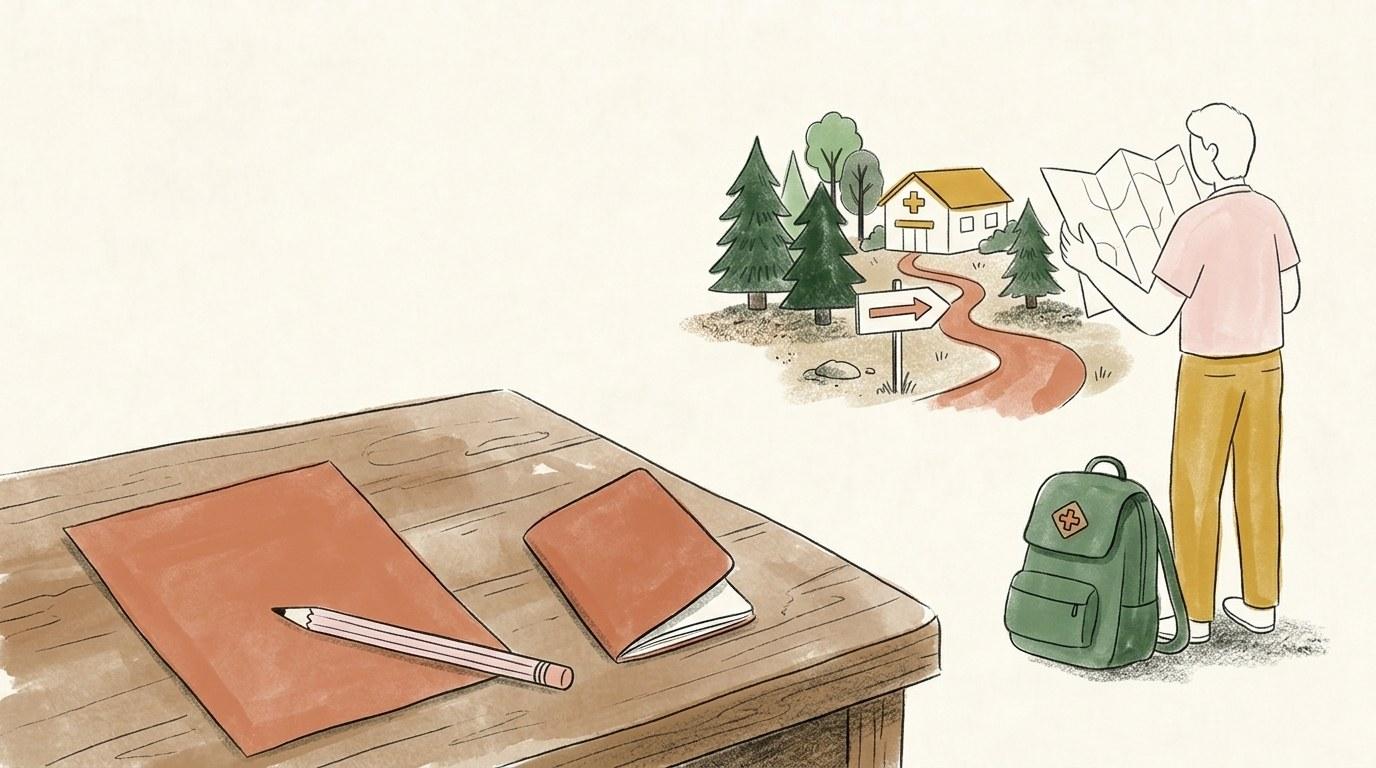
On the coverage side: A longer slow trip calls for more solid protection. Medical expenses abroad, repatriation, emergency assistance: these guarantees make all the difference when you are travelling far from organised circuits. Setting off without thinking about your coverage is its own form of recklessness, and travel insurance is part of any well-prepared trip.
FAQ
Is slow travel only for people with a lot of time?
No. Slow travel is a philosophy, not a minimum number of days. Even a “slow” weekend in a town two hours from home, without a list of monuments, with a local market and a walk without GPS, captures this spirit perfectly. What matters is the intention: depth over speed.
Does slow travel cost more?
Not necessarily. By staying longer in the same place, you often rent by the week (cheaper than by the night), sometimes self-cater and avoid buying a flight for every leg of the journey. Spending shifts rather than grows: more on local accommodation and artisan food, less on organised tours and mass-produced souvenirs.
How can you actually reduce your carbon footprint when travelling?
The first lever is transport. Avoid flying when a rail alternative exists, or choose a single direct long-haul flight rather than several legs with layovers. On the ground, prioritise walking, cycling and public transport. According to data from Carbone4, mobility accounts for around 70% of tourism emissions: that is where the biggest gains are to be made.
Is slow travel compatible with long-haul destinations (Asia, South America…)?
Yes, provided you adjust the length of your stay. If you take a long-haul flight, stay long enough to spread that carbon impact across as many days as possible. Three weeks in one region of Vietnam is a far better deal, carbon-wise, than three countries in ten days with repeated domestic flights.
Do you need travel insurance for a slow travel trip?
Yes, even more so. A slow journey often takes you away from big cities and well-trodden tourist circuits, where medical care can be harder to access. Health cover, repatriation and 24/7 assistance are essential, regardless of how long you stay. To understand how the industry is evolving on this point, travel insurance is also going through its own responsible revolution.