
Within just a few square kilometres, Luang Prabang packs in golden temples, a six-hundred-year-old Buddhist ceremony, turquoise waterfalls and a nightly craft market. The former royal capital of Laos was inscribed as a UNESCO World Heritage Site in 1995 and is home to dozens of active temples, nestled at the confluence of the Mekong and the Nam Khan rivers.
The Tak Bat: witnessing the monks’ alms-giving ceremony at dawn
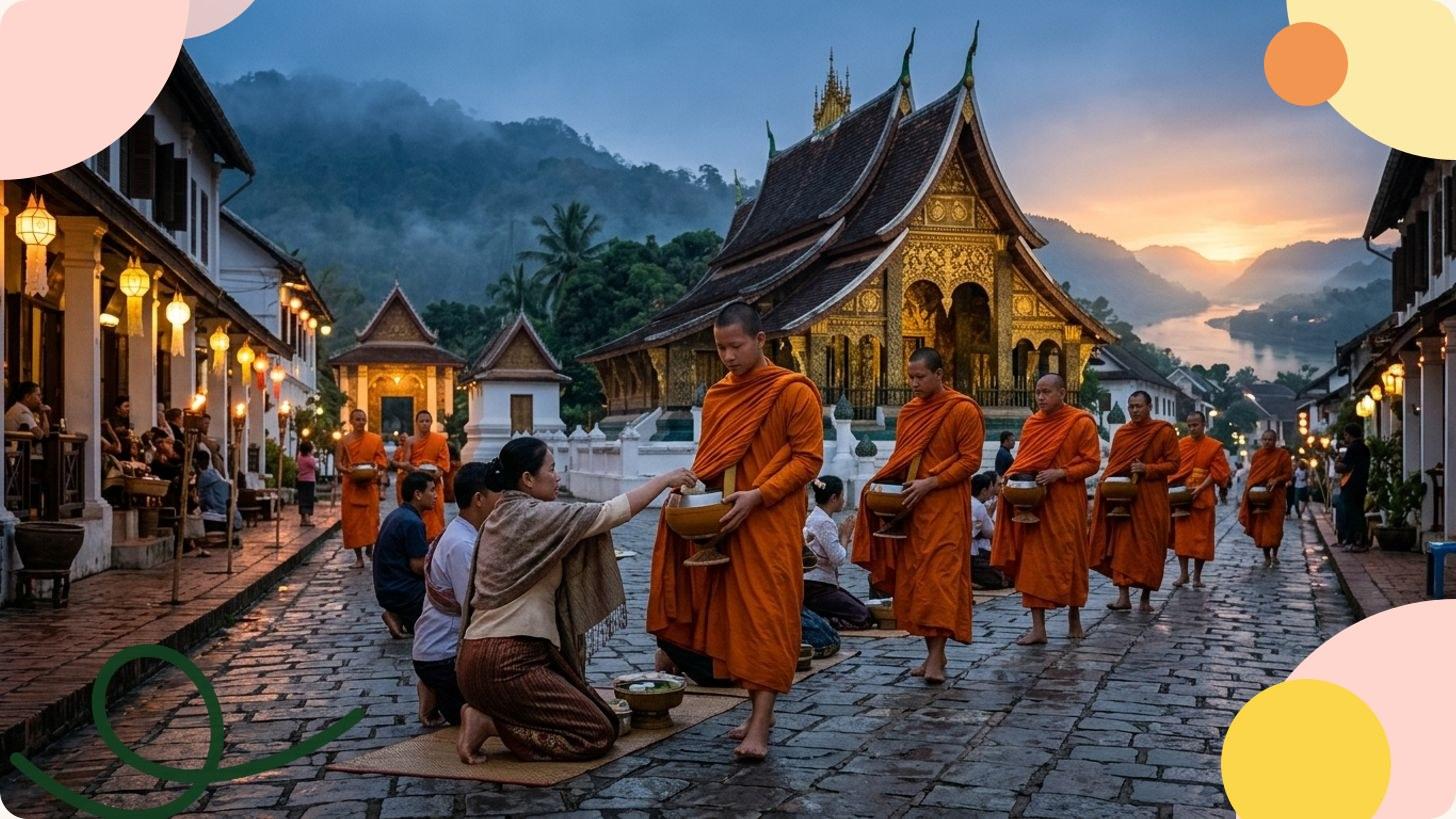
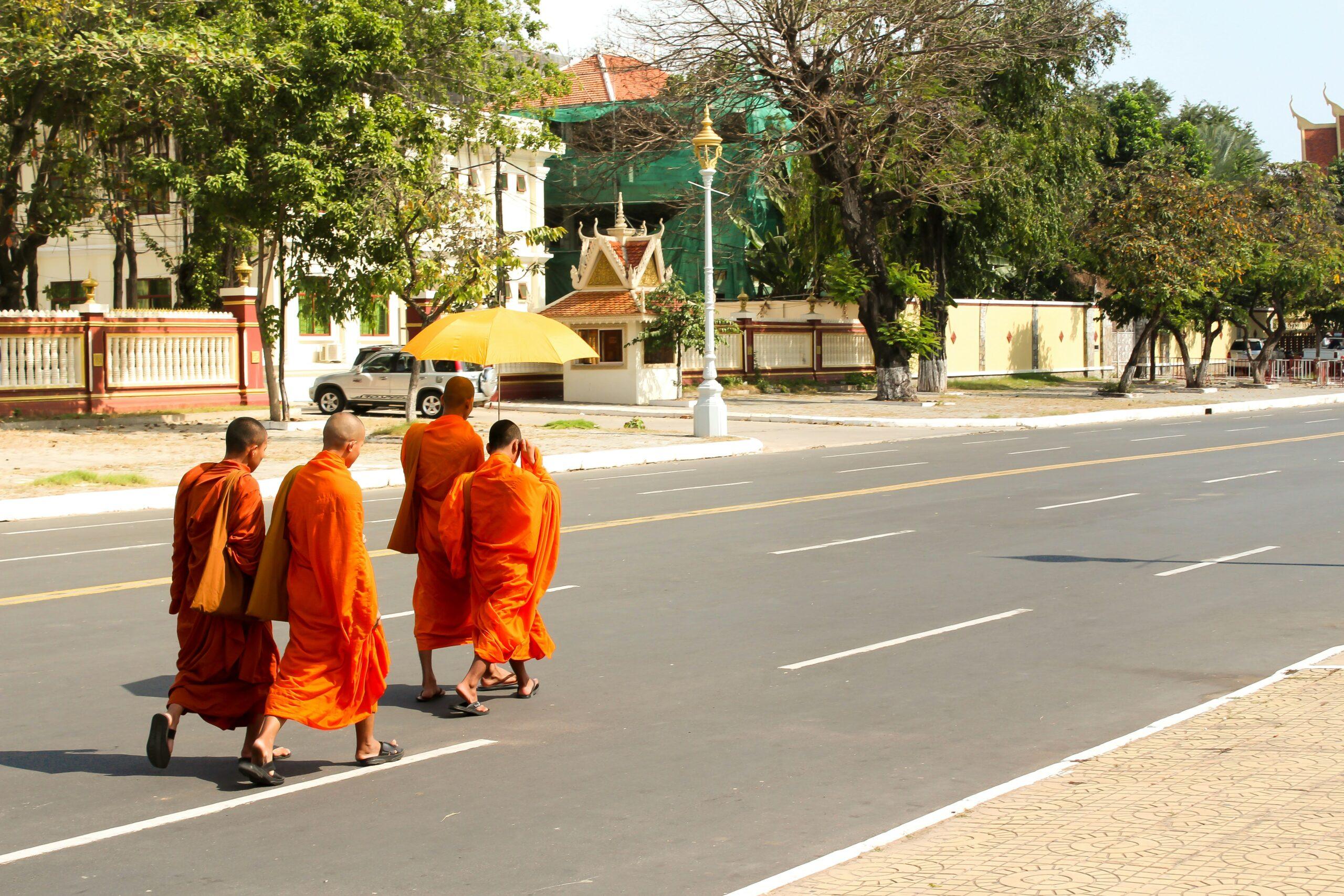
Every morning before sunrise, hundreds of monks in saffron robes walk in silence through the streets to receive offerings of sticky rice. This daily Buddhist ritual, six centuries old, is known as the Tak Bat. To watch respectfully: keep a reasonable distance, dress modestly, avoid using a flash and observe without interrupting the procession. Travellers who wish to take part in the offerings can prepare the evening before with a local host or guesthouse.
Wat Xieng Thong: the jewel of Lao royal architecture
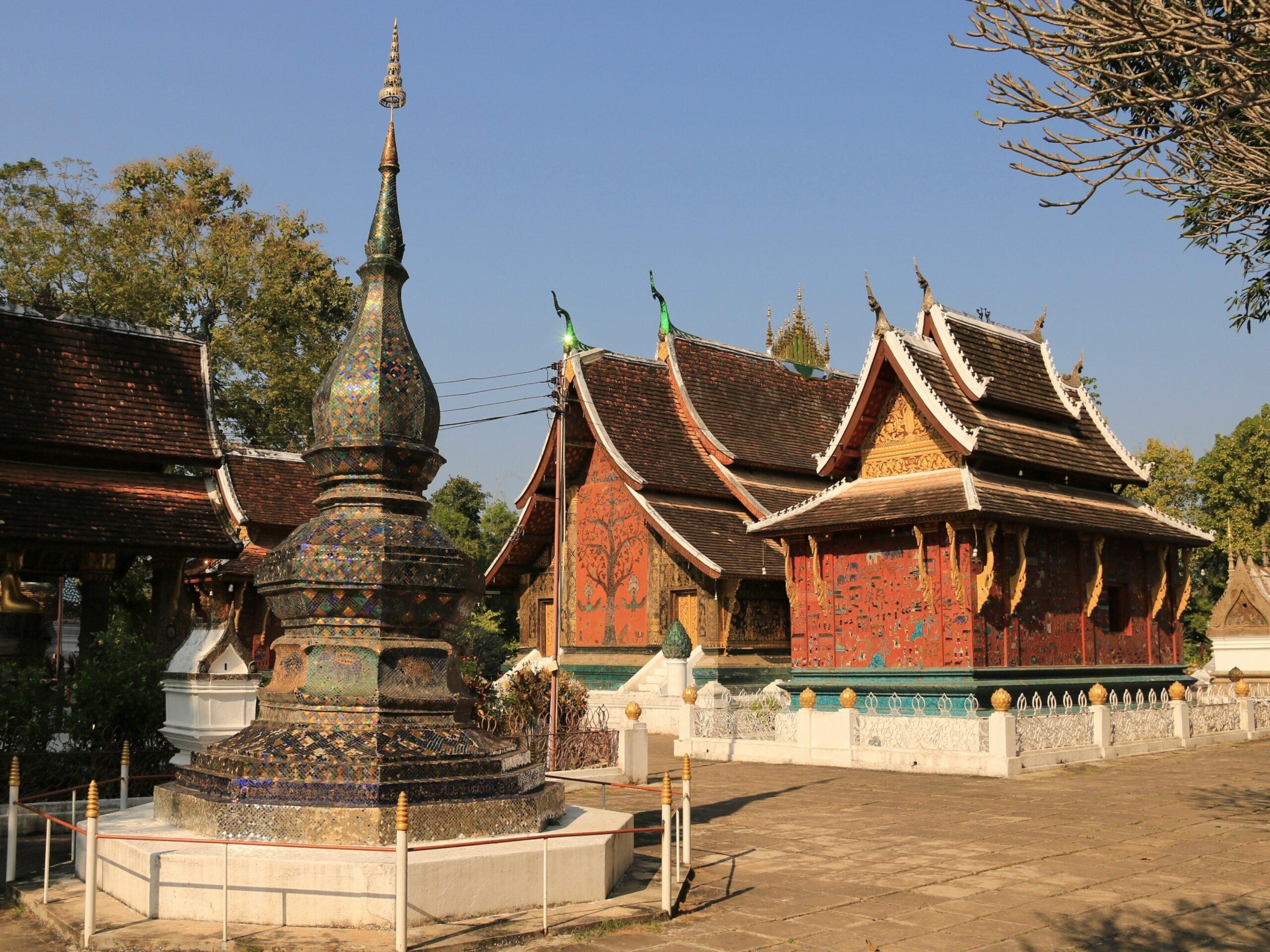
Built in 1559 by King Setthathirath at the northern tip of the peninsula, Wat Xieng Thong is widely regarded as the most beautiful temple in Laos. Its sweeping tiered roofs, adorned with golden mosaics depicting Jataka tales, cascade almost down to the ground. The royal funeral carriage chapel, housing a lacquered and gilded chariot, is well worth a closer look.
Other temples worth exploring
The city is home to dozens of temples. Wat Visoun, built in 1512, is the oldest still in active use in Luang Prabang: its watermelon-shaped stupa, the That Makmo, remains one of the most recognisable silhouettes on the skyline. Wat Mai, with its richly carved grand portico, is an easy walk from Wat Xieng Thong.
Kuang Si waterfalls: swimming in the tropical forest
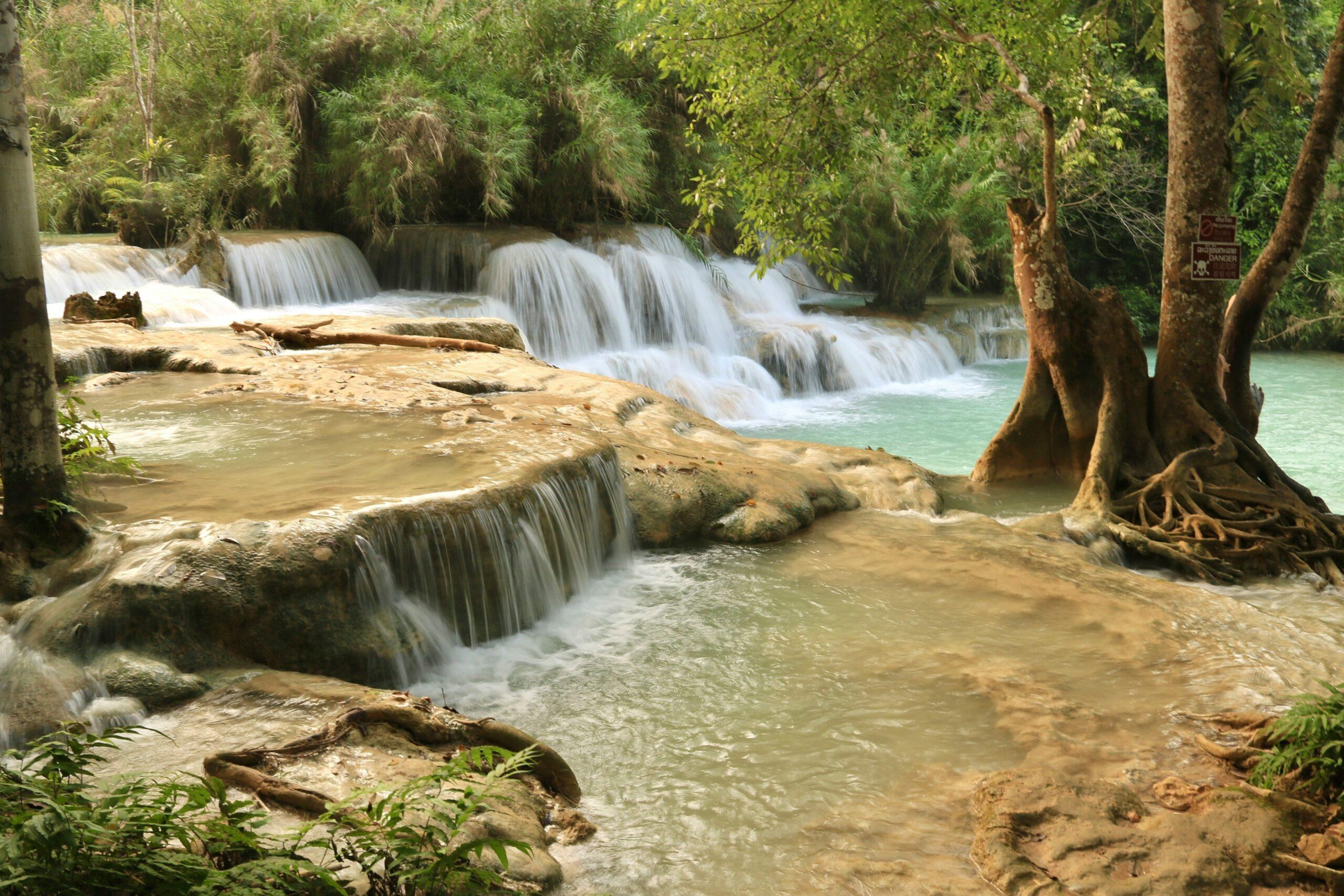
Some 29 km south of Luang Prabang, the Kuang Si waterfalls cascade into a series of natural pools tinted turquoise by calcium carbonate deposits. The main drop exceeds 60 metres. A marked trail follows the basins and climbs up to the upper falls. At the entrance to the site, a rescue centre shelters Asian black bears confiscated from illegal trafficking.
Mount Phousi: a 360-degree panorama at sunset
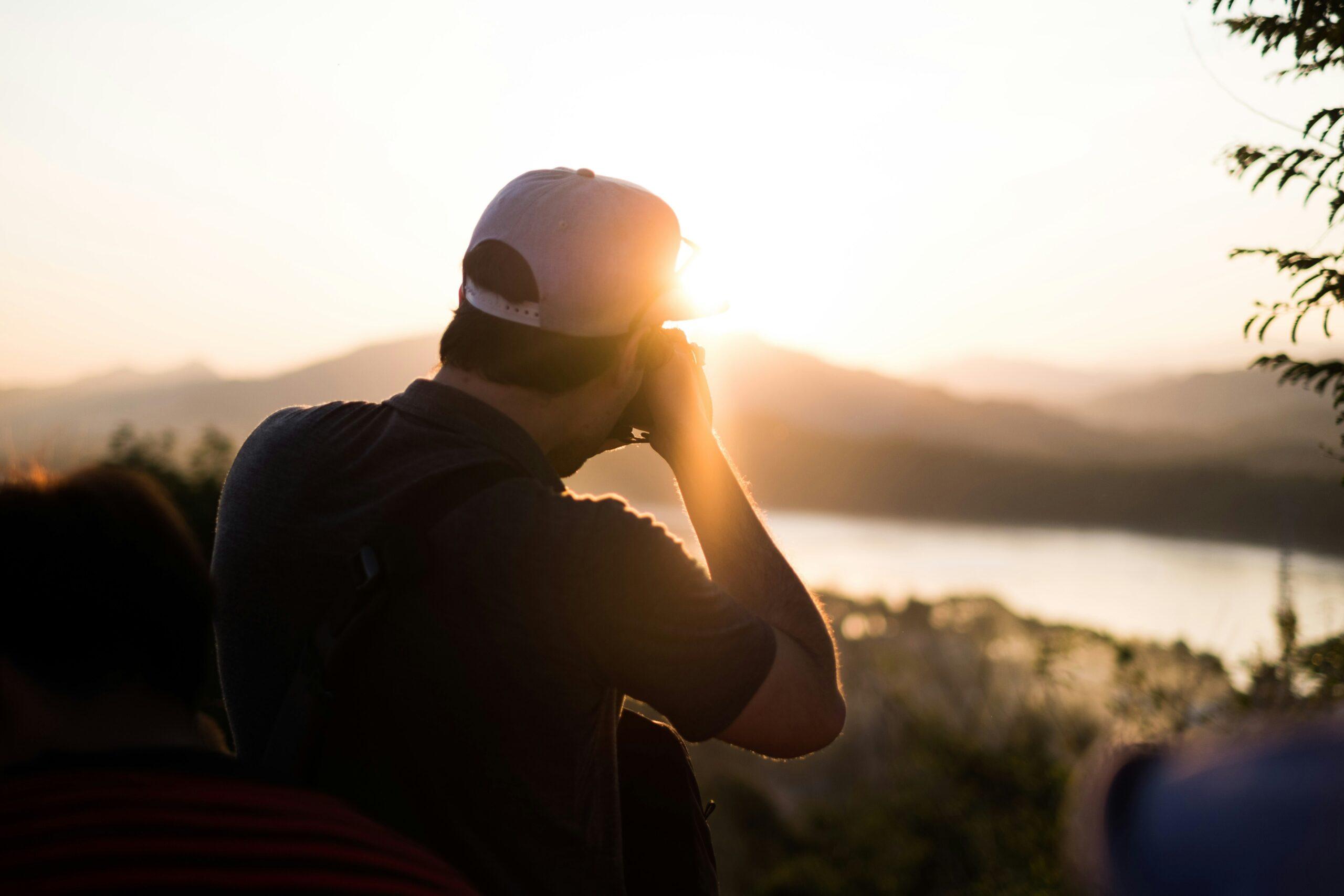
Standing 100 metres tall, Mount Phousi is reached by a stairway of 328 steps lined with Buddhist shrines. At the summit, the golden stupa That Chom Si, erected in 1804, rises above the old town with the Mekong and rolling green hills as a backdrop. Sunset draws a crowd every evening, so arrive early to claim your spot.
Pak Ou Caves: thousands of Buddhas along the Mekong
Some 25 km north of Luang Prabang, the Pak Ou Caves are reached by boat from the city (around 1 hour 30 minutes up the Mekong). These two limestone caverns, Tham Ting and Tham Theung, shelter more than 4,000 Buddha statues left by pilgrims over the centuries. The river journey passes limestone cliffs and riverside villages of stilted houses.
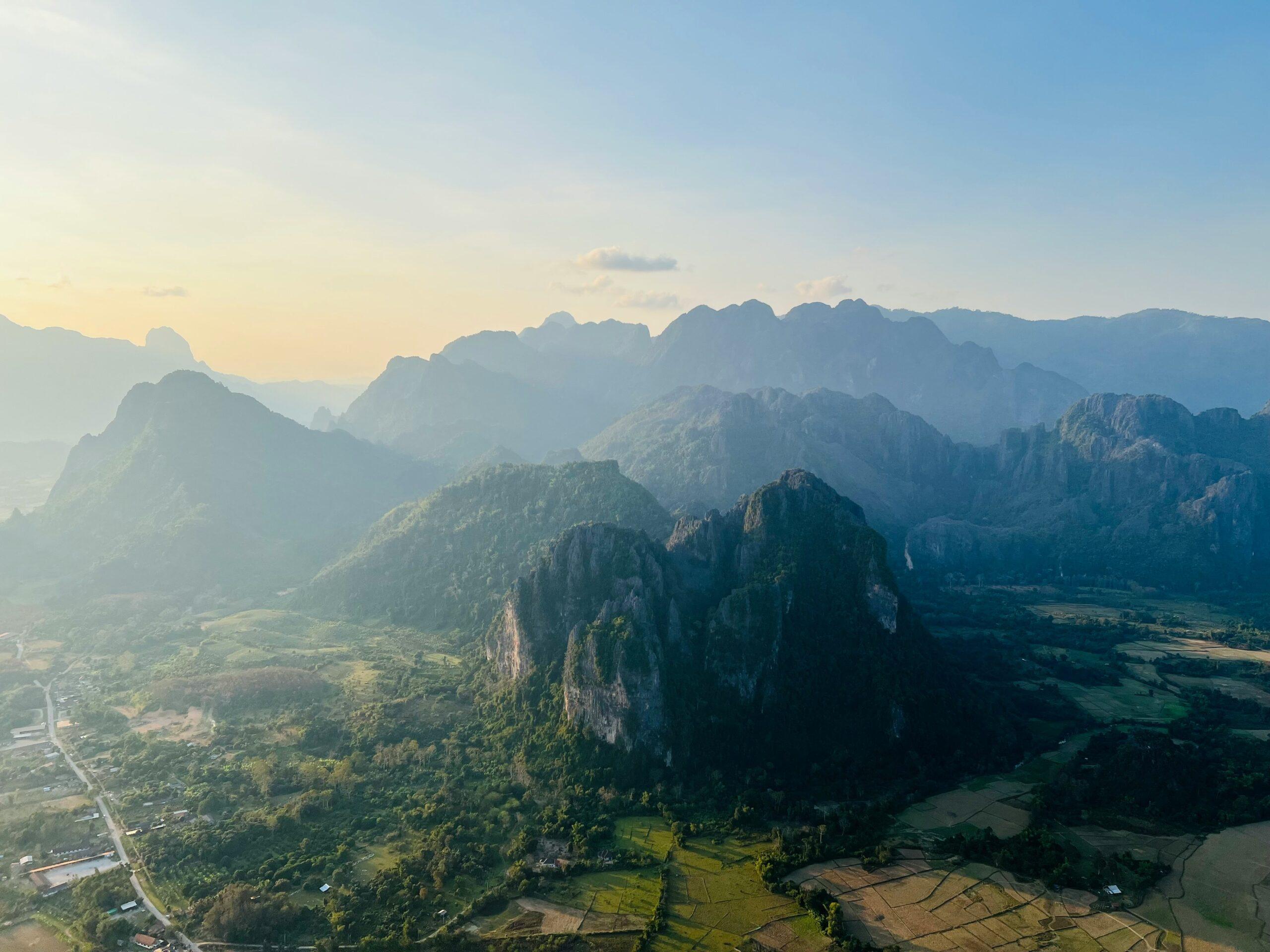
A Mekong cruise: riverside villages and river scenery
Beyond the Pak Ou Caves, a half-day or full-day cruise on the Mekong drifts past artisan villages, fishermen and wooded banks. Some boats offer a sunset dinner, a perfect way to round off a day spent in the open air.
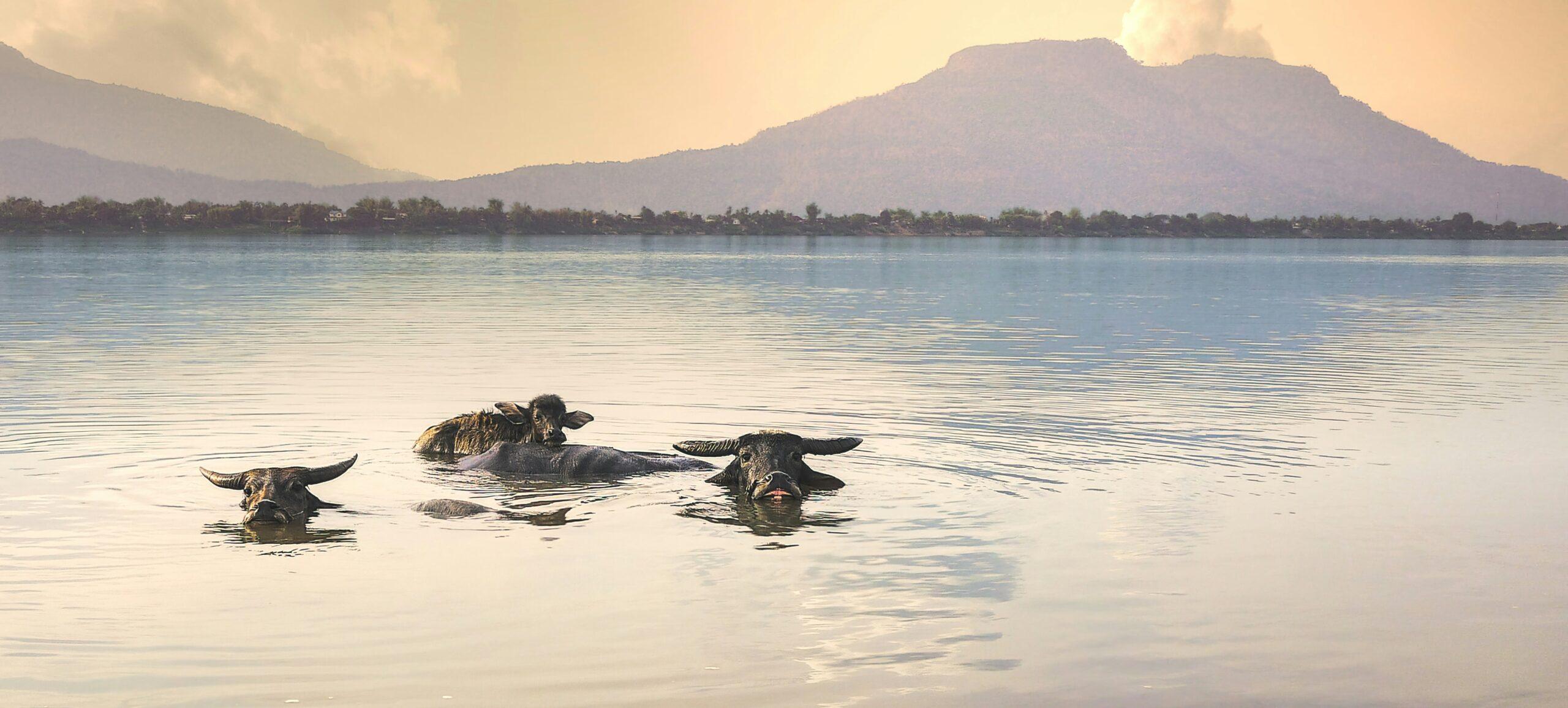
The night market: crafts and Lao flavours
As darkness falls, Luang Prabang’s main street transforms into a craft market. Hand-woven textiles, colourful lanterns, silver jewellery and bamboo goods line up alongside street food stalls. Khao soi (noodle soup), sai oua (Lao spiced sausage fragrant with lemongrass) and grilled skewers are all best eaten on the spot.
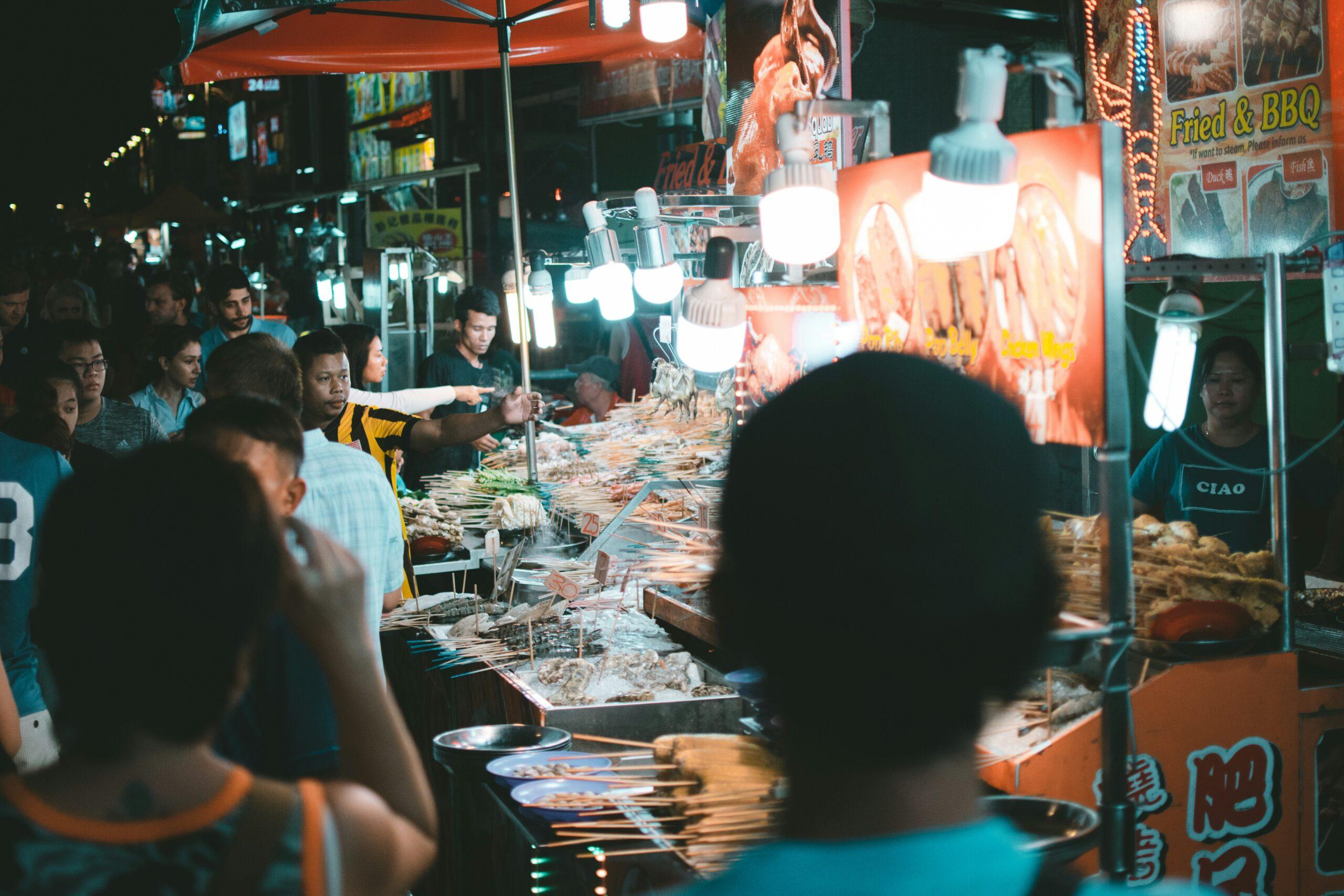
What to eat in Luang Prabang
Lao cuisine is built around fresh herbs, banana leaves and fermented pastes. Larb (minced meat salad with herbs and mint) and mok pa (fish steamed in a banana leaf) are among the most typical dishes. Night-market stalls often offer takeaway versions of both.
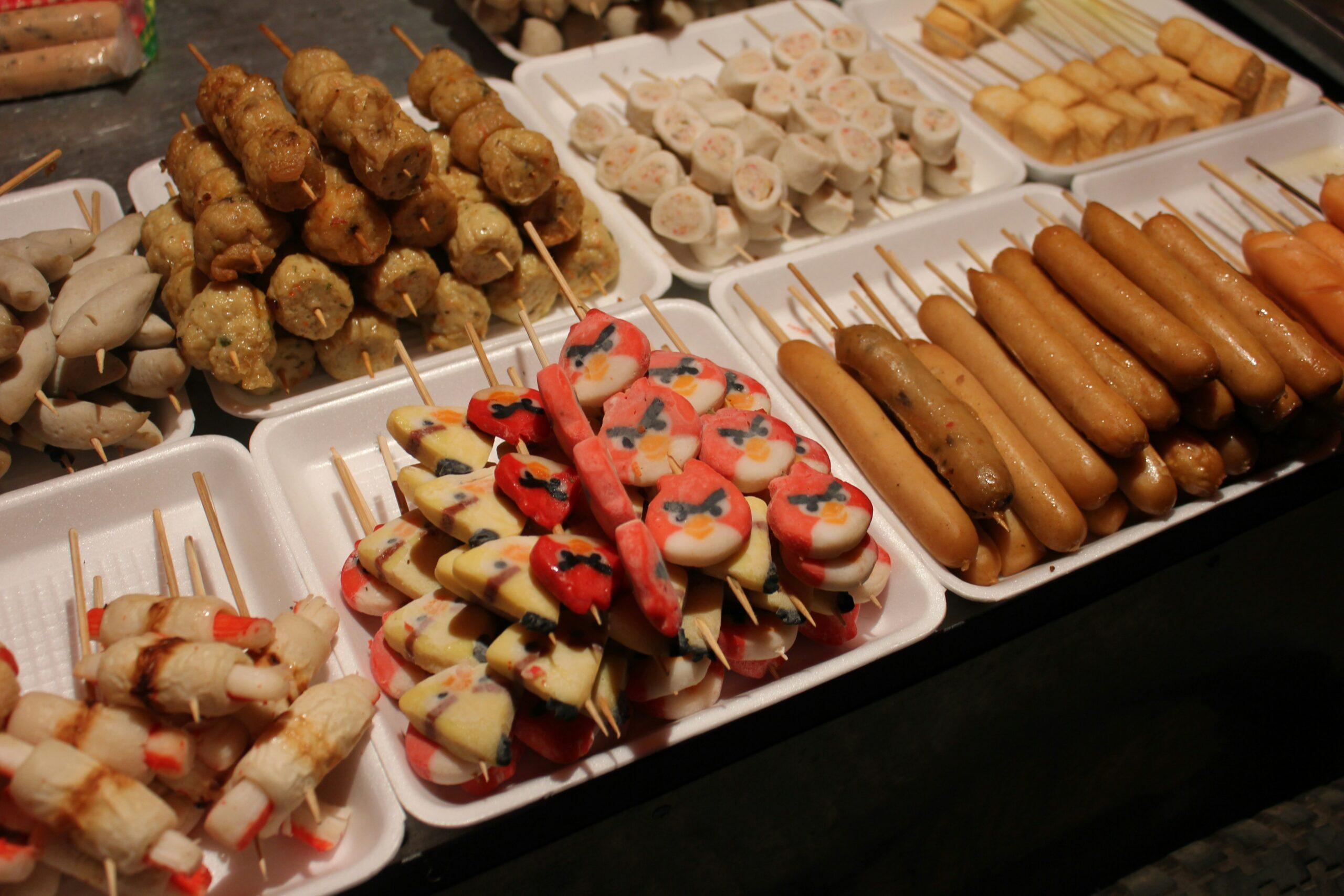
Weaving and cooking workshops: getting under the skin of Lao culture
For something beyond sightseeing, cultural workshops offer a hands-on introduction to local life. The Ock Pop Tok centre runs silk and cotton weaving classes rooted in the Lao textile tradition. Cooking workshops, plentiful across town, guide you through making larb and mok pa in small local kitchens, using ingredients bought fresh that morning at the market.
When to visit Luang Prabang
From November to March, the dry season brings clear skies, crystal-clear rivers and comfortable temperatures: the ideal window for swimming at Kuang Si and cruising the Mekong. The rainy season (May to October) makes some paths slippery, but turns the waterfalls into thundering torrents and cloaks the landscape in vivid shades of green.
Luang Prabang fits naturally into a broader Lao itinerary: our guide on things to do in Laos: 20 must-sees will help you plan your route through the country. If your trip includes a stop in Thailand, our tips on what to do in Bangkok will help you plan the next leg.
FAQ
When is the best time to visit Luang Prabang?
From November to March, the dry season guarantees clear skies, clean rivers and pleasant temperatures. It is the ideal window for swimming at Kuang Si and cruising the Mekong without the risk of heavy downpours.
How do you get to the Kuang Si waterfalls from the city?
By tuk-tuk, bicycle or minibus from central Luang Prabang. The journey takes around 45 to 60 minutes to cover the 29 km between the falls and the city.
Can you take part in the Tak Bat ceremony?
Yes, provided you respect the protocol: covered clothing, a respectful distance, no flash photography and silence throughout the procession. You can offer sticky rice or fruit by preparing the evening before with a local host or guesthouse.
How long do you need to see Luang Prabang?
Three days are enough to cover the highlights: Wat Xieng Thong, Mount Phousi, the Kuang Si waterfalls, the Pak Ou Caves and the night market. Five days give you time to explore the surrounding villages and join a weaving or cooking workshop.
Do you need travel insurance for Luang Prabang?
Yes. Medical facilities in Luang Prabang are limited, and a medical evacuation to Bangkok or Chiang Mai can be extremely costly. Insurance with health cover and repatriation protects your finances in the event of an accident or illness.