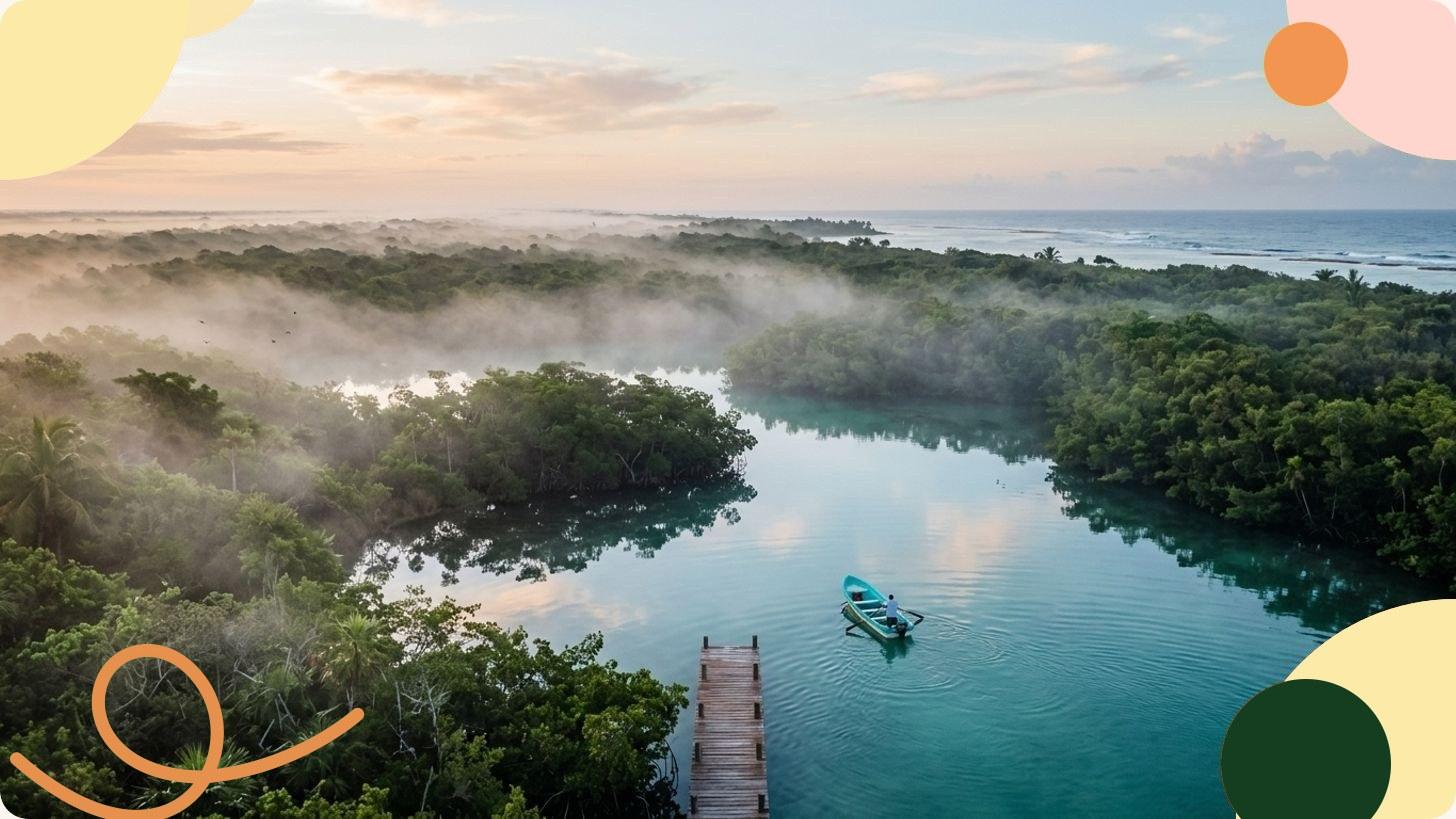

The Sian Ka’an Biosphere Reserve stretches across 528,100 hectares south of Tulum, in the state of Quintana Roo. A UNESCO World Heritage Site since 1987, it is one of Mexico’s largest protected areas: tropical jungle, turquoise lagoons, ancient Mayan canals and coral reefs all share a territory that remains remarkably untouched. You explore this landscape by boat, on foot, or simply by floating along natural currents.
Plan my trip to MexicoWhat the reserve holds
“Sian Ka’an” means “where the sky is born” in Yucatec Maya. The name says it all: a horizon caught between sea and jungle, a singular quality of light over the lagoons, and a silence that very few natural reserves so close to a beach destination can offer.
The reserve brings together several distinct ecosystems:
- Mangroves and wetlands: natural barriers against coastal erosion and nurseries for dozens of fish species.
- Tropical forest and savanna: home to jaguar, ocelot, Baird’s tapir and howler monkey.
- Lagoons and Mayan canals: calm inland waters crossed by flat-bottomed boats, connected by a network of channels dug centuries ago.
- Coral reef: Sian Ka’an borders a section of the Mesoamerican Reef, one of the largest reef systems in the world.
More than 350 bird species have been recorded within the reserve, including flamingos, magnificent frigatebirds, herons and roseate spoonbills, making it a standout destination for birdwatching.
Two ways to explore Sian Ka’an
Sian Ka’an is not a single park with one ticket booth. Two sectors offer radically different experiences.
Muyil: Mayan ruins and lagoon floating
Muyil sits roughly 25 to 30 minutes south of Tulum along the main road, reachable by car or colectivo. It is the most straightforward entry point.
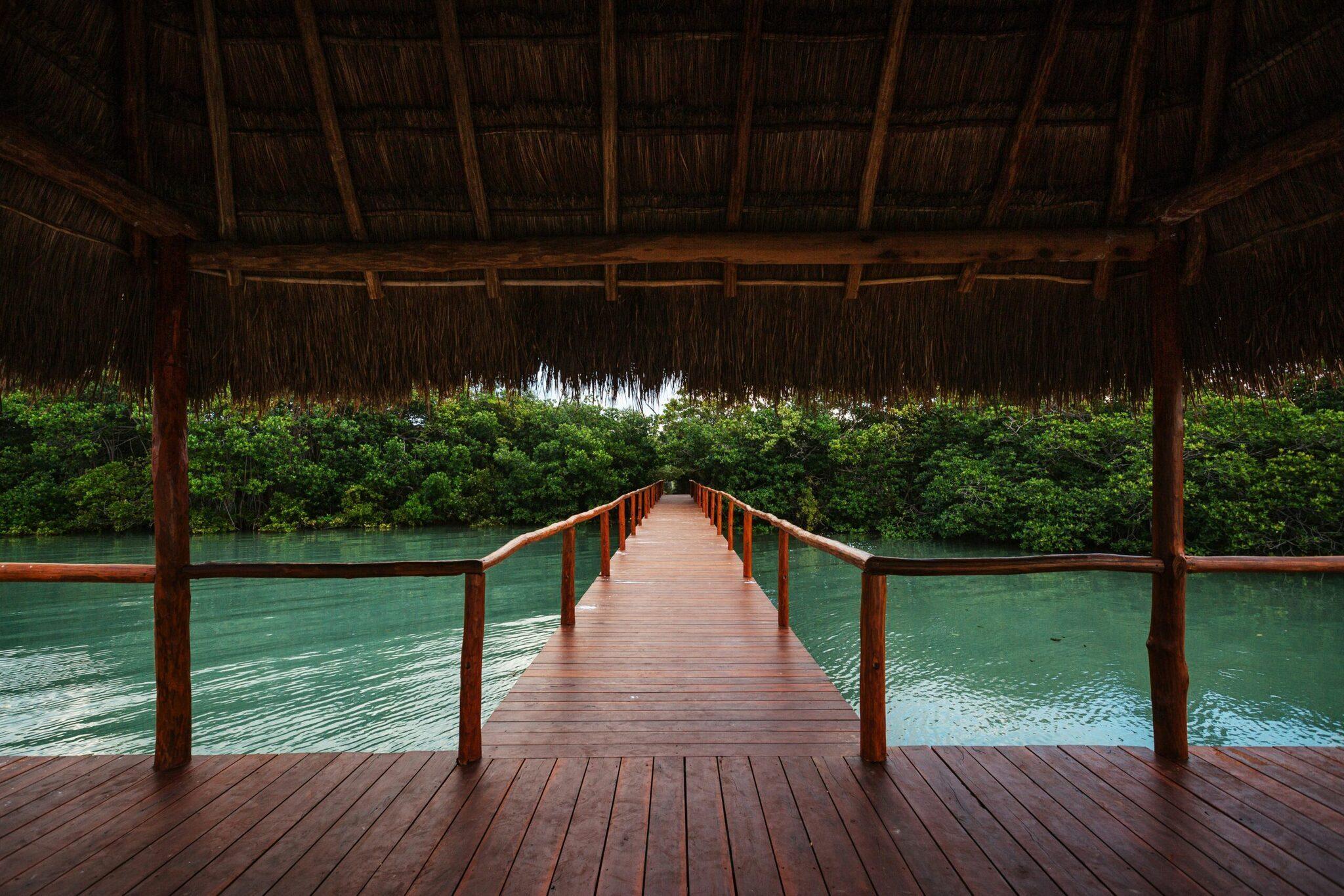
Highlights include an observation tower that rises above the canopy, little-visited Mayan ruins still enfolded by jungle, and a boat trip through the Chunyaxché lagoons. The standout experience: drifting through the Mayan canals that link the lagoons, carried by the current through water of surprising clarity.
Punta Allen: dolphins, sea turtles and reef
Punta Allen is a fishing village at the tip of the peninsula, roughly two hours from Tulum along an unpaved track (not recommended for standard hire cars). The journey itself is part of the adventure.
Once you arrive, boat trips offer sightings of wild bottlenose dolphins and sea turtles, along with snorkelling on sections of coral reef. Bird Island is a must-stop, putting you face to face with frigatebirds and pelicans.
Visiting Sian Ka’an as a responsible ecotourist
The reserve is not a theme park. Access is regulated and environmental rules are strict: certain areas remain closed to the public, tours are led by certified local guides, and group sizes are kept small.
A few practical principles:
- Choose a certified operator, ideally one rooted in local Mayan communities, which play an active role in managing and monitoring the reserve.
- Avoid single-use plastics inside the reserve.
- Keep your distance from wildlife: do not touch or feed wild animals.
- Use mineral sunscreen (free from oxybenzone) to protect the reef when snorkelling.
Booking with local community operators means your money goes directly towards conservation. For a broader picture of what Mexico has to offer beyond Sian Ka’an, browse our guide to the best things to do in Mexico.
Mayan heritage: the ruins at the heart of the reserve
The reserve contains 23 recorded archaeological sites, including Muyil, one of the oldest Mayan settlements on the Caribbean coast. These ruins speak to a continuous human presence spanning millennia. The descendants of those communities continue to manage parts of the reserve using sustainable practices passed down through generations.
When to visit Sian Ka’an
The reserve is open year-round, but two main seasons shape the experience:
- November to March (dry season): less rainfall, pleasant temperatures, though coastal winds can sometimes stir up the sea.
- April to October (wet season): frequent late-afternoon showers, but calm seas that are ideal for boat trips and snorkelling. Be mindful of hurricane season between August and October.
Spring (April to June) offers a good balance: rain is still rare, the sea is calm, and crowds are thinner than during the winter peak.
For everything you need to know about entry requirements, health considerations and travel cover in Mexico, visit our Mexico travel insurance page.
FAQ
Where is the Sian Ka’an Reserve?
The reserve lies south of Tulum, in the state of Quintana Roo, on Mexico’s Caribbean coast. It borders the Riviera Maya and extends southward along the Caribbean Sea.
Can you visit Sian Ka’an without a guide?
The Muyil area can be partly explored independently. However, boat excursions into the lagoons and trips to Punta Allen require a licensed guide or operator. It is also simply the most respectful way to experience the reserve.
How long does it take to visit Sian Ka’an?
Allow half a day for Muyil and a full day for Punta Allen, given the travel time involved. To cover both areas, set aside two days.
Can you snorkel in Sian Ka’an?
Yes, particularly at Punta Allen where guides take visitors to coral reef sections and natural pools. Floating through the Mayan canals at Muyil is also a water experience well worth having.
Are there jaguars in Sian Ka’an?
Jaguars do live within the reserve, but sightings are extremely rare given their nocturnal, solitary nature. Camera traps and tracks on the ground confirm their presence. The wildlife most reliably spotted includes birds, crocodiles, and at Punta Allen, dolphins and sea turtles.