
Zion National Park, in southern Utah, ranks among the most visited national parks in the United States. Its red sandstone cliffs rising over 600 metres, the canyons carved by the Virgin River, and iconic hikes such as Angels Landing make it an unmissable destination on any American West road trip. Before you go, a number of practicalities have changed for 2026 and are well worth knowing about.
Entry Fees and Passes 2026
Entry to the park costs $35 per vehicle (up to 15 passengers) for 7 consecutive days. Motorcyclists pay $30, while walkers and cyclists pay $20 per person (free for under-16s).
International visitor surcharge: from 1 January 2026, non-US travellers aged 16 and over pay an additional $100 per person on top of the standard entry fee. This surcharge is waived with the America the Beautiful Pass ($250 for non-residents, valid at all US national parks and federal sites). For a couple or family visiting several parks, this pass often pays for itself from the second park onwards.
Shuttles and Canyon Access
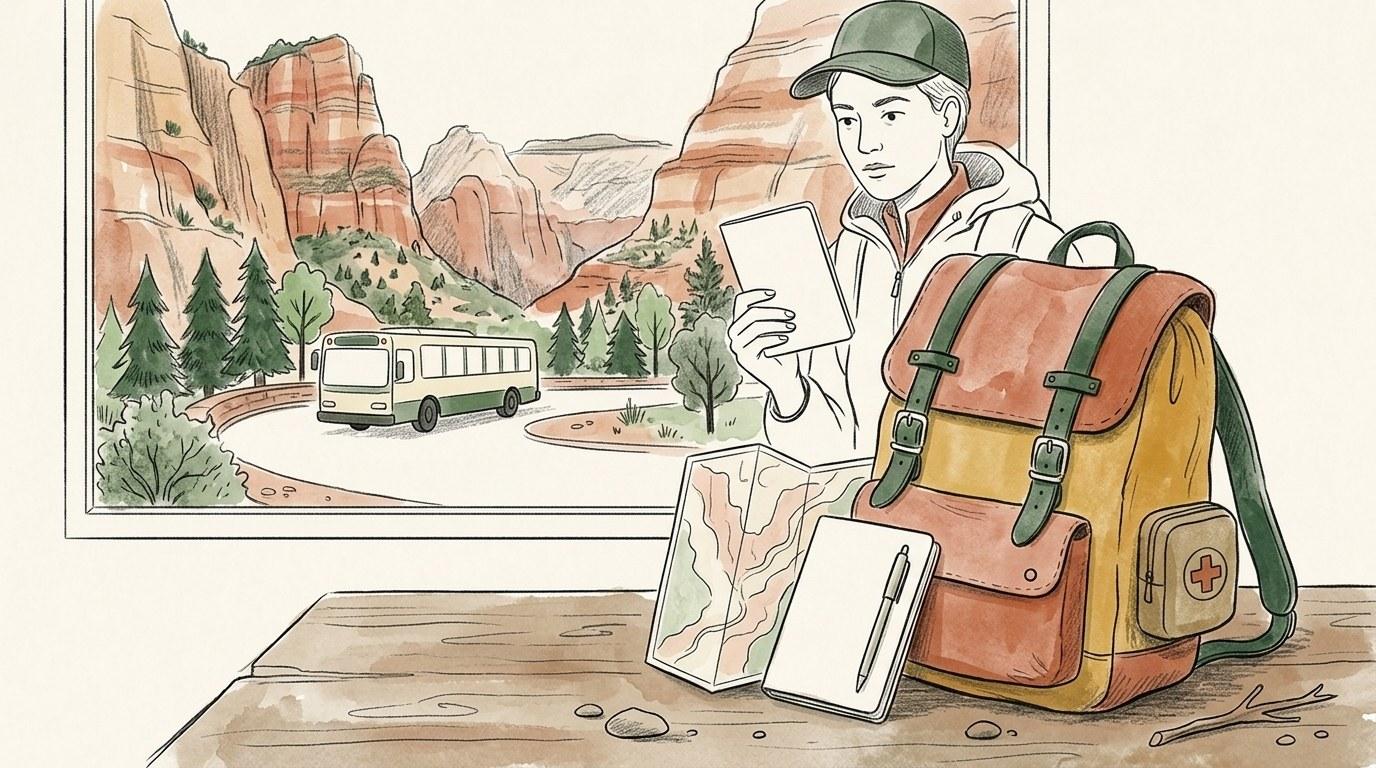
During peak season (from 7 March to 28 November 2026), private vehicles are not permitted to drive freely through Zion Canyon: a free shuttle service takes over. These buses serve all the key stops, from the Visitor Center to the Temple of Sinawava (the starting point for the Narrows), including the Grotto (the stop for Angels Landing). First departure at 7am.
The Springdale town shuttle, also free, connects the village to the park across 9 stops, running every 10 to 15 minutes.
Car parks around the park fill up by 8am in season. Arrive early, or park in Springdale and take the shuttle into the park.
Hiking: Zion’s Must-Do Trails
Angels Landing: the Permit is Now Required
Angels Landing is one of the most famous hikes in the United States. The climb to Scout Lookout is manageable for any reasonably fit hiker (around 7.5 km return, 480 m of elevation gain). Beyond that, the final ridge with its iconic chains drops away steeply on both sides: a permit is required for this section.
How to get the permit (Recreation.gov):
- Seasonal lottery: apply several weeks in advance (for June-August 2026, the lottery opens 1-20 April; for September-November, 1-20 July).
- Day-before lottery: applications open from 00:01 to 15:00 (Mountain Time) for the following day.
- Fees: a non-refundable $6 application fee per entry (up to 6 people), then $3 per person if selected.
- The permit is non-transferable, valid for one day only, and issued in the name of the lead applicant.
The Narrows: Walking Through the River
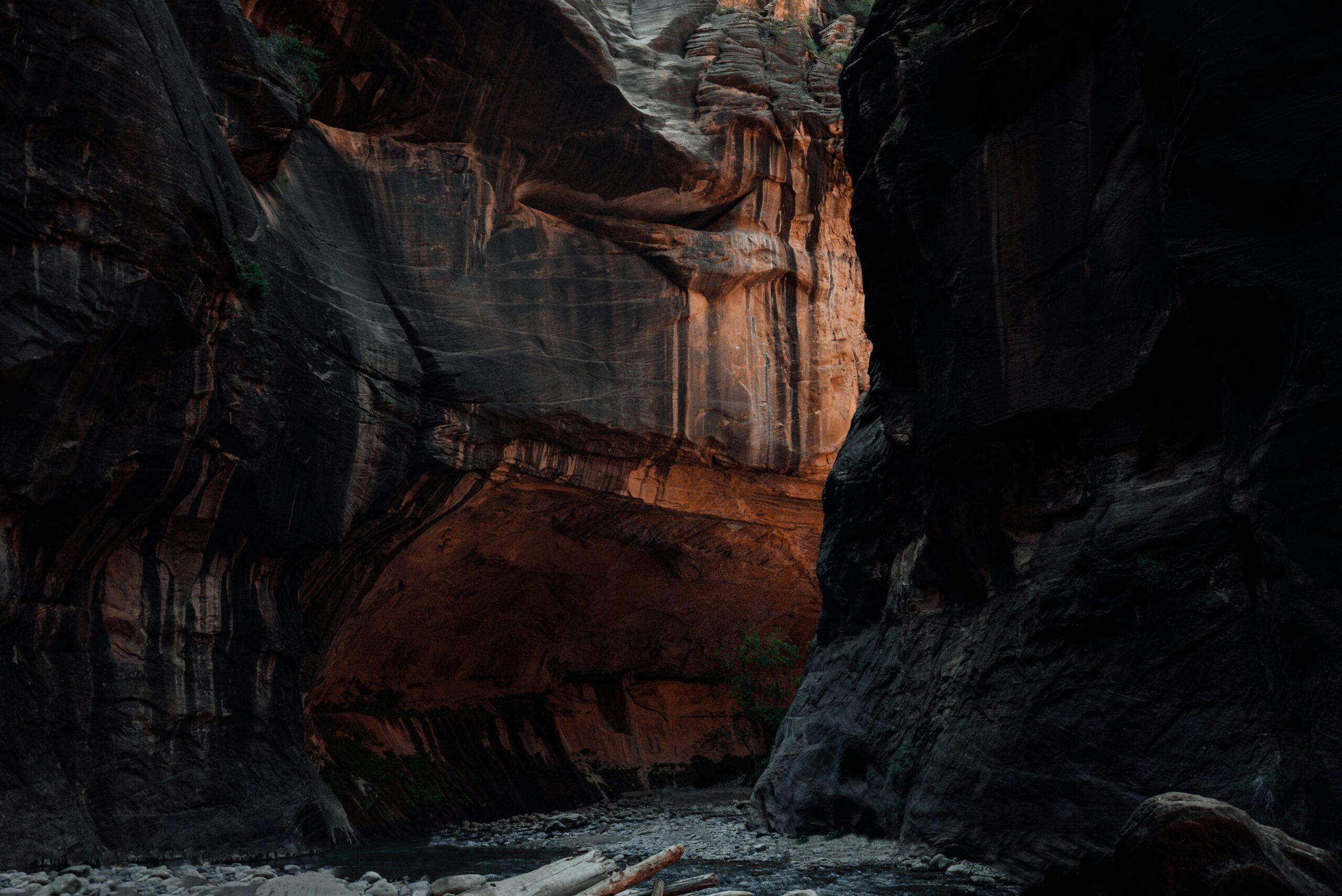
The Narrows is a hike up the Virgin River through a canyon where the walls close to less than 6 metres apart in places. The bottom-up version (starting from the Temple of Sinawava) requires no permit: you wade upstream at your own pace and turn back whenever you like. The full top-down route (16 km with an overnight wild camp) requires a Wilderness permit ($20), bookable on Recreation.gov.
Important safety note: the river is closed to hikers when the flow exceeds 150 CFS. Check real-time conditions on the NPS website before setting out.
Emerald Pools Trail: Accessible to Everyone
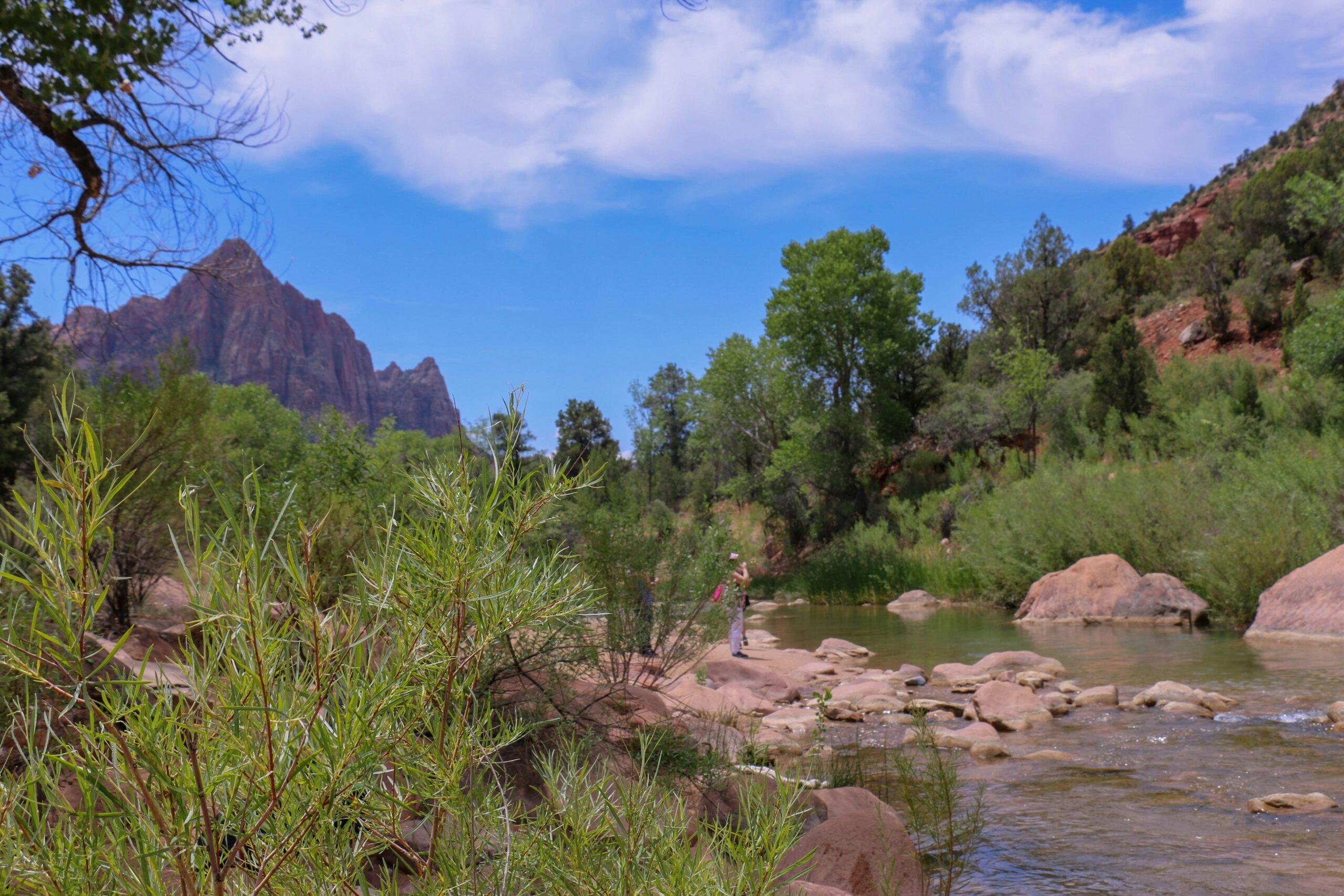
Less demanding than the other hikes, the Emerald Pools Trail winds through waterfalls and shaded pools. Suitable for families, it offers a gentle walk through the valley’s riverside greenery, where cottonwoods, willows and tamarisks provide a vivid contrast to the ochre rock.
Observation Point Trail: Closed Until Further Notice
The Observation Point Trail, which once offered one of the most spectacular views of Angels Landing and the valley below, has been closed since summer 2019 following a major rockfall. No reopening date has been announced for 2026.
Zion’s Geology: 250 Million Years of Layers
Zion’s walls are composed largely of Navajo Sandstone, the fossilised remains of a vast ancient desert of sand dunes from around 180 million years ago. The Virgin River has carved hundreds of metres down through this plateau, exposing the different layers: chalky white near the summit, deep crimson at the base, reflecting varying concentrations of iron oxide. Some peaks rise more than 670 metres above the valley floor.
When to Visit Zion?
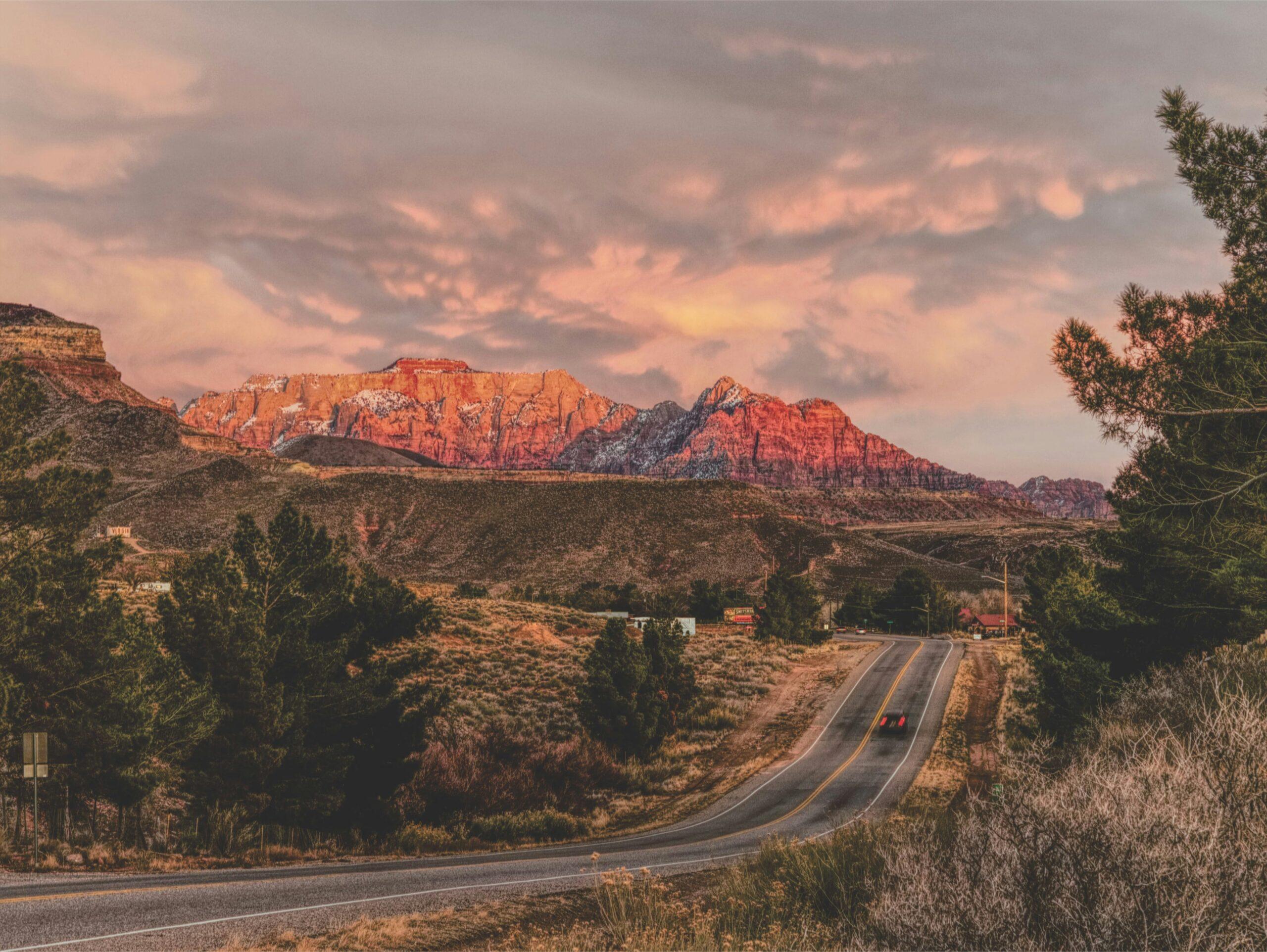
The park is open year-round, with more than 300 sunny days a year. Each season has its own appeal, depending on how you like to travel:
- Spring (March-May): ideal temperatures (16-27°C), wildflowers, waterfalls fed by snowmelt. The most recommended time to visit, though also the busiest.
- Summer (June-August): intense heat (up to 38°C in July) and a real risk of thunderstorms and flash floods in the canyons. Hiking early in the morning is essential.
- Autumn (September-October): slightly thinner crowds, pleasant temperatures and stunning light on the cliffs.
- Winter (November-February): quiet and cold. Some trails may be snow-covered or icy. Outside the mandatory shuttle period, driving into the canyon is permitted.
Zion on an American West Road Trip
Zion fits naturally into a Grand Circle road trip from Las Vegas (around 2.5 hours’ drive) or alongside Bryce Canyon (1.5 hours) and Capitol Reef. To extend your adventure across the American national parks, Yosemite National Park in California and Yellowstone in Wyoming are among the most popular itineraries for international travellers.
FAQ
Do you need to pay to enter Zion National Park?
Yes. The entry fee is $35 per vehicle for 7 consecutive days ($30 for a motorbike, $20 per person on foot or by bicycle). Since January 2026, non-US travellers aged 16 and over pay an additional surcharge of $100 per person, unless they hold the America the Beautiful Pass ($250 for non-residents).
Is the Angels Landing permit required for the whole hike?
No. The permit is only required for the section beyond Scout Lookout (the final ridge with the chains). The climb up to Scout Lookout is free and permit-free.
Is the Zion shuttle really free?
Yes. The Zion Canyon shuttle is included in the park entry fee, with no extra charge. It runs from 7 March to 28 November 2026. Outside this period, individual vehicles are permitted to drive into the canyon.
Can you do The Narrows without special equipment?
For a short exploration from the bottom, it is possible without specialist gear, but the riverbed is slippery and the water can be cold. Walking poles and shoes with a grippy sole are strongly recommended. For a longer outing, neoprene shoes and gaiters are available to hire in Springdale.
What is the best time of year to visit Zion?
Spring (March-May) and autumn (September-October) offer the most favourable conditions: temperatures between 16 and 27°C and noticeably smaller crowds than in midsummer. Summer is still doable if you set out very early in the morning to beat the heat and avoid the afternoon storm risk.