
Straddling Wyoming, Montana and Idaho, Yellowstone National Park is the oldest national park in the world and one of the most remarkable natural territories on the planet. Across its 2.2 million acres (roughly 8,983 km²), it holds more than half of the world’s active geysers, a thriving population of large wildlife and some of the most spectacular scenery in the American West.
Founded in 1872 to protect something extraordinary
On 1 March 1872, President Ulysses S. Grant signed the Yellowstone National Park Protection Act, making Yellowstone officially the first national park in the world. This visionary decision preserved an intact ecosystem spanning more than 8,983 km², where wild rivers, lodgepole pine forests and sweeping grasslands sit alongside some of the rarest geological phenomena on Earth.
The source of this extraordinary geological activity lies directly beneath the park: Yellowstone sits atop an active supervolcano, its caldera stretching under much of the land above. That single fact explains every hydrothermal feature visible at the surface and gives the site its wholly unique character.
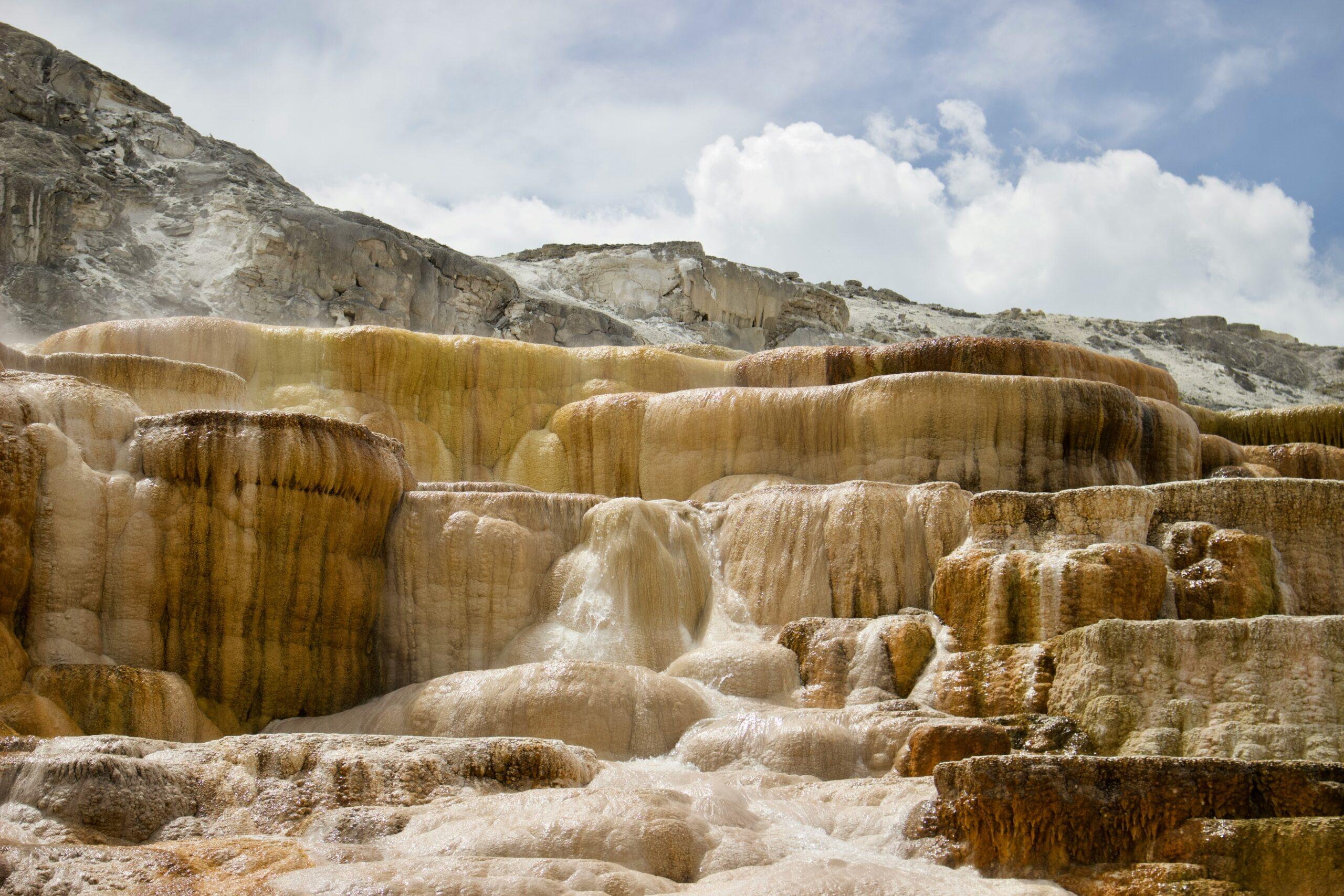
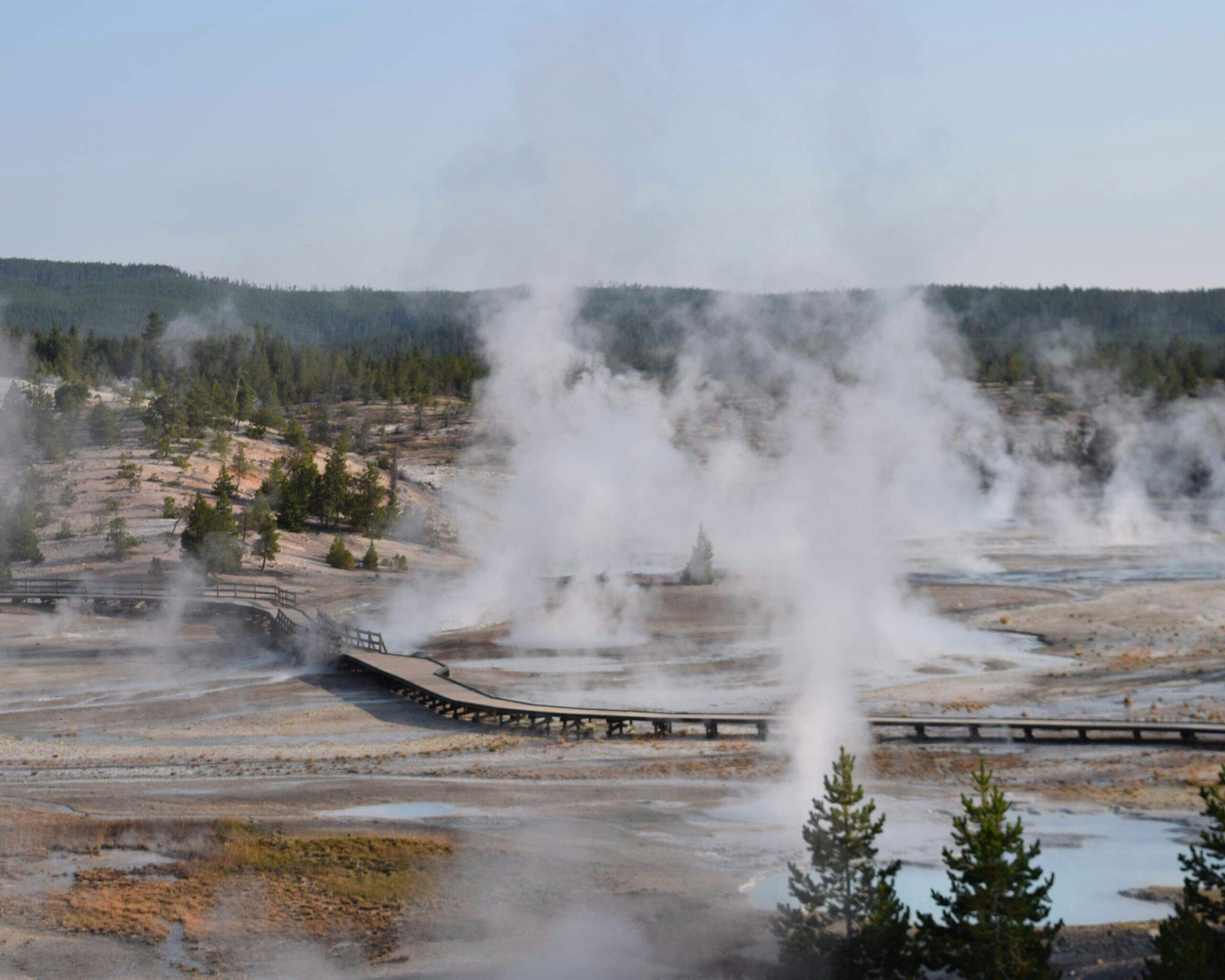
Geysers and hydrothermal features: the park’s volcanic heart
Yellowstone is home to more than 500 active geysers, accounting for over half the world’s total, as well as more than 10,000 recorded hydrothermal features including hot springs, fumaroles and bubbling mud pots. All are powered by the same subterranean volcanic activity.
Old Faithful: the unmissable spectacle
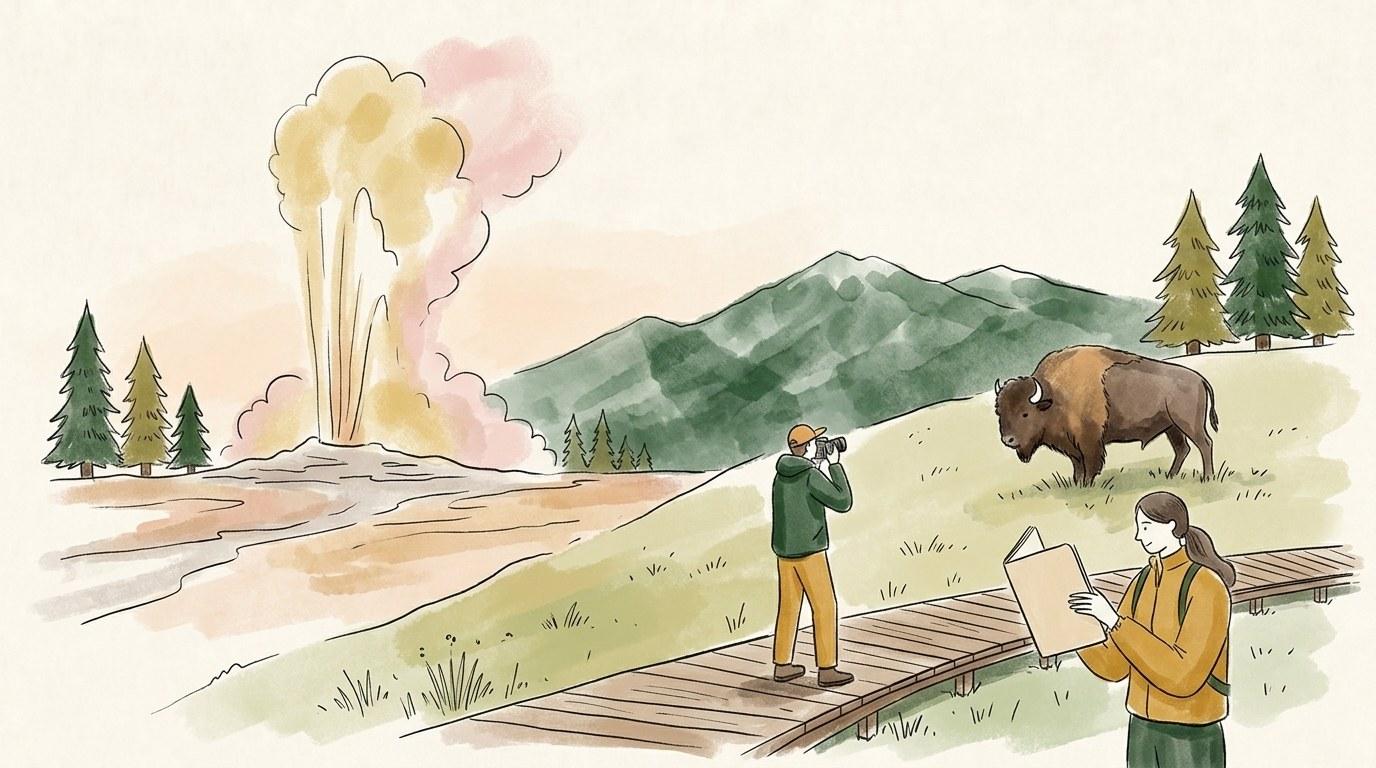
Old Faithful is the enduring symbol of Yellowstone. It erupts roughly every 90 minutes, shooting a column of water and steam up to 50 metres into the air for between 1.5 and 5 minutes. Its relative regularity makes it the park’s most popular gathering point, with a purpose-built amphitheatre so visitors can watch in safety.
Steamboat Geyser: the world’s most powerful
Less predictable but far more dramatic, Steamboat Geyser in the Norris Geyser Basin is the tallest active geyser in the world. Its major eruptions hurl water up to 90 metres skyward.
Grand Prismatic Spring: colours painted by life
Grand Prismatic Spring is the largest hot spring in the United States. Its spectacular palette, ranging from deep blue at the centre to vivid oranges and reds around the edges, is produced by heat-loving thermophilic bacteria. Seen from the overlook trail above the basin (Fairy Falls Trail), it offers one of the most photographed panoramas in the entire park.
Thermal zone safety is non-negotiable: the ground here is extremely fragile. The National Park Service warns that visitors have been seriously injured and even killed after straying from marked boardwalks. Always stay on designated paths.
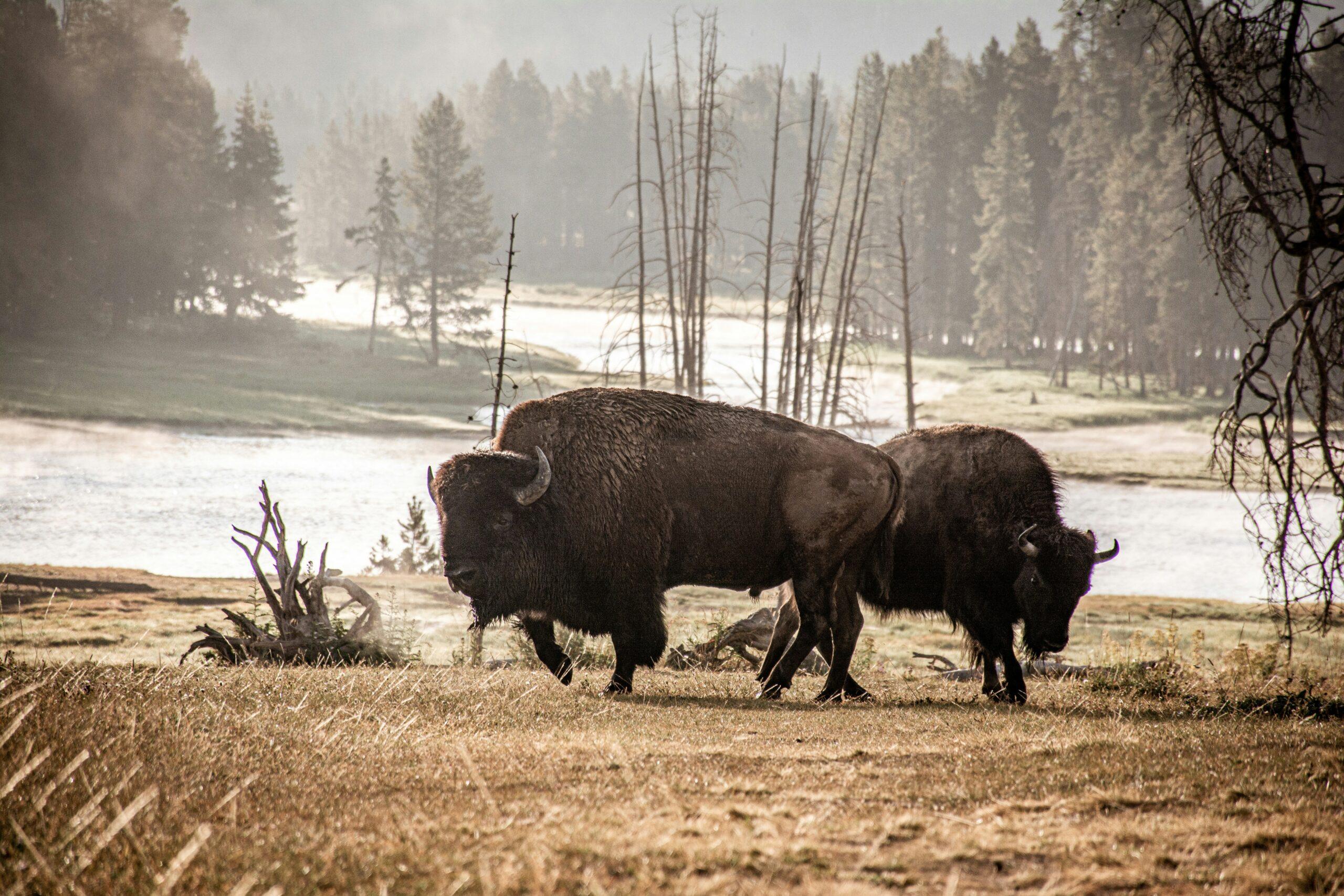
Wildlife: an intact and exceptional ecosystem
More than a century of protection has made Yellowstone one of the finest places in the world to watch large North American wildlife in the wild. The park is home to 67 mammal species and nearly 300 bird species.
Bison: lords of the plains
Yellowstone holds one of the largest free-roaming plains bison herds in North America. Encountering them on a road or watching them graze across Hayden Valley is one of the park’s most unforgettable experiences. The NPS requires a minimum safe distance of 25 yards (roughly 23 metres) at all times.
Grey wolves of Lamar Valley
Wiped out in the early twentieth century, grey wolves were reintroduced to the park in 1995. Their return has profoundly rebalanced the ecosystem, largely by keeping elk populations in check. Lamar Valley, in the east of the park, is the most celebrated spot for wolf watching, particularly at dawn or dusk.
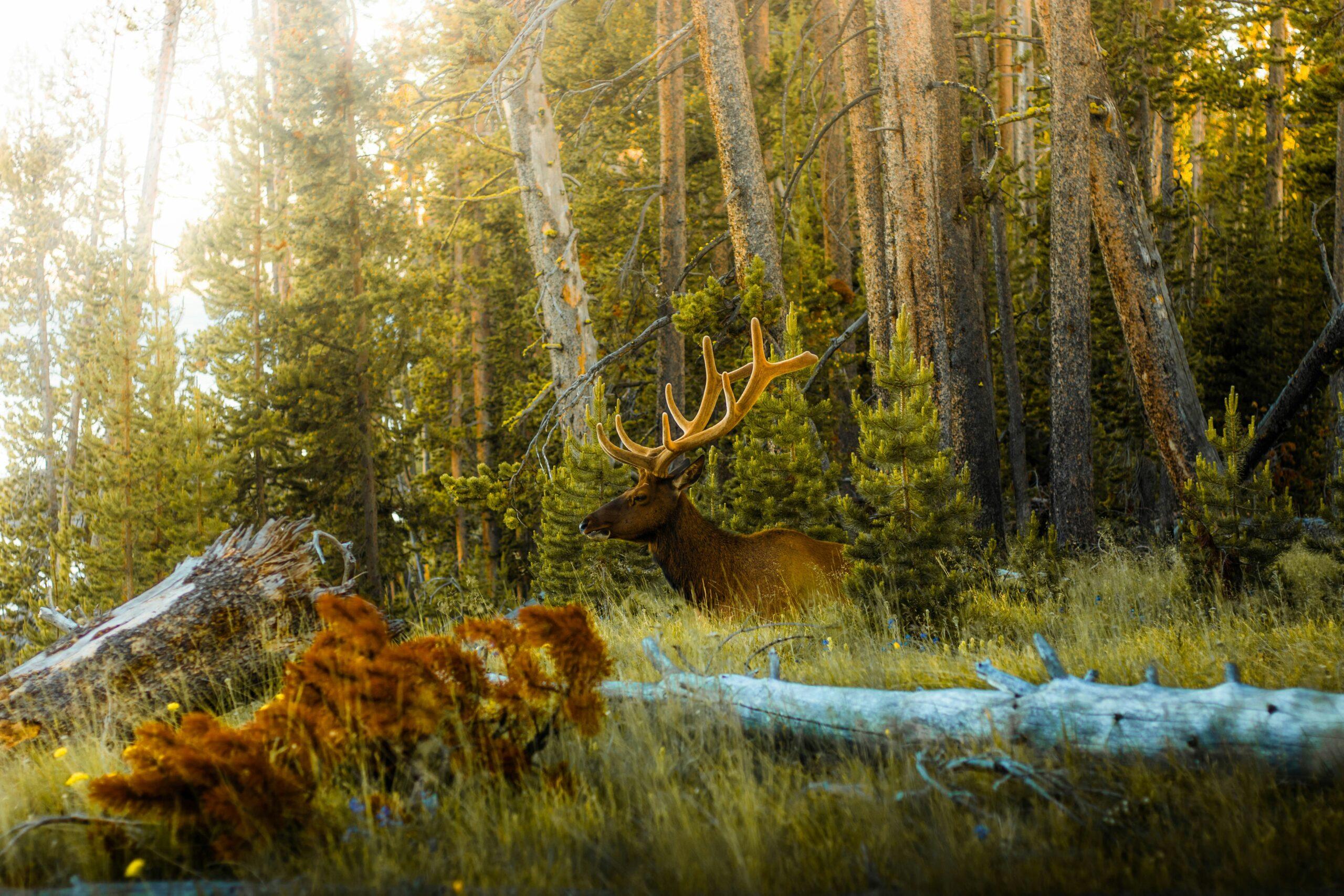
Grizzly bears and elk
Grizzly and black bears roam the forests and riverbanks throughout the park. Elk and mule deer round out an impressive roster of large wildlife. The mandatory safe distance for bears, wolves and mountain lions is 100 yards (roughly 90 metres). Carrying bear spray is strongly recommended on any backcountry hike.
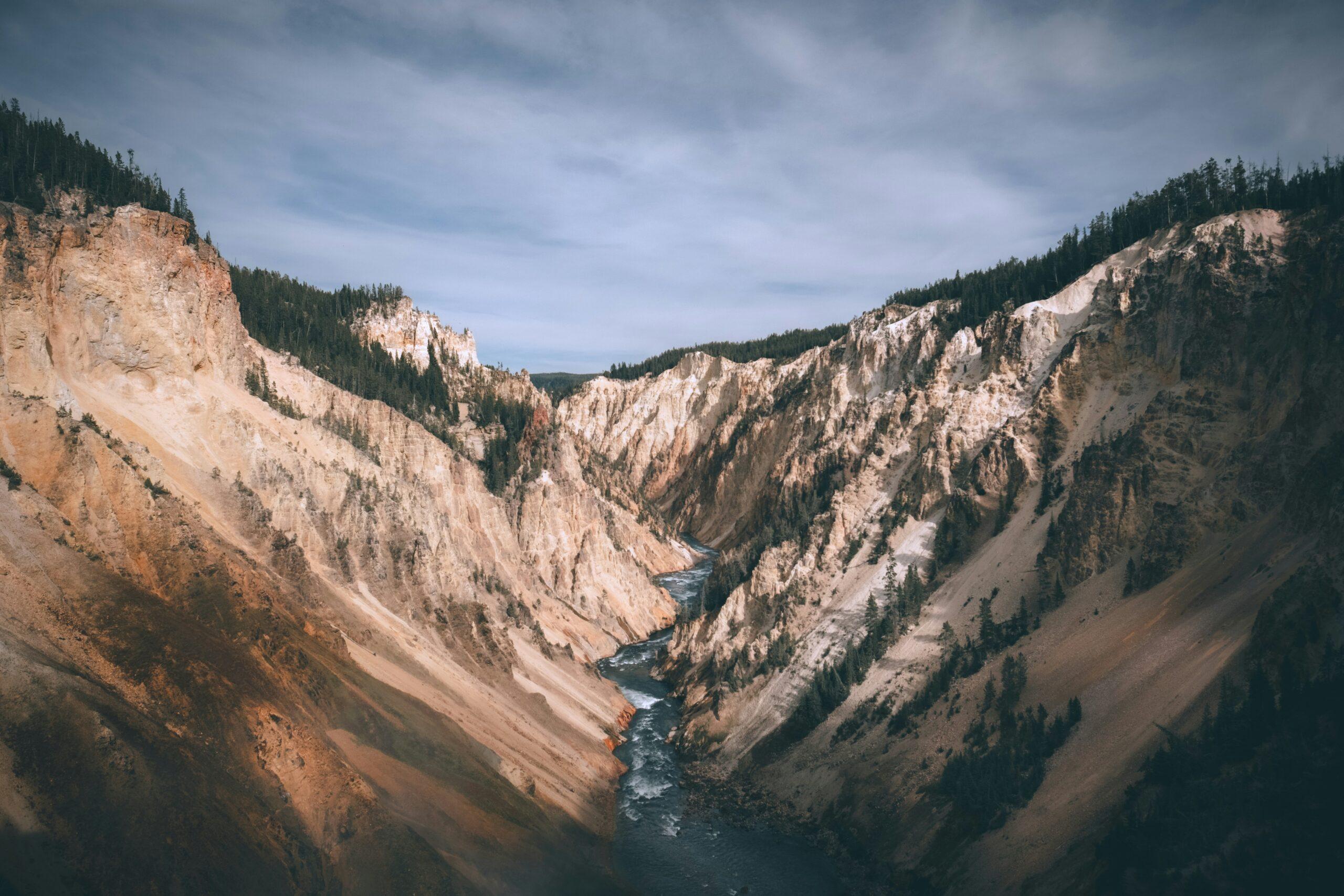
The Grand Canyon of the Yellowstone: cliffs and waterfalls
Carved by the Yellowstone River over thousands of years, the Grand Canyon of the Yellowstone is one of the park’s most breathtaking sights. Its distinctive yellow and ochre cliffs, which inspired the name “Yellowstone,” plunge to depths of around 300 metres.
Two major waterfalls punctuate the canyon:
- Lower Falls (93.9 metres high): the more spectacular of the two, best viewed from the Artist Point overlook.
- Upper Falls (33 metres): equally impressive, with several viewpoints accessible on foot.
On clear days, the mist thrown up by the falls creates fleeting rainbows that add yet another layer of beauty to the scene.
Hiking and activities in the park
Yellowstone offers around 1,000 miles of marked trails (roughly 1,600 km), suitable for all ability levels. A few highlights not to miss:
- Fairy Falls Trail: leads to the overlook above Grand Prismatic Spring, an essential stop for photographers.
- Mount Washburn: an accessible climb (a return journey of around 10 km) with 360-degree views across the park.
- Lamar Valley: ideal for wildlife watching, especially wolves, at dawn.
The NPS also runs free ranger-led programmes, open to all visitors from the moment they enter the park.
To extend a road trip through the American West, Yosemite National Park and Zion National Park are absolutely worth adding to your itinerary.
Practical information for visiting Yellowstone in 2026
Entry fees
| Pass type | 2026 price |
|---|---|
| Private vehicle (valid 7 days) | $35 |
| Motorcycle (valid 7 days) | $30 |
| Pedestrian / cyclist / skier (16+) | $20 per person |
| Annual Yellowstone pass | $70 |
| America the Beautiful Pass (residents) | $80 |
| America the Beautiful Pass (non-residents) | $250 |
Non-resident surcharge: international visitors (non-US residents) aged 16 and over pay an additional $100 per person, unless they hold an America the Beautiful Pass ($250). This is a cost that overseas travellers should factor into their budget well before departure.
When to visit?
The main season runs from mid-June to early September: mild weather and all roads fully open. Spring (April-May) and autumn (October) bring smaller crowds but less predictable conditions. In winter, almost all roads close; only the route between the North and North-East entrances remains open to vehicles.
Accommodation and reservations
Campsites and lodges inside the park fill up extremely quickly. Booking several months in advance, as soon as reservations open, is strongly recommended.
Mobile coverage and preparation
Mobile coverage is very limited inside the park. Download maps and content from the official NPS app in offline mode before you arrive.
FAQ
Where is Yellowstone National Park?
Yellowstone is located primarily in the north-west corner of Wyoming, with small sections extending into Montana and Idaho. The North Entrance, open year-round, is at Gardiner, Montana; the West Entrance, the busiest in summer, is at West Yellowstone, Montana.
How much does it cost to enter Yellowstone in 2026?
Standard entry is $35 per vehicle for 7 days. Non-US residents aged 16 and over pay an additional $100 per person surcharge, unless they hold an America the Beautiful Pass ($250). Source: NPS Yellowstone.
What is the best time to visit Yellowstone?
From mid-June to early September all roads are open and the weather is at its most favourable. To avoid the crowds, consider May or October, and be prepared for more changeable conditions.
Is Yellowstone dangerous to visit?
The main risks come from wildlife and thermal areas. Maintain a minimum of 25 yards from bison, 100 yards from bears and wolves, and never leave boardwalks in geothermal zones. Carrying bear spray is strongly advised on any trail.
Do I need travel insurance to visit Yellowstone and the United States?
Yes, travel insurance is essential. The American healthcare system does not cover foreign visitors: a hospitalisation or medical repatriation can run to tens of thousands of dollars. Comprehensive medical and repatriation cover is a must before you travel.