

Egypt packs an extraordinary amount into a single trip: pyramids standing for 4,500 years, temples carved into living rock, a desert full of surreal chalk formations, and a Red Sea teeming with marine life. From Giza to Abu Simbel, from the Nile Valley to the oasis of Siwa, here are 20 concrete experiences to help you build your itinerary.
Get travel insurance for EgyptCairo and surroundings
Cairo is the natural gateway to any trip to Egypt. A megacity of more than 20 million people, it is home to some of the country’s most important sites, including the pyramids roughly 20 kilometres from the centre. For a closer look at the capital, our guide on things to do in Cairo complements this overview.
1. The Pyramids of Giza: the only ancient wonder still standing
The Pyramids of Giza are the only one of the seven monuments of antiquity recognised as wonders of the world to have survived to the present day. Built around 4,500 years ago, the three pyramids of Khufu, Khafre and Menkaure rise above a desert plateau roughly 20 kilometres from Cairo. Khufu’s pyramid, the largest, now stands at 138 metres after losing its original casing stones over the centuries. The site is a UNESCO World Heritage landmark.
Tip: arrive at opening time for raking light and far fewer tour groups.
2. The Great Sphinx: stone guardian for 4,500 years
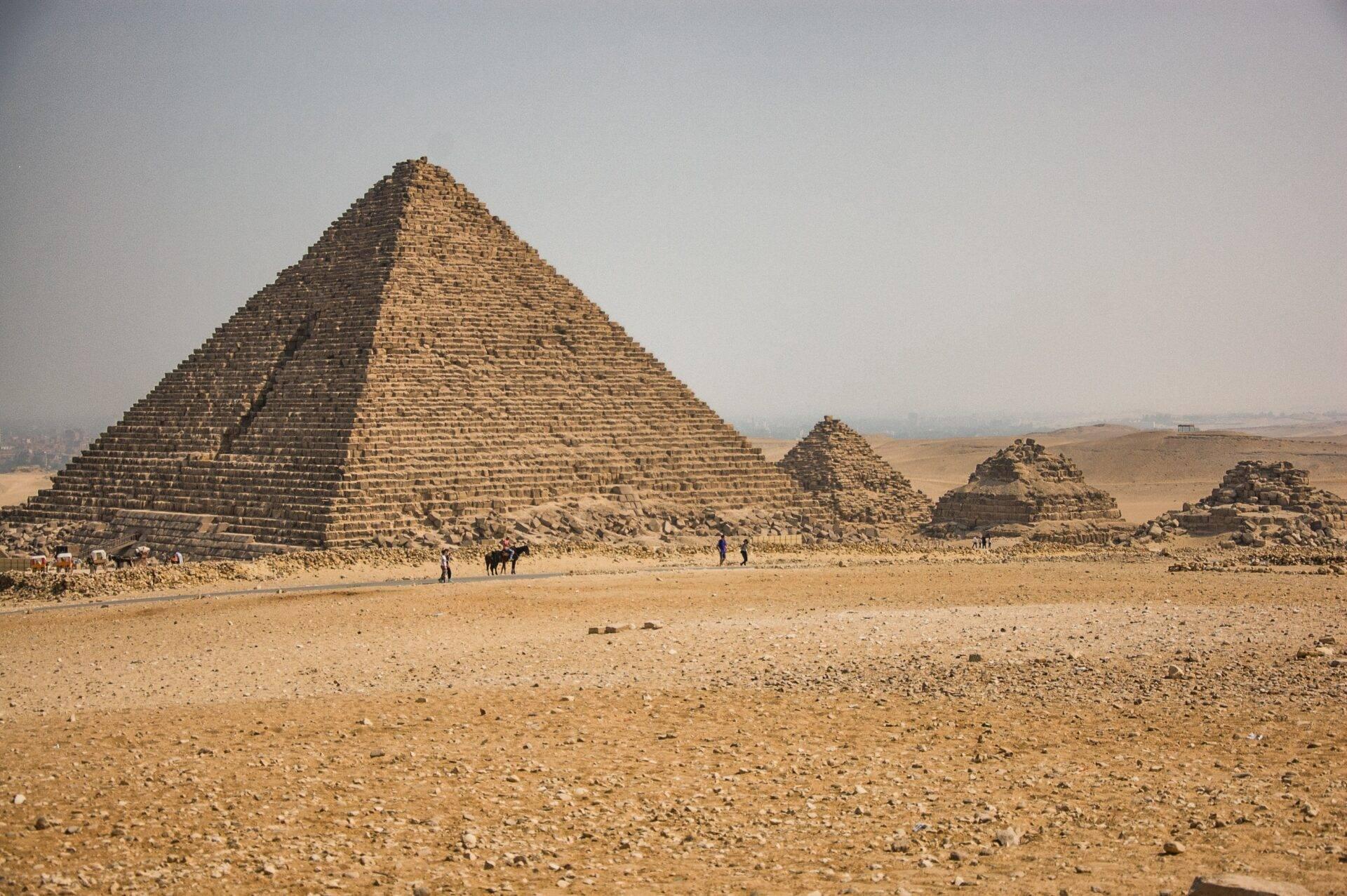
Just a short walk from the pyramids, the Sphinx has kept watch since antiquity. Carved directly from a single block of limestone, it stretches approximately 73 metres in length and stands 20 metres tall, making it one of the largest monolithic sculptures in the world. Archaeologists still debate its precise date of construction, though most agree it dates to the same era as the neighbouring pyramids.
3. The Step Pyramid at Saqqara: the world’s first large-scale stone monument
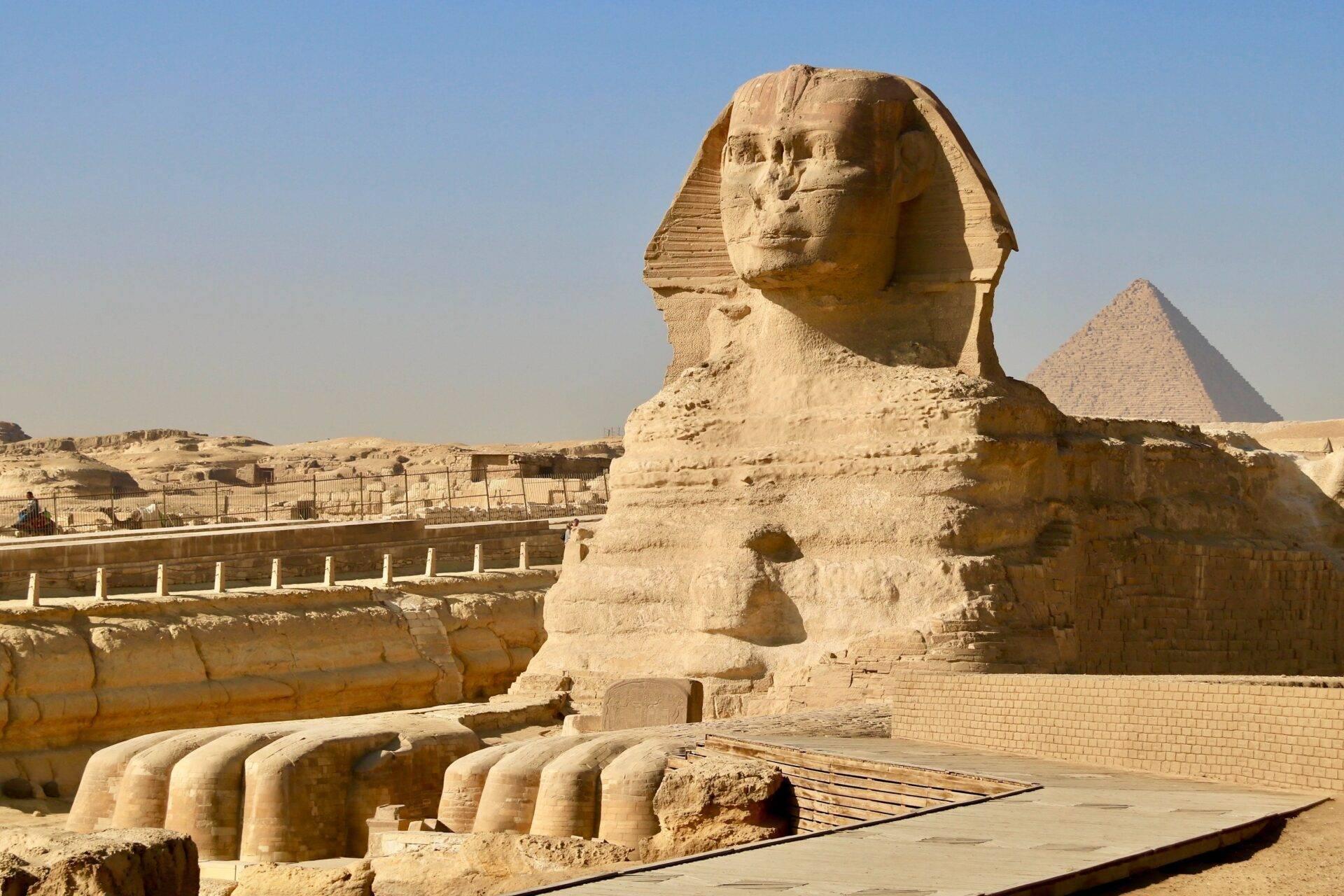
About 30 kilometres south of Cairo, the necropolis of Saqqara is home to the Step Pyramid of Pharaoh Djoser, the oldest large-scale cut-stone structure in the world, built more than 4,600 years ago. Designed by the architect Imhotep, it transformed the traditional flat tomb known as a mastaba into a six-tiered stepped structure. Far quieter than Giza, Saqqara offers a more contemplative immersion into the origins of pharaonic architecture.
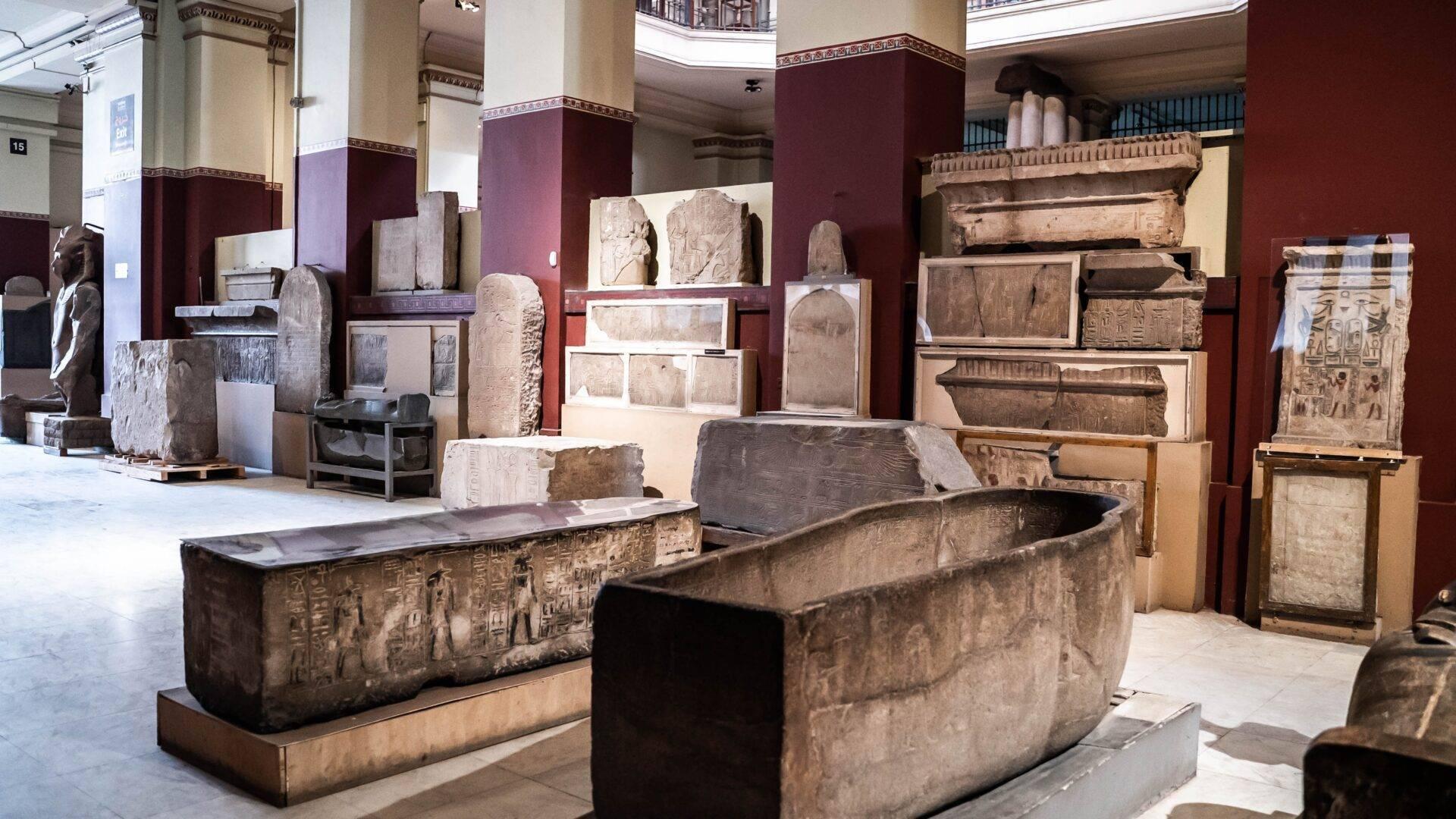
4. The Grand Egyptian Museum (GEM): the world’s largest archaeological museum
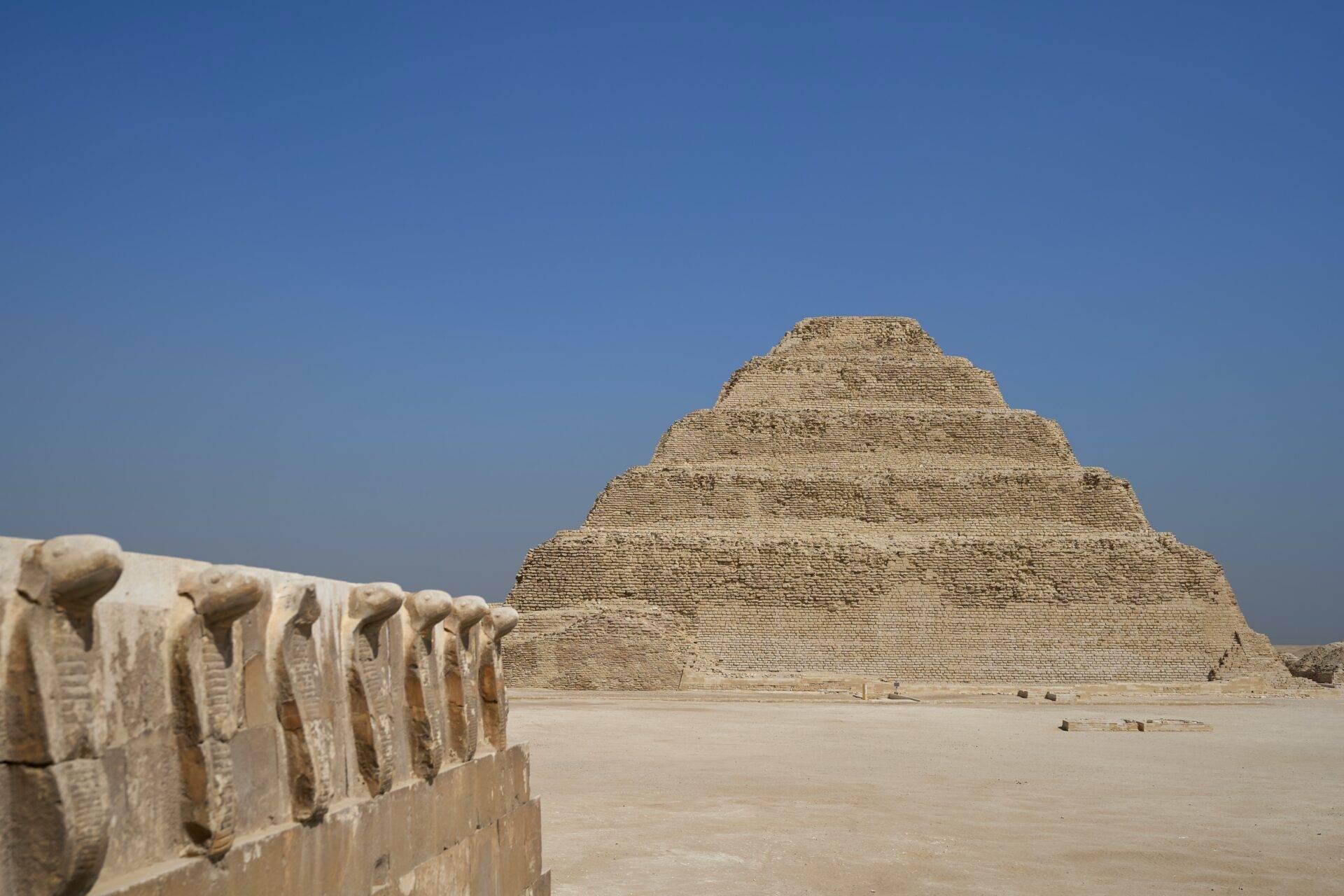
Opened in November 2025 near the Giza Pyramids, the Grand Egyptian Museum (GEM) is the largest archaeological museum dedicated to a single civilisation anywhere in the world. It brings together the complete Tutankhamun collection for the first time: more than 5,000 objects, including the gold funerary mask, the royal throne and two gilded sarcophagi, none of which had been displayed together since their discovery in 1922. Note: the original Egyptian Museum on Tahrir Square remains open and still holds part of the national collection.
5. The Citadel, Muhammad Ali Mosque and Khan el-Khalili bazaar
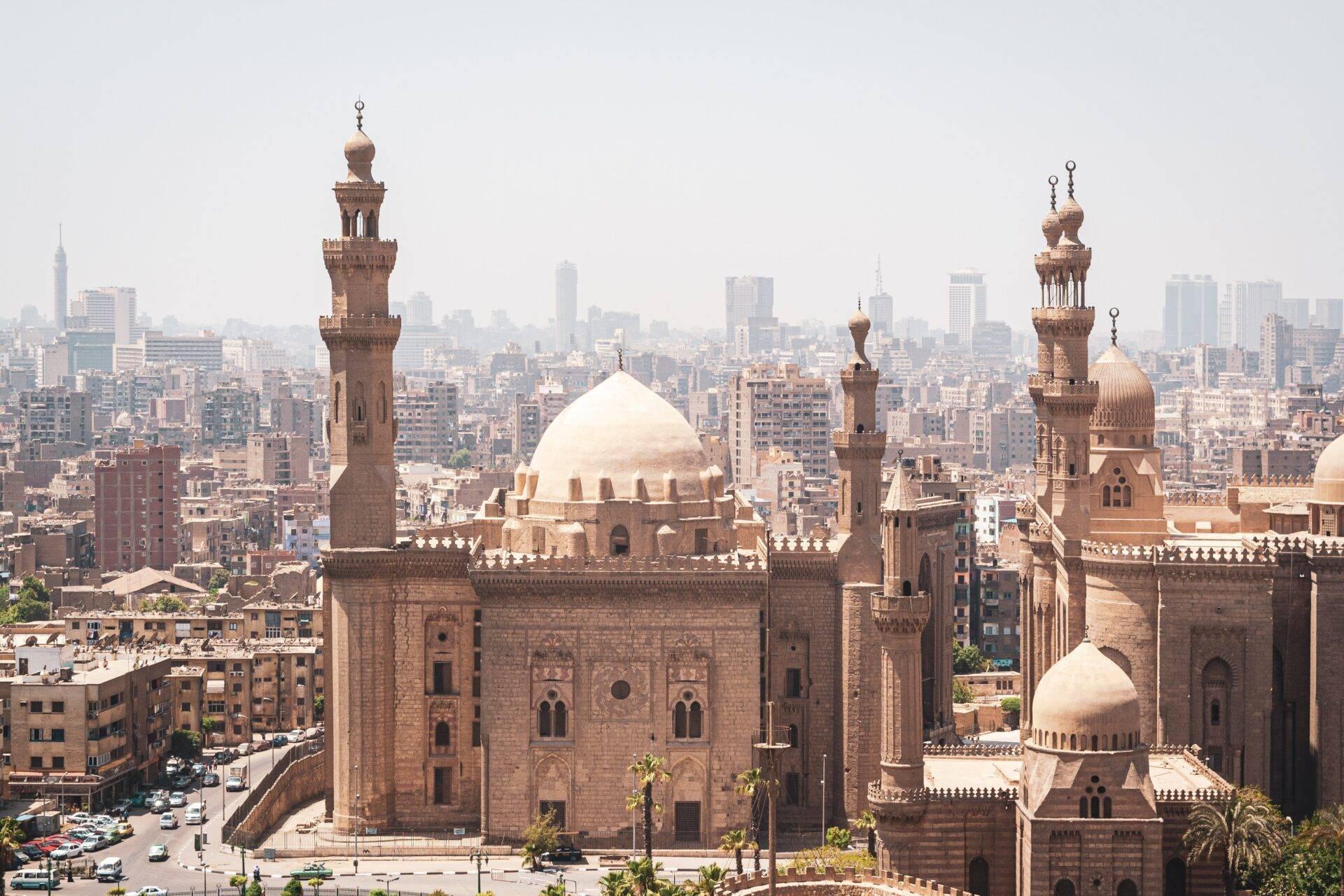
Built from 1176 by Sultan Saladin, the Cairo Citadel has dominated the city skyline for nearly nine centuries. The Muhammad Ali Mosque, constructed inside its walls in the 19th century, is instantly recognisable by its white domes and slender minarets, visible from across the historic centre. A few kilometres away, the Khan el-Khalili bazaar, founded in the 14th century, is Cairo’s most vibrant historic market: spices, copperware, textiles and traditional coffeehouses spill through a labyrinth of narrow lanes.
Luxor: the world’s greatest open-air museum
Once the pharaonic capital known as Thebes, Luxor concentrates an unrivalled number of ancient monuments within just a few square kilometres. Allow a minimum of two days to explore both the east bank (Karnak and Luxor temples) and the west bank (Valley of the Kings and the funerary temples).
6. Karnak Temple: built by thirty successive pharaohs
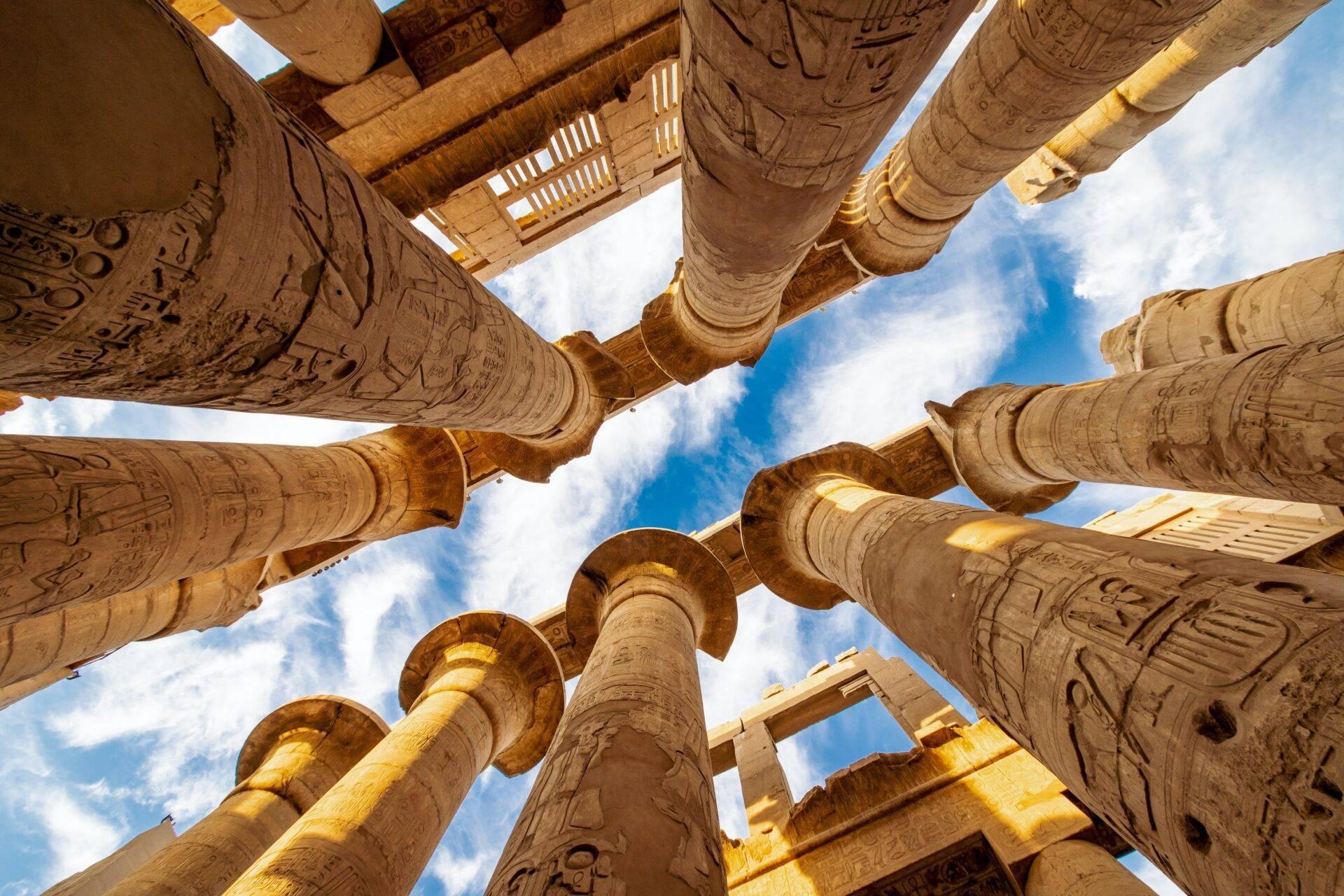
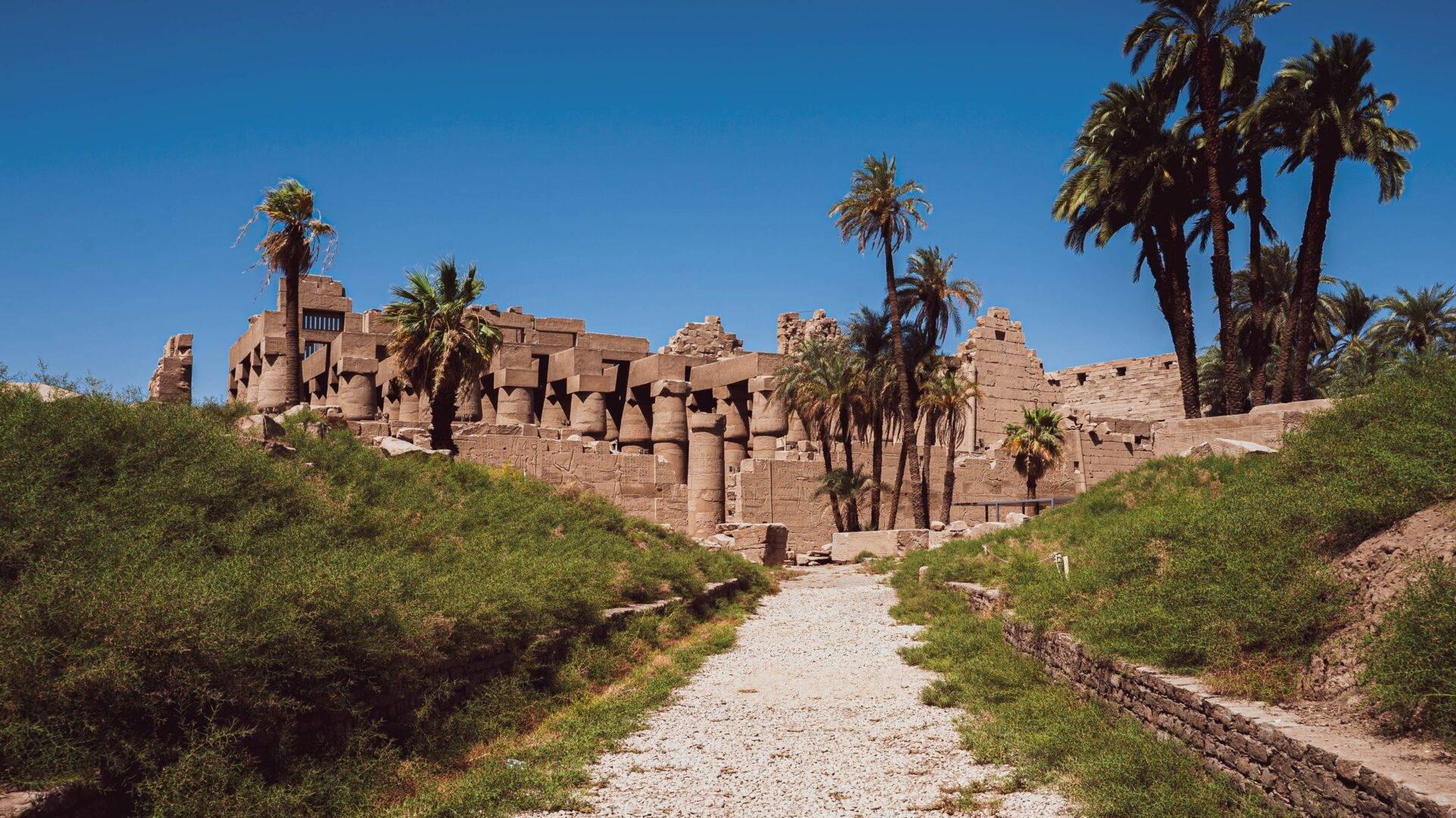
The Karnak complex is the second-largest religious site ever built, surpassed only by Angkor Wat. Construction began around 2000 BCE, and some 30 successive pharaohs added their own structures over more than two millennia. The Hypostyle Hall, with its 134 columns covered in hieroglyphs, is one of the most breathtaking architectural spaces you can walk through anywhere on earth. A sound-and-light show takes place on site each evening.
7. Luxor Temple: at its most spectacular after dark
Facing the Nile, Luxor Temple was built by Amenhotep III and later enlarged by Ramesses II. The colossal statues of the pharaoh flanking the entrance, the sphinx-lined avenue and the great pylon together form a monumental facade. The site is illuminated at night, and an evening visit transforms the atmosphere entirely.
8. The Valley of the Kings and Luxor’s west bank
On the west bank of the Nile, the Valley of the Kings holds the burial chambers of the pharaohs of the New Kingdom. Sixty-three royal tombs have been discovered to date, including that of Tutankhamun, found almost completely intact in 1922, along with those of Ramesses II and Seti I. The corridors decorated with paintings and funerary texts remain remarkably well preserved. Nearby, the sandstone funerary temples of the west bank, including that of Queen Hatshepsut, round out the visit perfectly.
9. A hot-air balloon ride at sunrise
From the air, the geography of the west bank reveals itself in full: funerary temples on the desert side, the glittering Nile at the centre, sugarcane fields stretching to the east. Flights take off before dawn so passengers can watch the sun rise over the Theban plateau. It is one of the most memorable ways to grasp the true scale of the site.
Aswan and Nubia
10. Aswan: the most beautiful stretch of the Nile
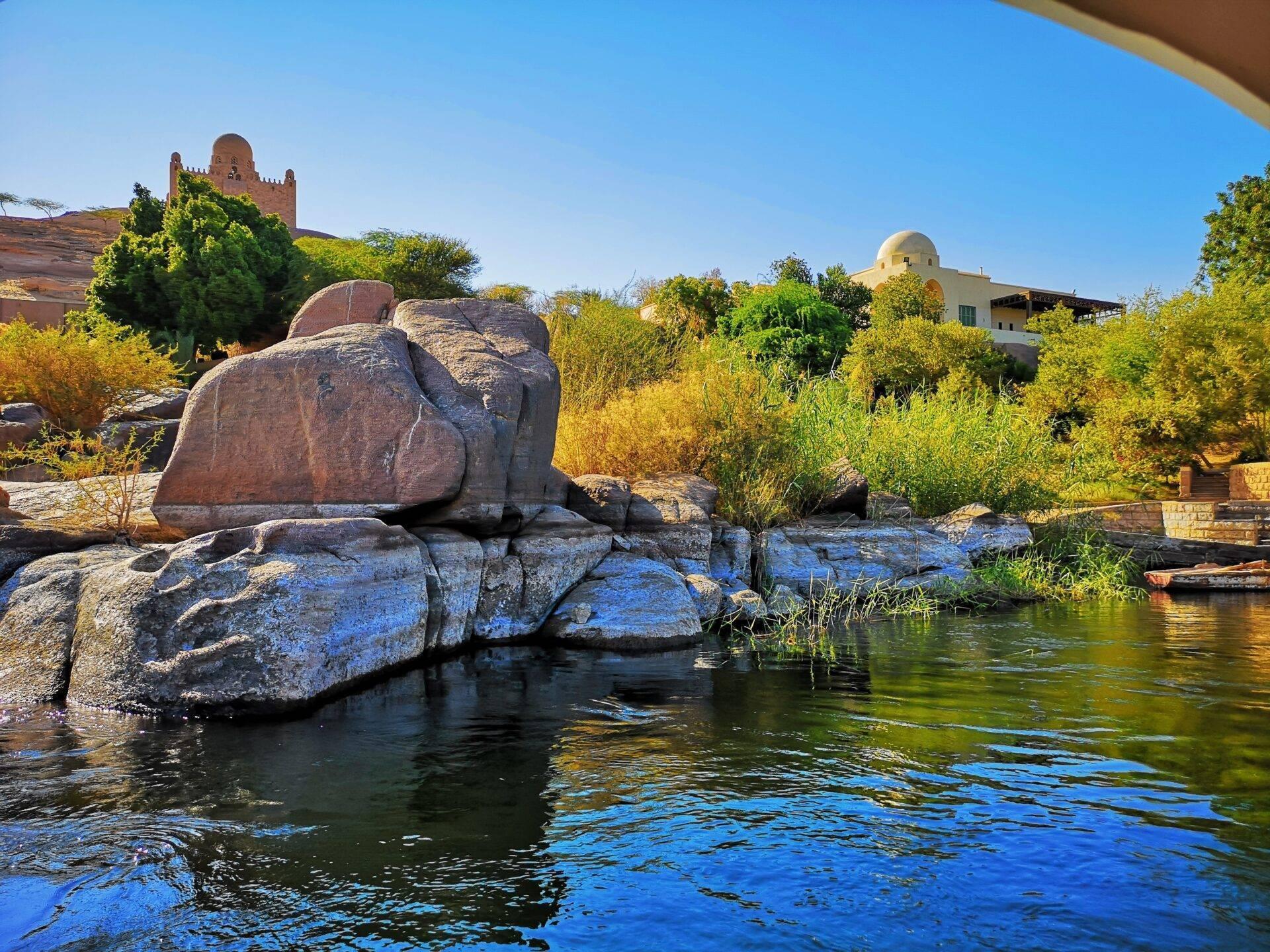
Aswan is the southernmost city on the classic Egyptian circuit. Here the Nile weaves through pink granite outcrops, green islands punctuate the landscape and Nubian culture brings a vivid splash of colour. A sunset felucca ride (a traditional wooden sailboat) drifting between the rocks is one of the most peaceful moments an Egypt trip can offer.
11. Philae Temple: Isis’s sanctuary on a Nile island
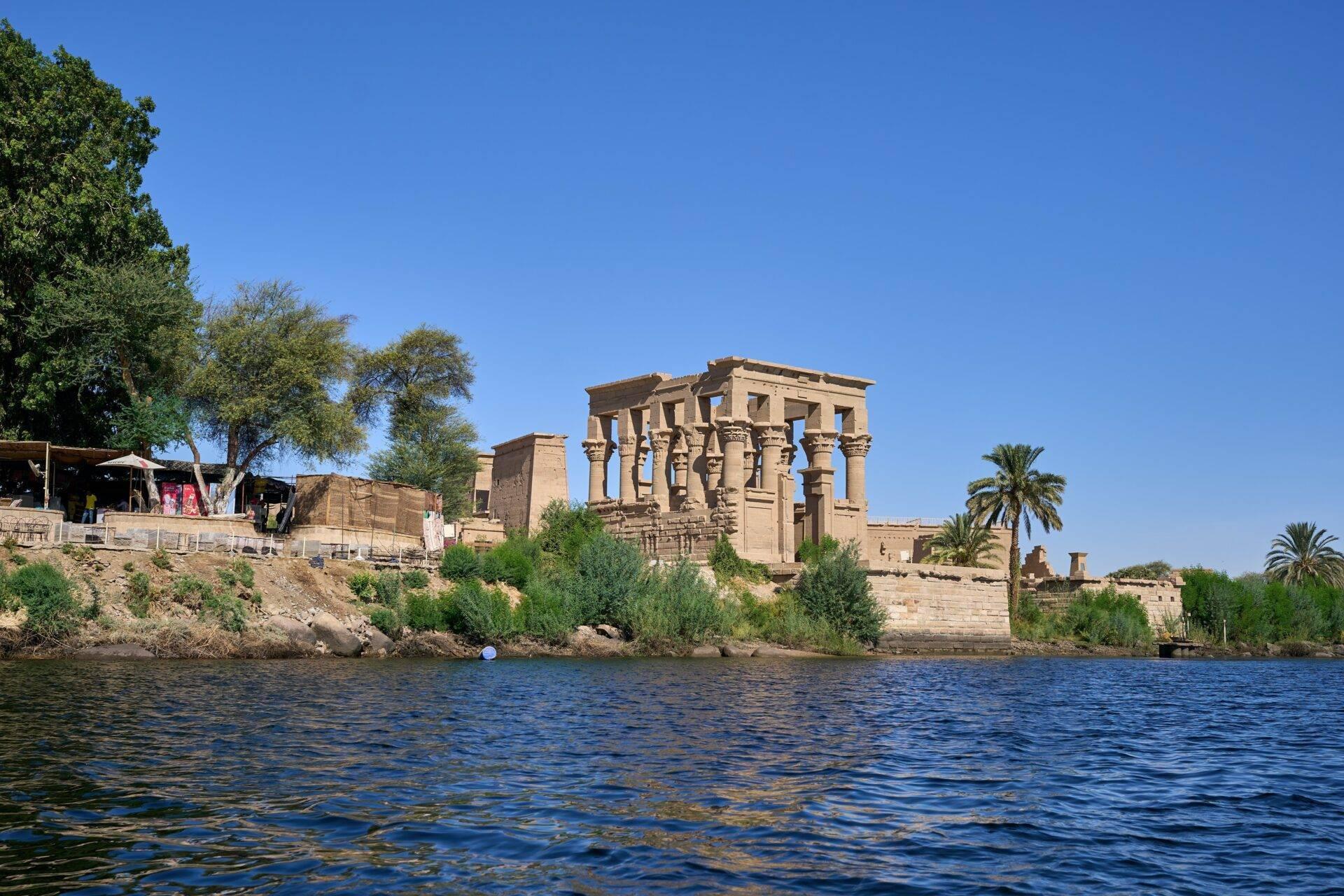
Philae Temple is dedicated to the goddess Isis. Reachable only by boat from the bank, it is one of the best-preserved temples in Egypt. Its modern story is remarkable in its own right: between 1972 and 1980, the entire complex was dismantled stone by stone and rebuilt on a neighbouring island to save it from the rising waters of the Aswan Dam.
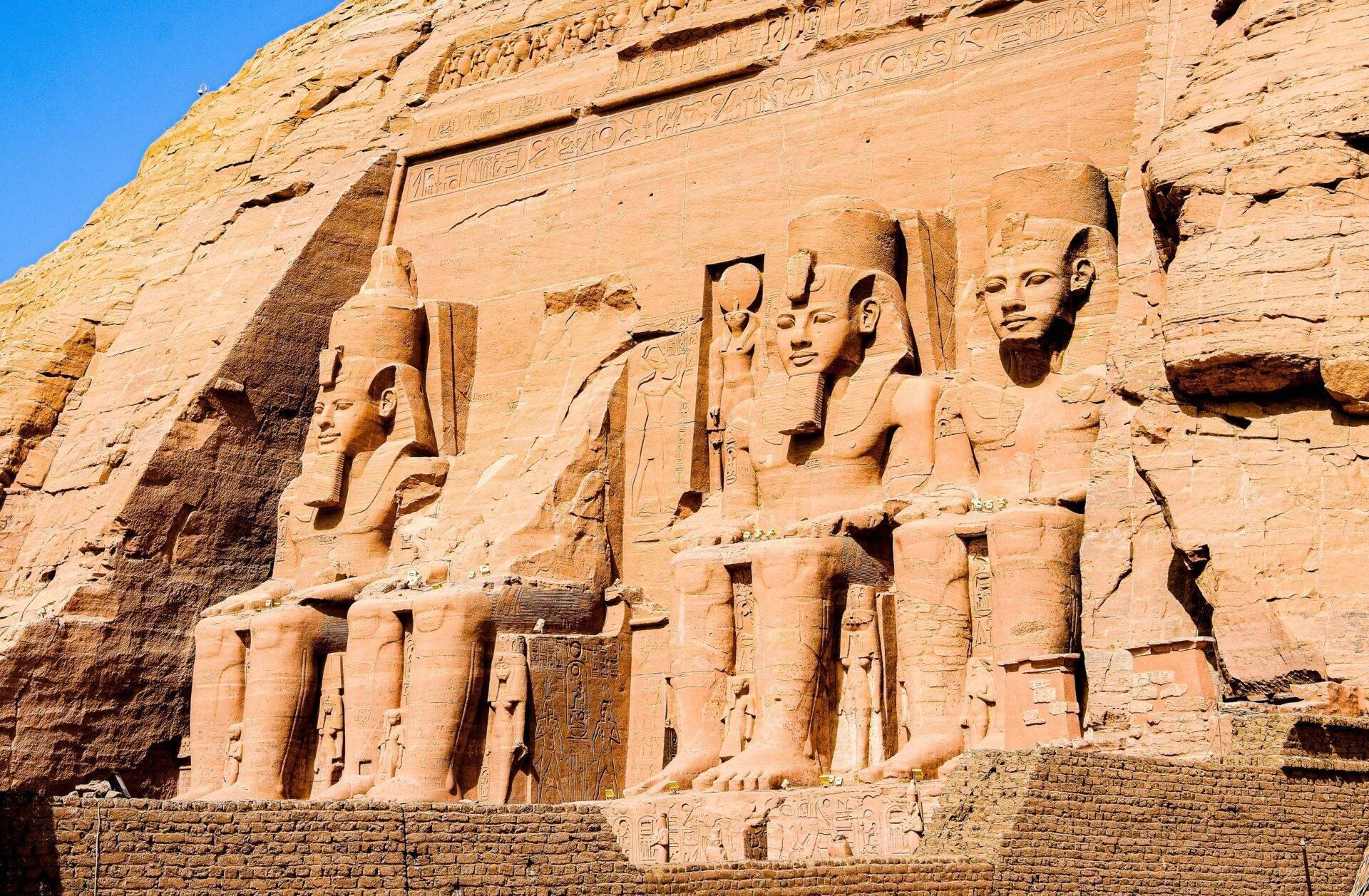
12. Abu Simbel: Ramesses II carved into the cliff face
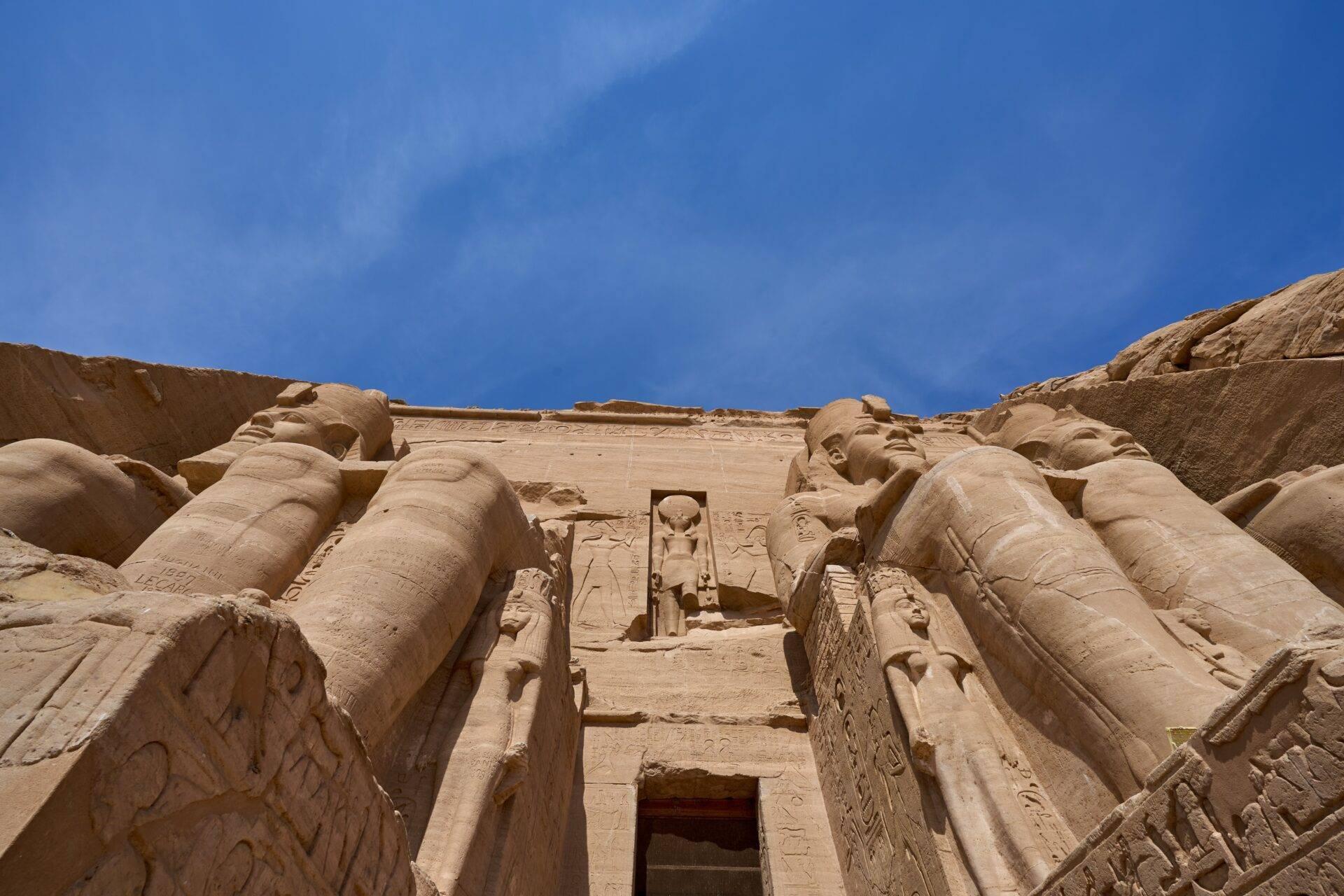
More than 250 kilometres south of Aswan, the two temples of Abu Simbel were hewn from solid rock in the 13th century BCE by Ramesses II. The Great Temple is guarded by four enormous colossi of the pharaoh cut directly into the cliff. Their alignment is unique: twice a year, sunlight penetrates deep into the sanctuary to illuminate the statues of the gods, an astronomical feat of engineering more than 3,200 years old. Between 1964 and 1968, both temples were relocated some 60 metres uphill to protect them from the rising waters of Lake Nasser, in an unprecedented international operation.
The Red Sea
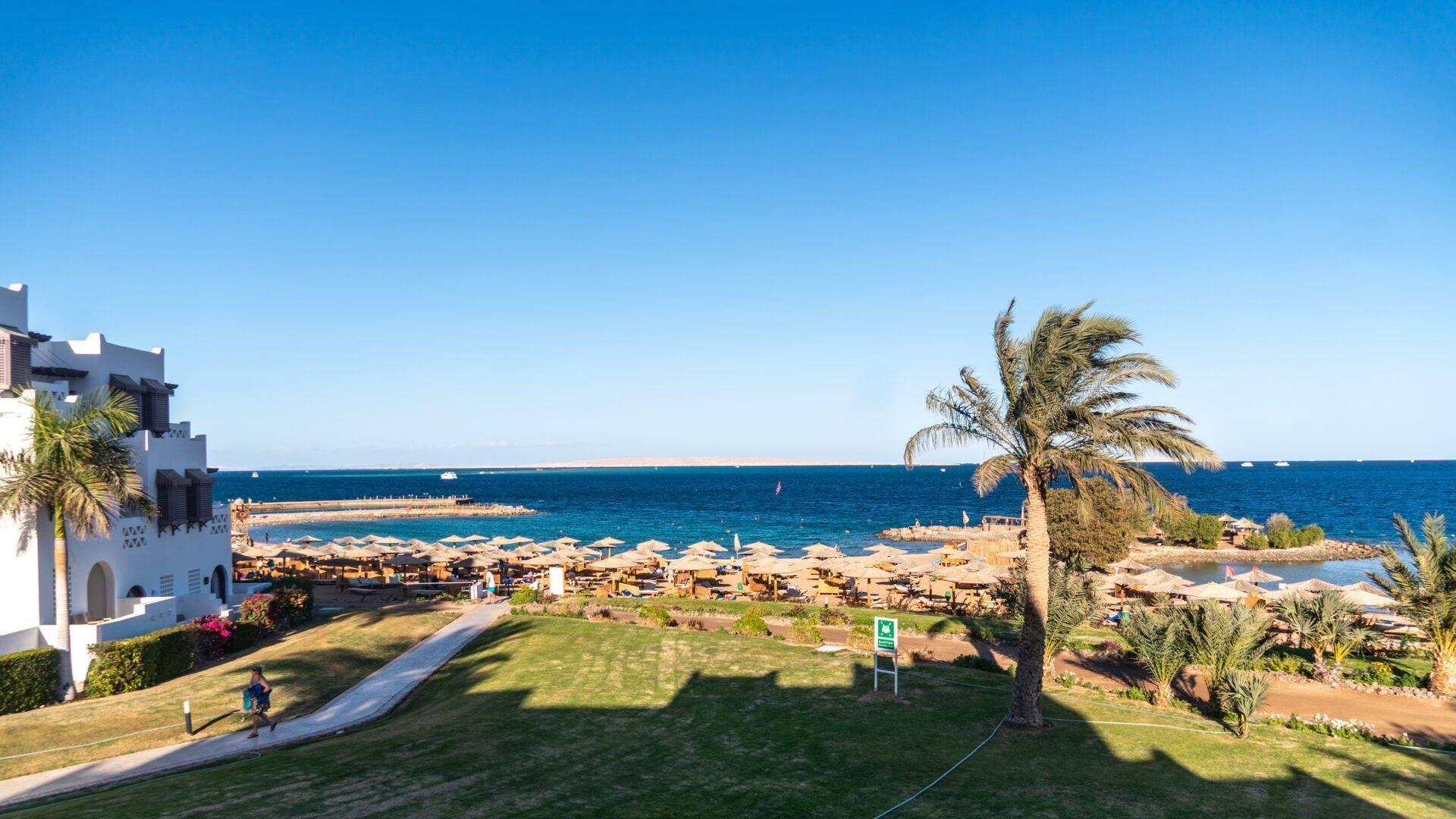
Egypt has hundreds of kilometres of coastline on the Red Sea. Several resorts, including Sharm el-Sheikh, Hurghada, Dahab and Marsa Alam, make it easy to combine beach time, diving and rest for a few days after a cultural circuit.
13. Sharm el-Sheikh: the Sinai Peninsula’s international resort
At the southern tip of the Sinai Peninsula, Sharm el-Sheikh is Egypt’s most internationally renowned seaside resort. The nearby Ras Mohammed National Park protects some of the country’s most spectacular coral reefs and is accessible by boat from the town.
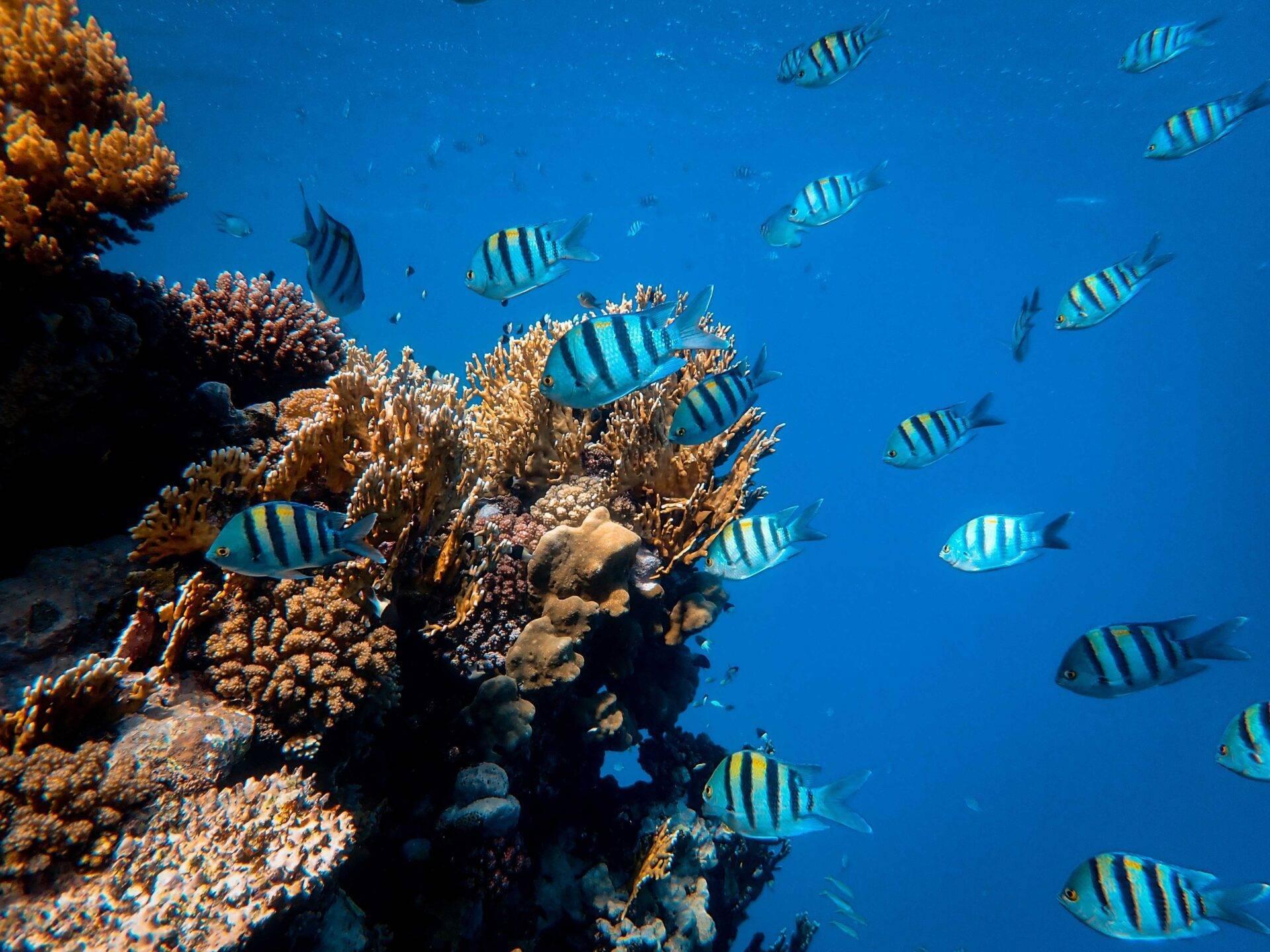
14. Diving a Red Sea coral reef
The Red Sea is one of the best diving destinations in the world, thanks to its warm, clear waters and extraordinary marine life: surgeonfish, rays, turtles and grouper. Dive sites run the full length of the coast, from the dramatic walls of Sharm el-Sheikh to the shallow reefs of Marsa Alam, accessible even to snorkellers.
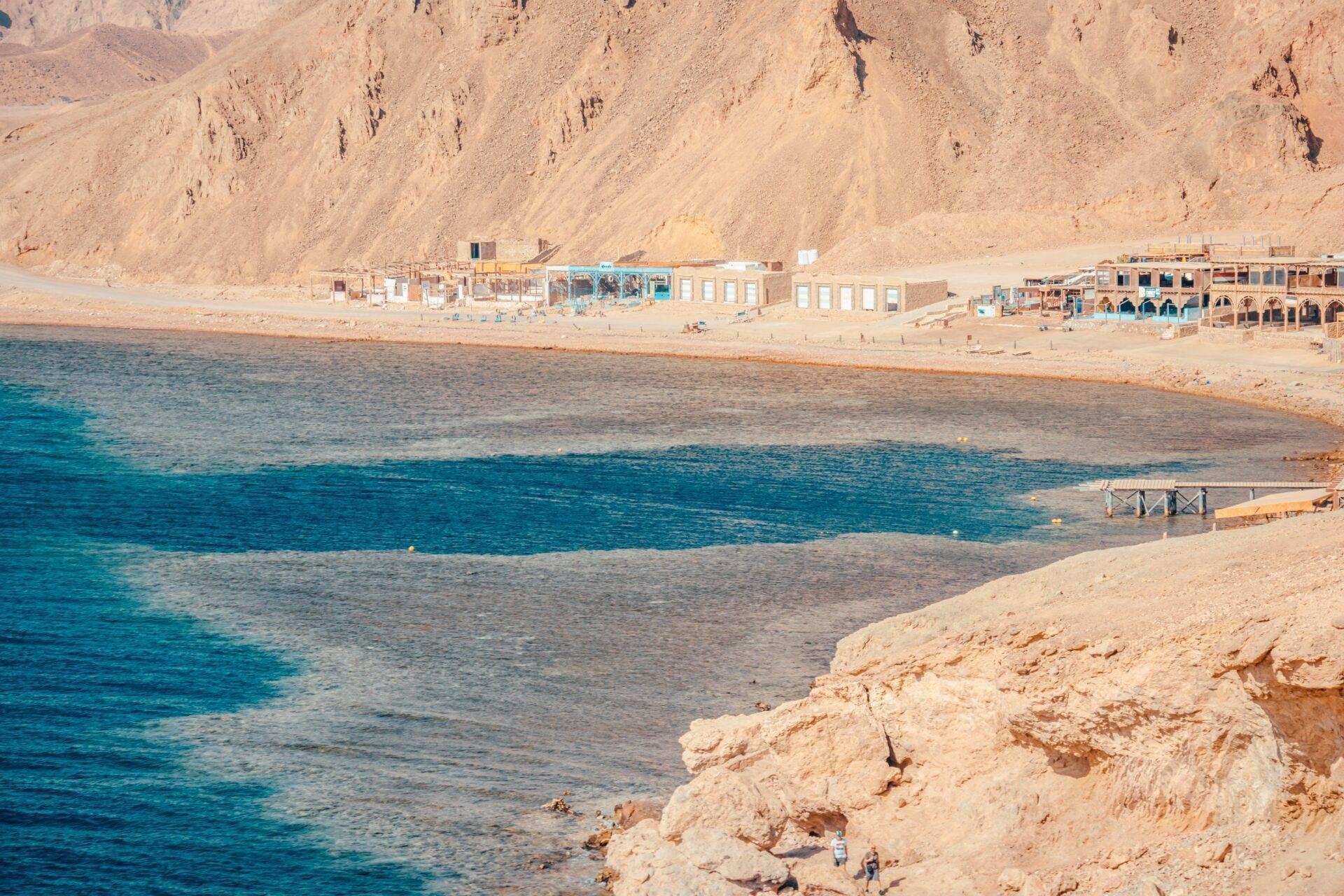
15. Dahab: Bedouin beach and world-class diving
Dahab is a former Bedouin fishing village that has become a favourite haunt of divers and windsurfers. Its laid-back atmosphere is a world away from the large resort complexes. A few kilometres to the north, the Blue Hole is one of the most photographed dive sites on the Red Sea: a shaft that drops to more than 100 metres.
16. Unwinding at a beachside resort
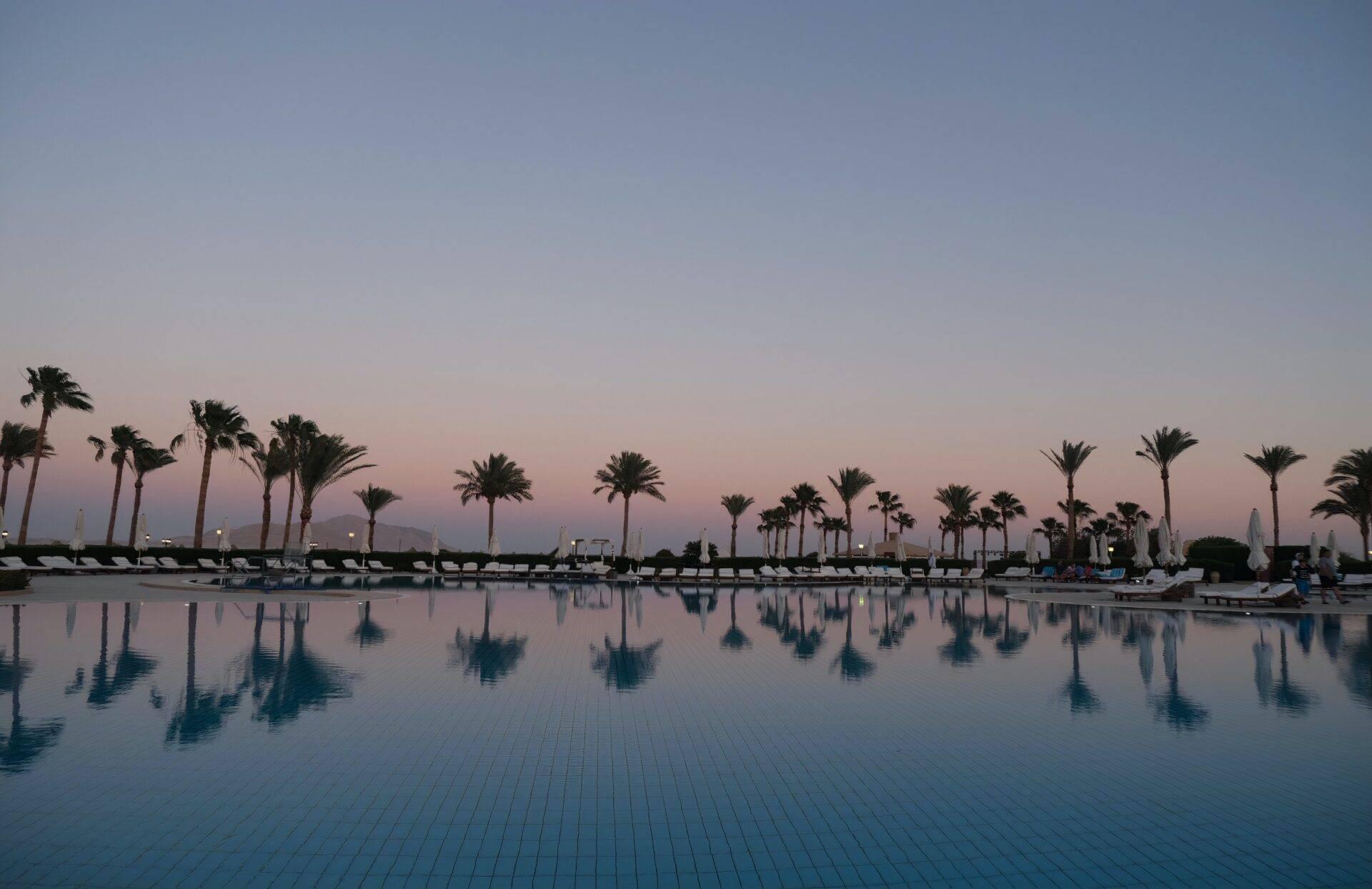
Hurghada, El Gouna and Marsa Alam all offer resort hotels with direct access to the reef. For travellers wanting to recharge after several intensive days of sightseeing, these destinations provide pool-side relaxation and easy boat access to dive sites. El Gouna, built around a network of canals, is particularly popular for its distinctive architecture and atmosphere.
Beyond the classic circuit
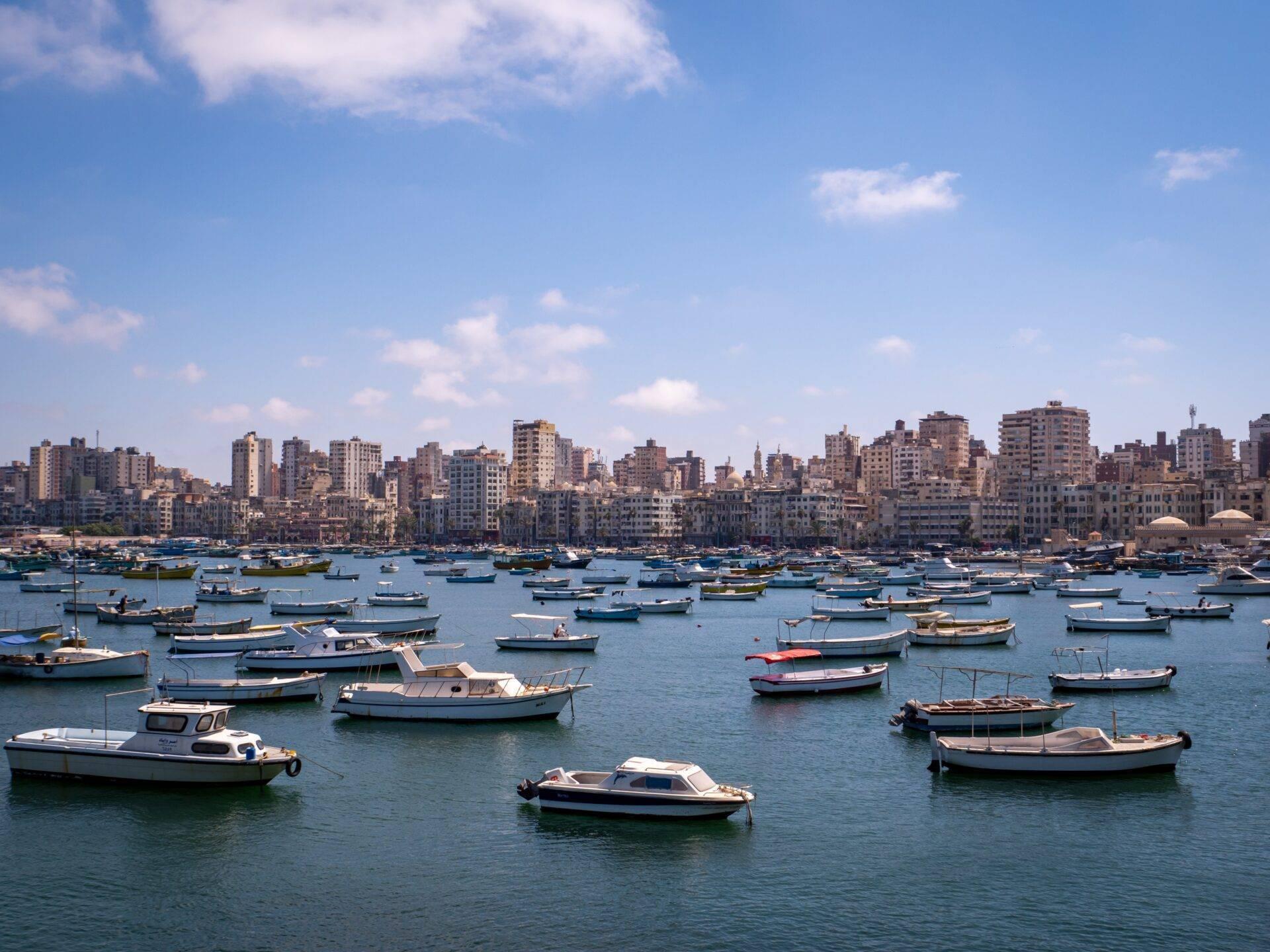
17. Alexandria: two millennia of Mediterranean memory
Founded by Alexander the Great in 331 BCE, Alexandria was for centuries the intellectual capital of the ancient world. Today a coastal city 225 kilometres from Cairo, it still holds the Catacombs of Kom el-Shoqafa (the largest in Egypt), Pompey’s Pillar, the medieval Qaitbay Citadel and the Bibliotheca Alexandrina, inaugurated in 2002 on the presumed site of the ancient Library of Alexandria.
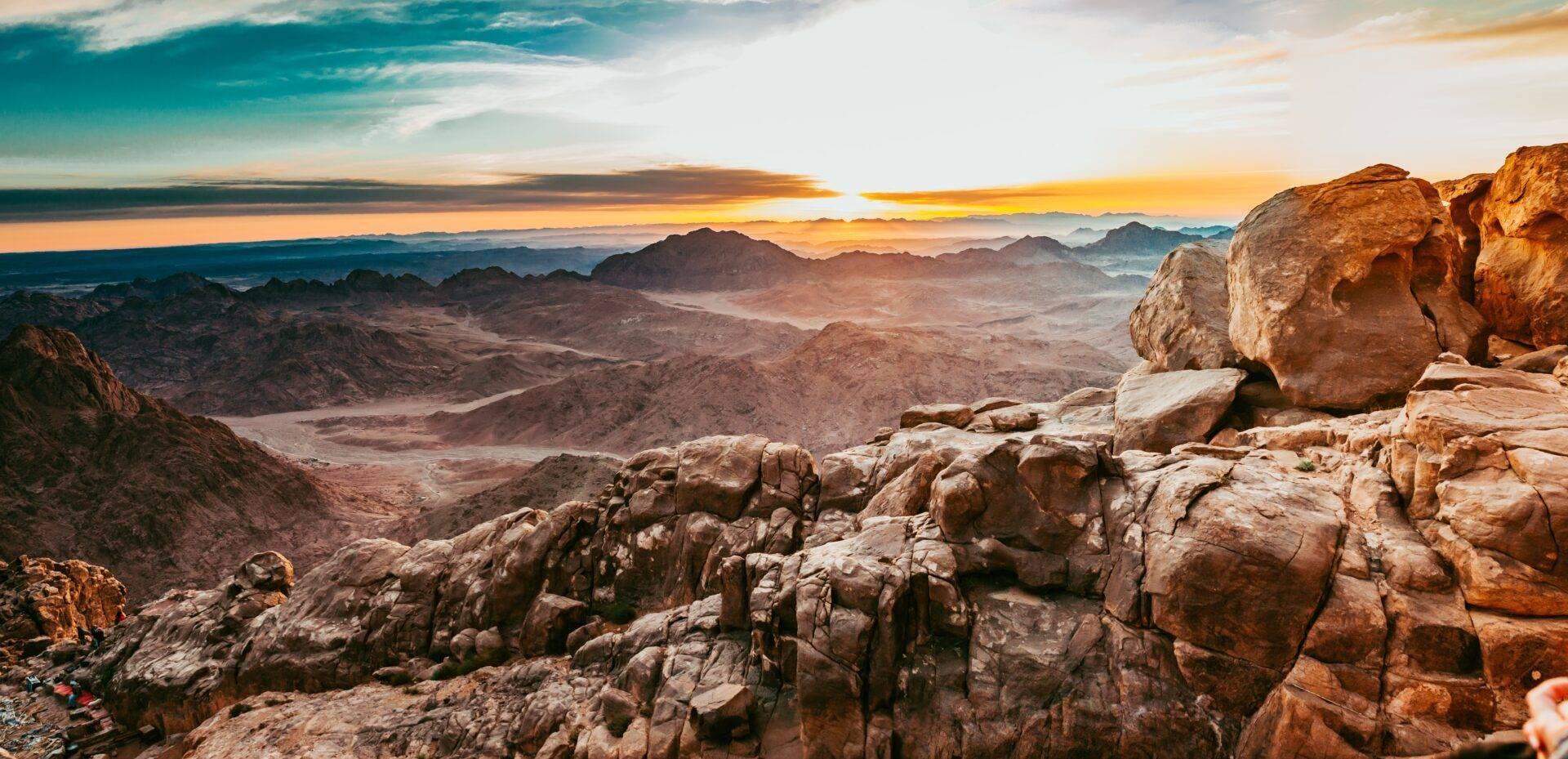
18. Mount Sinai and St Catherine’s Monastery
The Sinai Peninsula is a land of red granite and silence. Mount Sinai (2,285 m) is typically climbed overnight to reach the summit at sunrise. St Catherine’s Monastery, one of the oldest continuously operating Christian monasteries in the world, sits at the foot of the mountain and is a UNESCO World Heritage site.
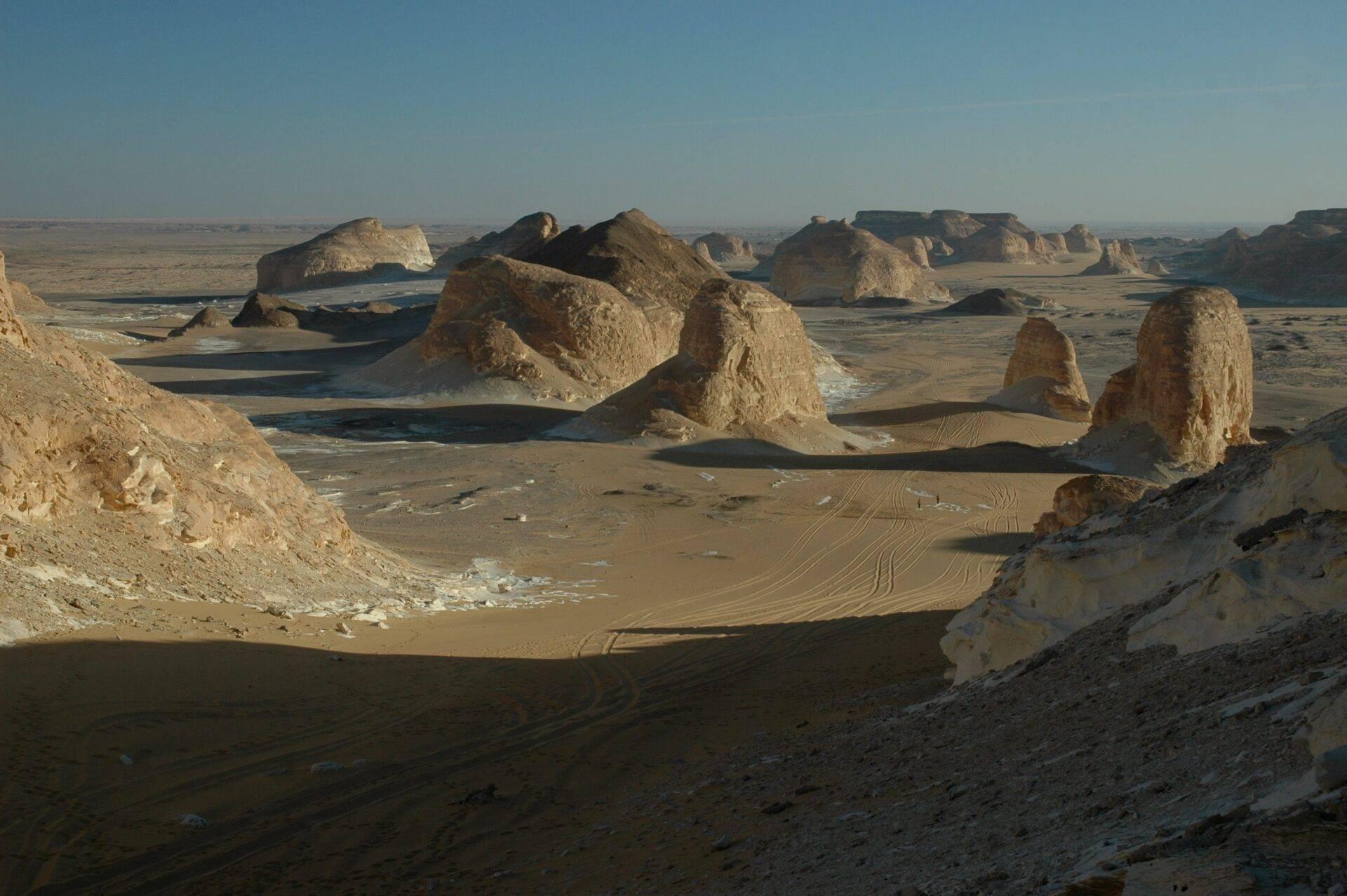
19. The White Desert: chalk sculptures and sleeping under the stars
About 370 kilometres south-west of Cairo, the White Desert takes its name from the wind-sculpted limestone formations that define it: chalk mushrooms, ghostly inselbergs, a pristine white floor. A two-day excursion from Bahariya Oasis allows you to camp overnight in the heart of a landscape unlike anything else in Egypt.
20. Siwa Oasis: the forgotten jewel of the Western Desert
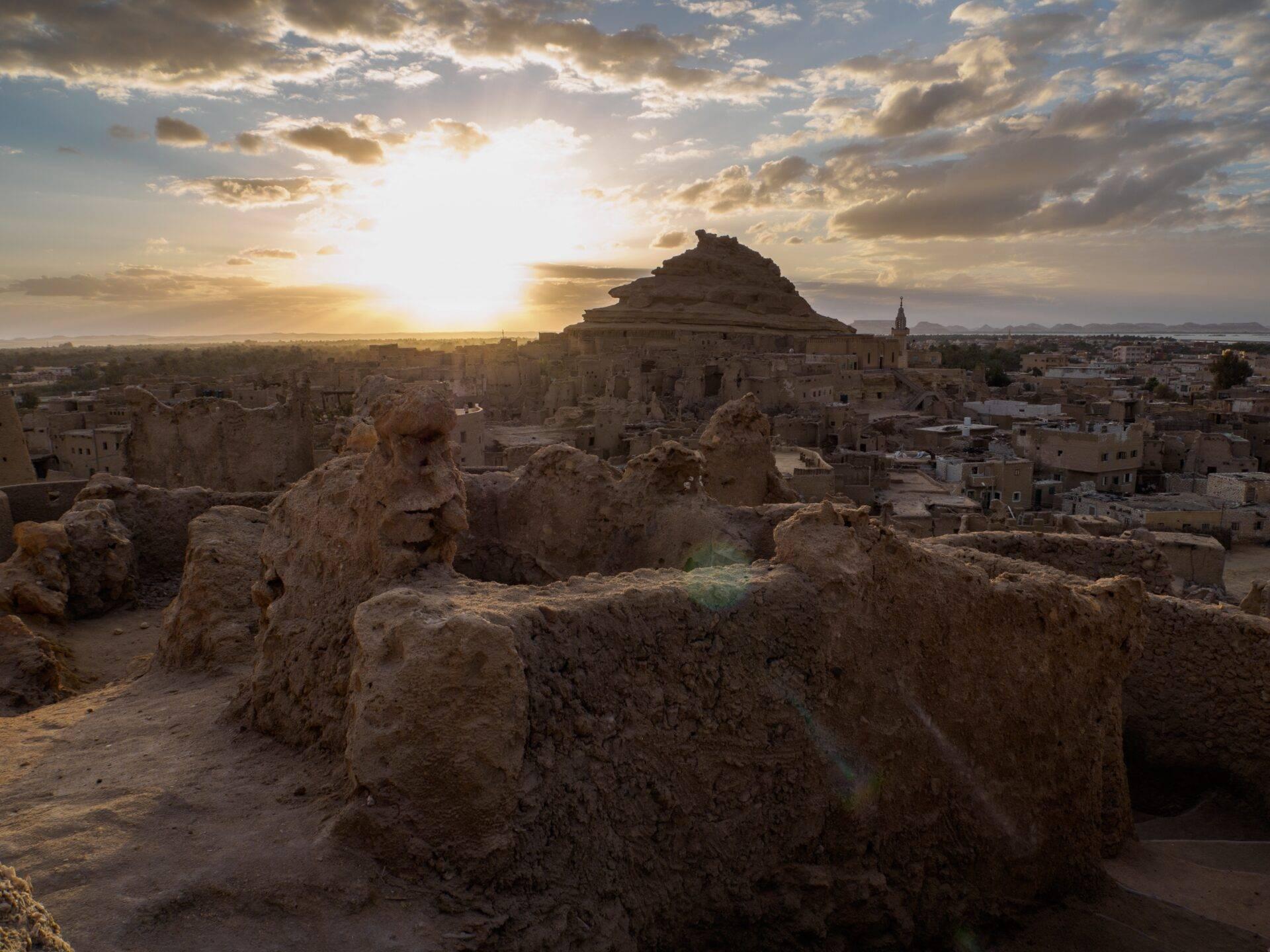
Some 560 kilometres west of Cairo, on the edge of the Libyan border, Siwa is one of Egypt’s most remote oases. Ringed by palm groves, natural springs and sand dunes, it is home to the ruins of the Shali fortress and the Temple of the Oracle of Amun, the very sanctuary Alexander the Great came to consult in 331 BCE. A destination for travellers who want to step well beyond the standard circuit.
FAQ
What is the best time of year to visit Egypt?
November to March brings the most comfortable temperatures for outdoor sightseeing, particularly in the south of the country. Summer can be extremely hot in cities and the desert. The Red Sea is suitable for diving year-round.
How many days should I plan for a trip to Egypt?
Ten days is enough to cover Cairo, Luxor and Aswan with a day trip to Abu Simbel. Two weeks opens up the possibility of adding time on the Red Sea, or visiting Alexandria and the White Desert. Three weeks gives you enough time to reach Siwa Oasis.
Is Egypt just about the pyramids?
Not at all. Egypt offers a remarkable variety of experiences: open-air temples, Nile cruises, Red Sea diving, Sinai hiking, remote oases and Mediterranean cities. The pyramids are the most famous symbol, but they represent only a fraction of what the country has to offer.
Can I combine culture and beach in Egypt?
Yes. The Cairo-Luxor-Aswan circuit (five to seven days) pairs naturally with a Red Sea stay (three to five days). Sharm el-Sheikh, Hurghada and Dahab are all reachable by domestic flight from Cairo or Luxor in under an hour.
Is Abu Simbel worth the journey from Aswan?
Yes, despite the roughly 280-kilometre distance. The two temples of Ramesses II rank among the most impressive monuments in Egypt. Most travellers visit on a day trip from Aswan or take a charter flight directly to Abu Simbel.