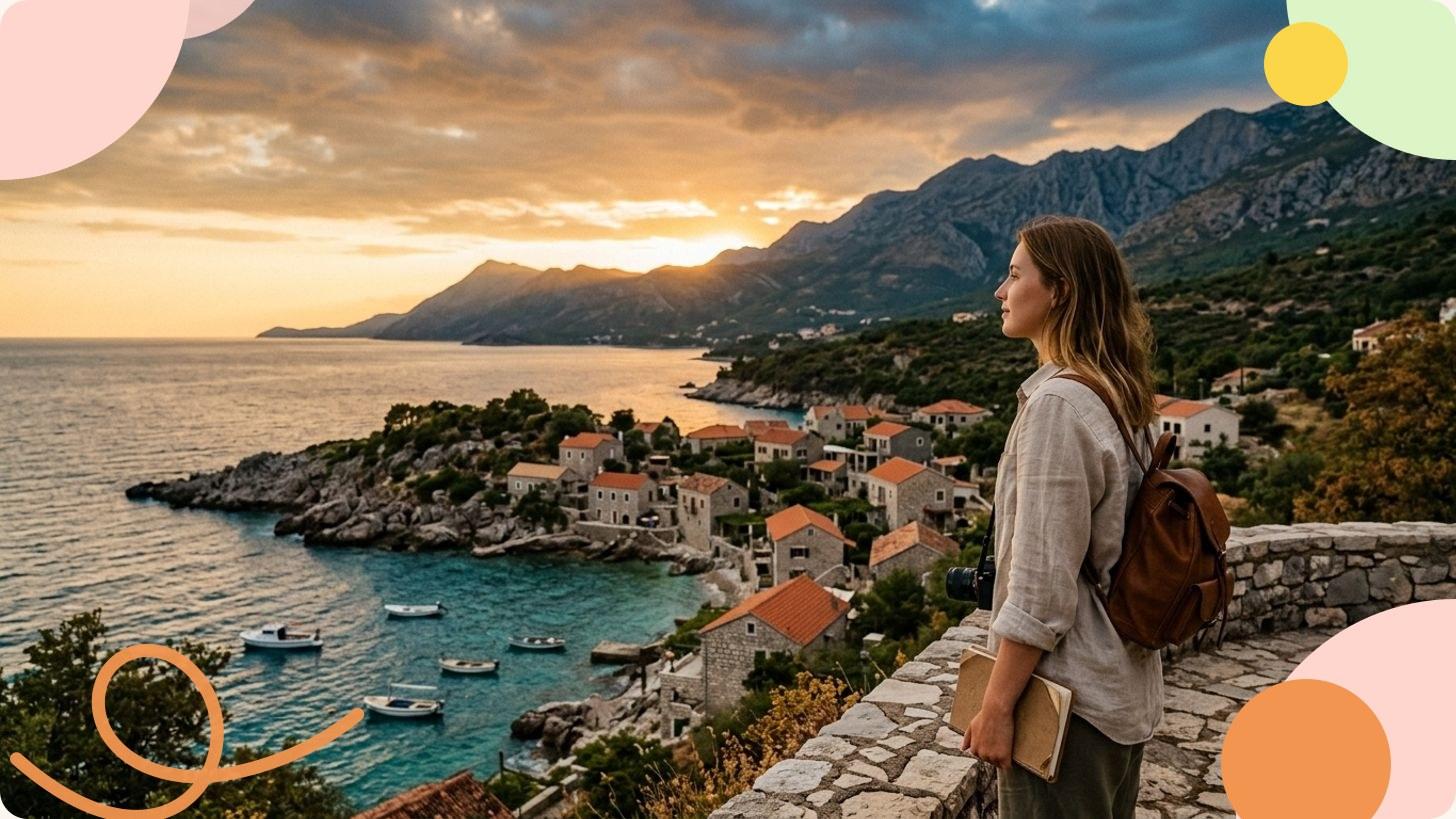
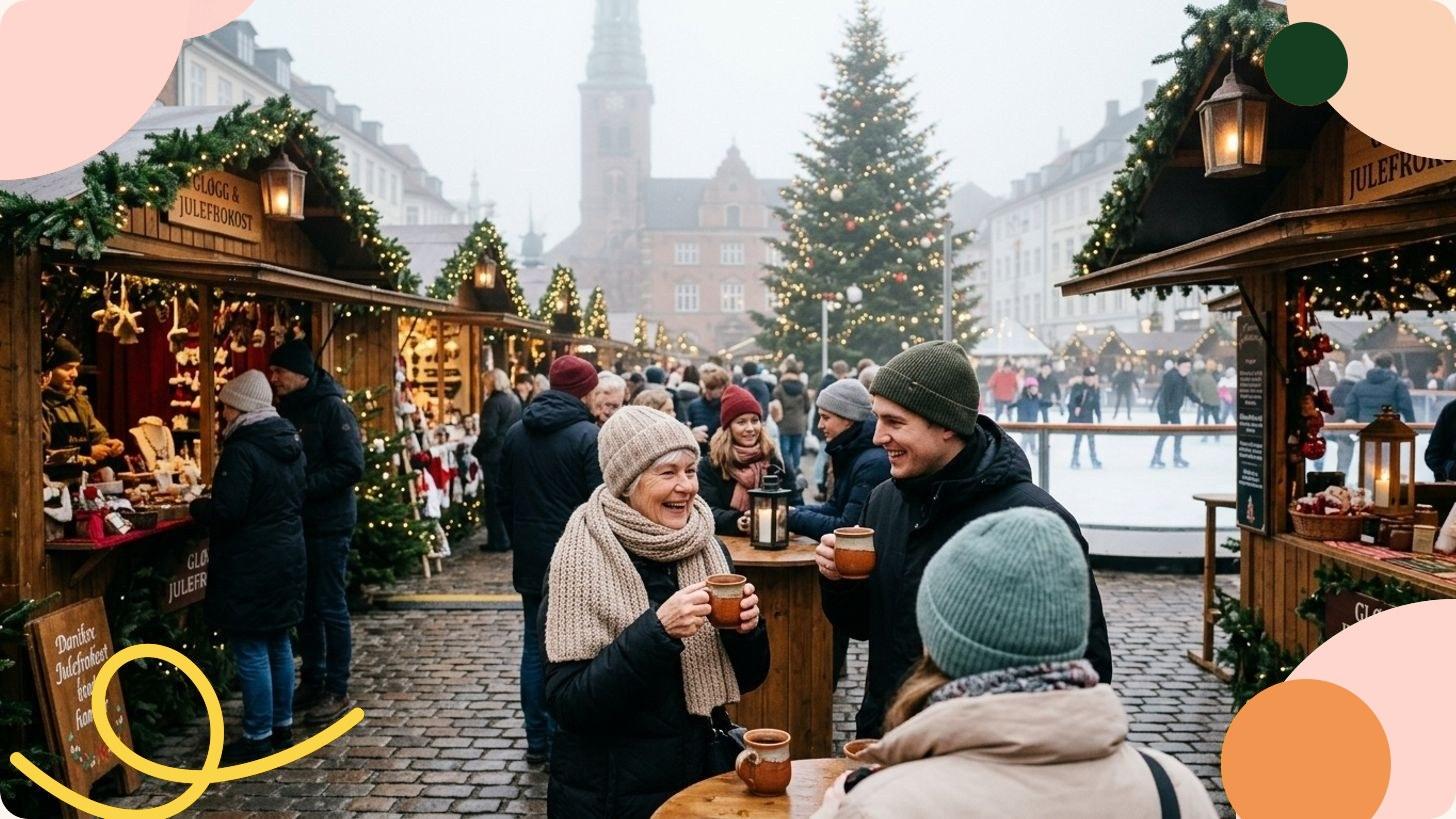

Copenhagen in December has everything that makes a Nordic Christmas special: markets fragrant with cinnamon and roasted almonds, illuminated canals, outdoor ice rinks and the beloved tradition of the julefrokost. The Danish capital isn’t content with pretty decorations – it invites you into hygge, the Danish art of living that turns winter into the most sought-after season of all.
Hygge: the soul of a Danish Christmas
The word hygge (pronounced roughly “hoo-ga”) has no direct English equivalent. It describes the warm, convivial atmosphere conjured by a flickering candle, a glass of gløgg cupped in both hands, or a lively conversation around a table. At Christmas, it shapes the entire social rhythm of Danish life.
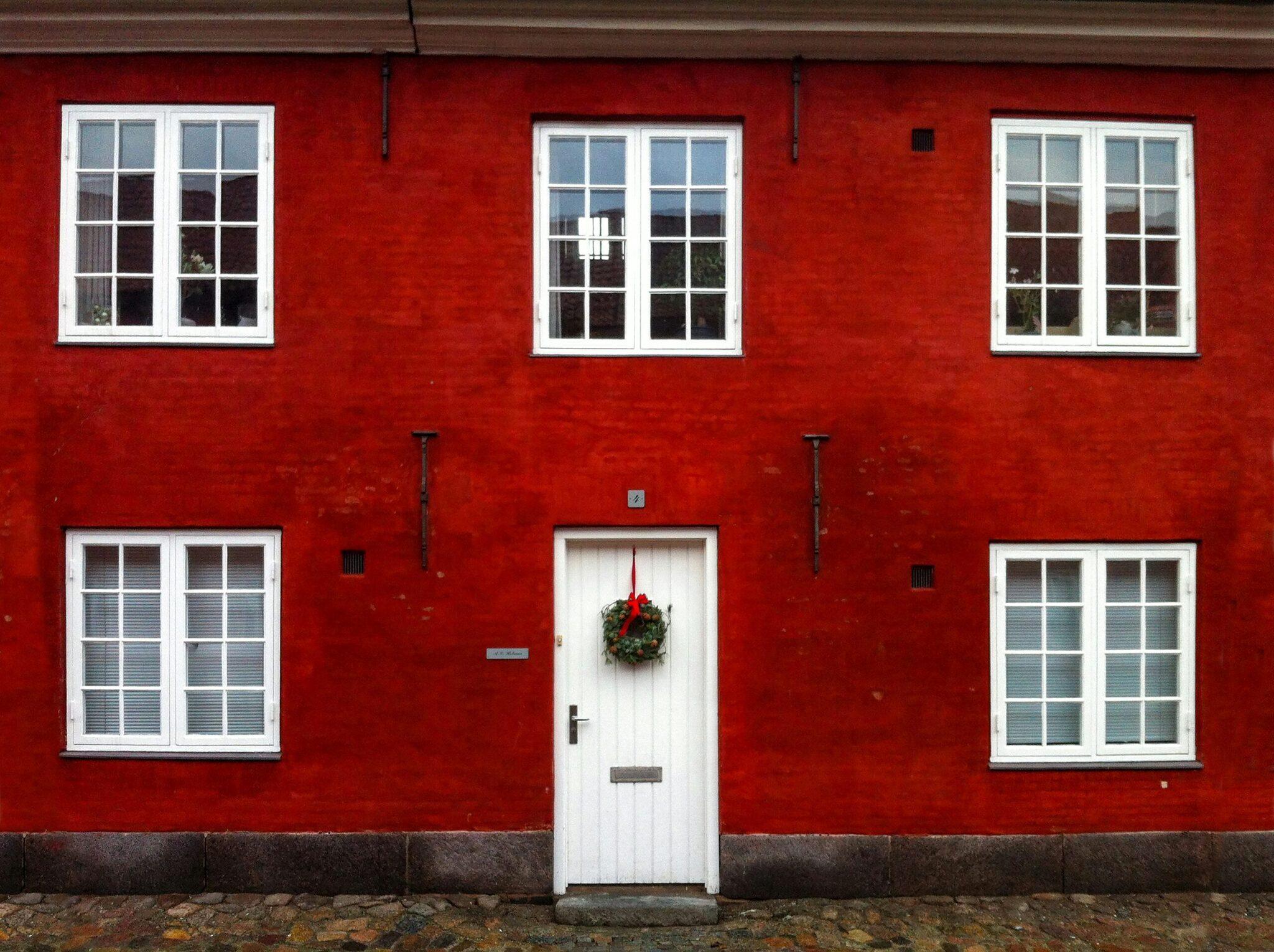
From November onwards, Copenhageners hang paper star lanterns in their windows. Four-candle Advent wreaths take pride of place on family tables. Cafés light a candle on every surface, and bakeries churn out batch after batch of æbleskiver all through December.
Copenhagen’s Christmas markets
Copenhagen doesn’t have one grand central market – several sites run in parallel, each with its own distinct character.
Tivoli, 14 November to 4 January
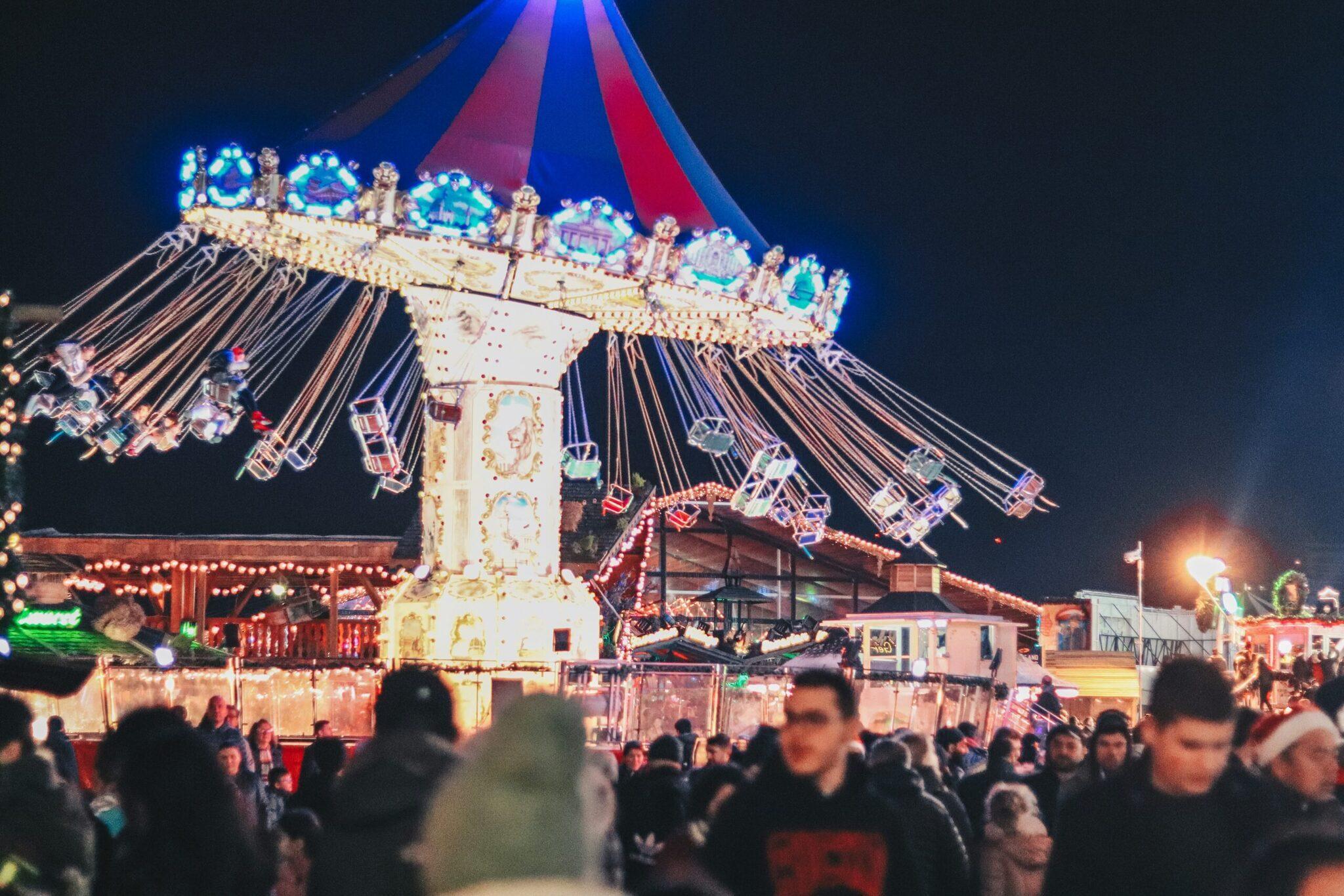
Tivoli Gardens is the unmissable starting point for Christmas in Copenhagen. The park opens on 14 November and closes on 4 January (except 24 December). Sixty wooden chalets offer Danish crafts, caramelised almonds and æbleskiver. After dark, thousands of fairy lights and specially themed rides create a festive world that Tivoli has been perfecting for over a century. CNN ranks it among the best Christmas markets in the world.
Højbro Plads, 4 November to 21 December
One of the city’s largest open-air markets, strung with 180,000 light bulbs. Stalls blend Danish specialities with European produce; the atmosphere is more local and relaxed than the buzz of Tivoli. Opening hours: 11am-7pm on weekdays, until 9pm Thursday to Saturday.
Nyhavn and Kongens Nytorv, from mid-November
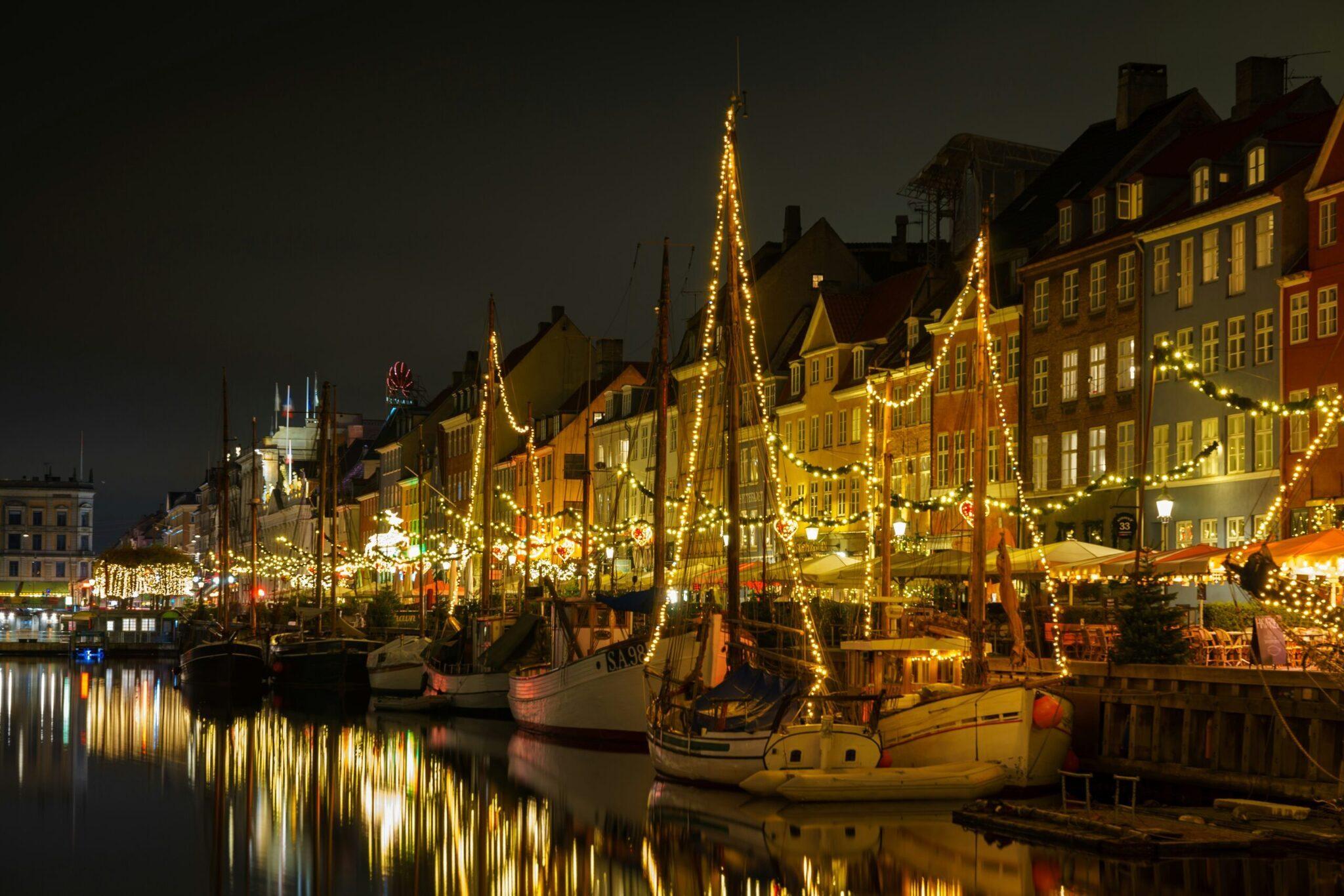
The Nyhavn market runs along the canal between the 17th-century coloured townhouses, from mid-November to late December. A few hundred metres away, Kongens Nytorv combines a market (open until 21 December) with a 1,300 m² ice rink, accessible from 14 November to 4 January.
The Hans Christian Andersen market at Gammeltorv (14 November to 20 December) and the Christiania market (6-20 December) round out the map for those in search of a more alternative atmosphere.
For a broader European picture, the Christmas markets in Europe guide offers a useful comparative overview.
Nyhavn: where all the magic converges
Nyhavn is Copenhagen’s most recognisable face. In December, its ochre, brick-red and saffron-yellow 17th-century facades reflect in the dark water beneath strings of golden lights, while wooden boats moored along the quayside complete the picture. A stroll along the waterfront at dusk is enough to understand why the Danish capital features among the finest Christmas light destinations in Europe.
Ice rinks: two ways to skate outdoors
Tivoli
The 350 m² rink inside the park is particularly well-suited to evening sessions, wrapped in the warm glow of Tivoli’s fairy lights. It is included in the park admission price.
Kongens Nytorv
The royal square hosts a free-to-skate 1,300 m² rink, open 10am to 9pm from 14 November to 4 January. More spacious than Tivoli’s, it is ideal for families and laid-back outings right in the heart of the city, just steps from Nyhavn.
Nordic shopping: Danish design to take home
Copenhagen is a benchmark for design. Two addresses worth seeking out during the festive season:
Illums Bolighus (Amagertorv, on the Strøget) brings together homeware and tableware from Georg Jensen, Royal Copenhagen and other Danish houses, in a pared-back, elegant setting that feels especially atmospheric in December.
Illum (Østergade, just steps away), a multi-storey department store, covers fashion, fine food and toys in a festive setting.
In the neighbourhoods of Vesterbro and Nørrebro, local artisan shops offer handmade ceramics, textiles and stationery, well away from the Strøget crowds.

Cafés and restaurants: the julefrokost experience
The Danish festive meal
The julefrokost (literally “Christmas lunch”) is Denmark’s quintessential festive meal, served in restaurants throughout December. The classic spread runs from pickled herring on rye bread (rugbrød) and a variety of smørrebrød to crispy-crackling roast pork, duck with red cabbage and caramelised potatoes. For dessert, risalamande: a creamy rice pudding flecked with chopped almonds, topped with a warm cherry sauce – and a whole almond hidden inside to delight one lucky guest.
Gløgg and æbleskiver
Gløgg is the Danish answer to mulled wine, spiced with cinnamon, cloves, almonds and raisins. Æbleskiver – small, spherical doughnuts dusted with icing sugar – are served alongside it in almost every café and at every market stall. The independent roasters and coffee shops of Vesterbro serve both in a neighbourhood atmosphere, well away from the tourist bustle.

Not to be missed: the St Lucia kayak parade
On 13 December, hundreds of illuminated kayaks glide silently along Copenhagen’s canals for the Feast of St Lucia. Participants wear white costumes and glowing crowns, reviving a Scandinavian tradition that celebrates light in the depths of winter. The parade sets off at dusk – stake out a spot along a canal from 5pm to get a good view.
For a comparison with another European capital that does Christmas in its own distinctive way, the Christmas in London guide draws a useful parallel between two very different approaches to the festive season.
FAQ
When do Copenhagen’s Christmas markets run?
The first markets open in early November: Højbro Plads on 4 November, Nyhavn and Kongens Nytorv from mid-November. Tivoli and the Hans Christian Andersen market open on 14 November. Most markets close around 21 December; Tivoli stays open until 4 January (closed on 24 December).
What is hygge and how do you experience it in Copenhagen in December?
Hygge is the Danish art of creating a warm, convivial atmosphere – something the Danes value especially in winter. In Copenhagen, you feel it in a café over a gløgg, at a julefrokost dinner, or wandering along Nyhavn at twilight.
Is it better to visit Copenhagen before or after Christmas?
Before 21 December, you have access to almost all the markets. The period from 21 to 24 December is quieter and more intimate. After the 25th, only Tivoli remains in full swing until 4 January – a great window for exploring the city without the market crowds.
Which ice rink should you choose in Copenhagen?
Tivoli has a 350 m² rink within the park’s festive setting (park admission required). Kongens Nytorv offers a free 1,300 m² rink – larger, right in the old city centre, and open 10am to 9pm.
What festive food should you try in Copenhagen at Christmas?
The essentials: gløgg (spiced mulled wine with almonds and raisins), æbleskiver (spherical doughnuts with icing sugar), risalamande (almond rice pudding with warm cherry sauce) and julefrokost with pickled herring, smørrebrød and roast pork.