
Seeing elephants in Thailand ranks among the most unforgettable experiences Southeast Asia has to offer. The golden rule for doing it with a clear conscience: avoid elephant riding and shows, then choose an ethical sanctuary or national park where the animals roam freely. That choice is better for the elephant, and far more authentic for the traveller.
The reality behind elephant rides
What looks like a charming attraction hides a cruel reality. Elephants are deeply social animals: they live in family groups, experience complex emotions and are profoundly affected by early separation. To produce a domesticated elephant, wild calves are captured, a process that typically kills many of the adults who rush to defend them. Calves born in captivity are often taken from their mothers at a very young age, and many do not survive the separation.
Training then involves the bullhook, a sharp metal spike used to control the animal through pain and fear. This tool remains common at centres that offer rides. There is also a physiological problem: an elephant’s back is not built to carry a human being, leading to injuries and exhaustion, sometimes fatal under the Thai heat.
The conclusion is clear: even if a centre assures you that “its elephants are not mistreated,” riding remains incompatible with animal welfare. Take it off your itinerary, regardless of any promises made.
How to spot a genuinely ethical sanctuary
Ethical sanctuaries take in elephants rescued from abuse or forced labour, never captured from the wild. Several signs help you tell the real thing from a well-marketed imitation:
- No riders, no howdahs: a genuine sanctuary offers neither rides nor any kind of frame or saddle on its elephants.
- Freedom to leave: if an elephant has had enough, the mahout lets it walk away, even mid-visit. That detail speaks volumes.
- Regulated visitor numbers: fewer people means less stress for the animals.
- No performances or shows: elephants do not paint pictures or perform tricks on command.
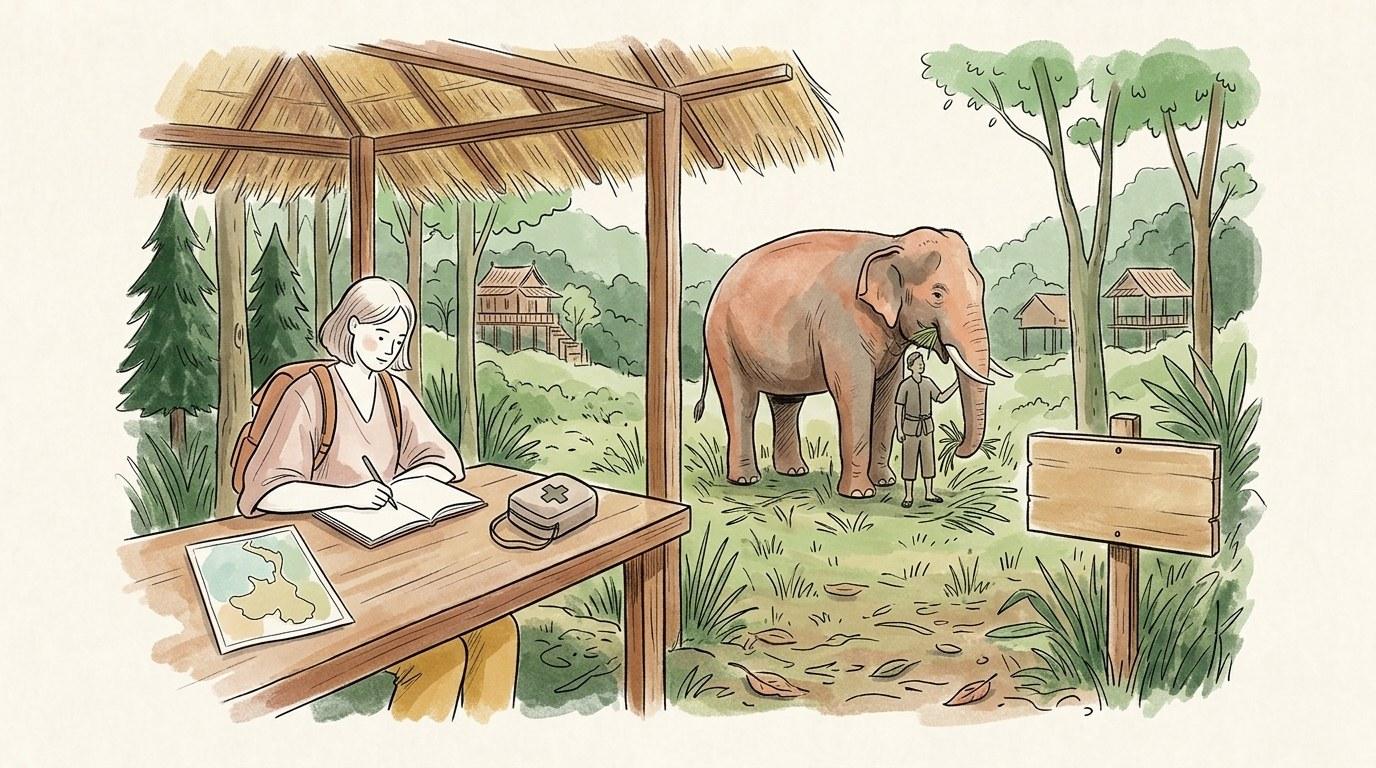
At these places, you can hand-feed elephants, watch them bathe or wallow in the mud, natural behaviours they genuinely enjoy. Stay calm and quiet; these are wild animals that deserve respect. Ethical sanctuaries tend to be set well away from tourist hotspots, within forested areas that give the animals room to roam. Be wary of roadside operations near major tourist routes that display “no riding” signs but continue other invasive practices.
Get travel insurance for ThailandSeeing wild elephants: the national parks worth visiting
If observing elephants in the wild is your priority, several Thai national parks make this possible with no constraints on the animals whatsoever. An encounter is never guaranteed, and that is precisely what makes it so valuable.
Khao Sok: ancient jungle in the south
Khao Sok National Park, in Surat Thani province, is home to one of the oldest tropical rainforests on earth. Canoe trips on Cheow Lan Lake, jungle treks and night safaris all offer the chance to spot elephants and other wildlife in their natural surroundings. Stilted floating bungalows on the lake put you right at the heart of the ecosystem.
Khao Yai: gibbons, elephants and a Unesco stamp
Just two hours from Bangkok, Khao Yai National Park is a UNESCO World Heritage Site. Guided excursions run in small groups and bring you face to face with a remarkable range of wildlife: wild elephants, gibbons, reptiles and a wealth of bird species. A half-day gives you a taste; a full day takes you deeper into the forest.
Khao Sam Roi Yot: where sea meets mountain
Khao Sam Roi Yot National Park, in Prachuap Khiri Khan province, is Thailand’s first marine national park. Its name means “mountain of 300 peaks.” Visitors may encounter elephants, migratory birds, geckos and, offshore, the occasional Irrawaddy dolphin. Cave enthusiasts can explore Phraya Nakhon Cave; hikers can cross salt marshes and mangroves and discover traditional oyster and shrimp farming along the way.
In all of these parks, the animals live entirely free: nothing is guaranteed, and everything is real.
Planning your trip: one last responsible step
Choosing an ethical sanctuary, sticking to marked trails, not feeding wild animals without a guide’s go-ahead, respecting each park’s own rules: these are concrete actions that genuinely make a difference. Travelling responsibly also means protecting yourself against the unexpected with the right travel insurance.
Yupwego donates 1% of its revenue to environmental organisations through the 1% for the Planet programme. To go further, find out why responsible travel insurance also changes the way you travel.
FAQ
Is elephant riding legal in Thailand?
Yes, it remains legal at the time of writing. Legal does not mean ethical: local and international organisations document the suffering caused by these activities. The most direct way to act is to opt out, and not to fund it.
Can you touch elephants at an ethical sanctuary?
At some ethical sanctuaries, visitors can hand-feed elephants or accompany them during bath time. These interactions happen at the elephant’s own initiative, in a calm setting, with no coercion. Forced contact, such as riding or posed photographs, simply does not exist in a genuine sanctuary.
How do you tell a real sanctuary from a fake one?
Warning signs: elephant rides on offer, shows or “talent” demonstrations, unlimited visitor access, visible use of bullhooks, elephants chained between visits. By contrast, a legitimate sanctuary regulates access, lets elephants move freely and imposes no performances.
When is the best time to see wild elephants in Thailand?
The dry season (roughly November to April) makes sightings easier, as the vegetation is less dense. In parks like Khao Yai, elephants sometimes move closer to open clearings in the late afternoon to drink. Local guides know the regular movement corridors well.
Is travel insurance worth it for a trip to Thailand?
Absolutely. Medical costs can be steep at the facilities commonly used by foreign visitors, and outdoor activities such as hiking, canoeing and safari carry real risks. Travel insurance covering medical expenses and repatriation is strongly recommended, whatever the length of your stay.