
Reducing your waste while travelling is entirely achievable without sacrificing comfort – it all comes down to preparation. A handful of reusable accessories, a few smart habits around packaging and some conscious choices on the ground are enough to dramatically cut the rubbish you generate, wherever in the world you happen to be.
Why your travel waste really does matter
Tourism produces a staggering amount of plastic waste: single-use water bottles, plastic cutlery, food packaging, miniature single-use toiletries. In the Pacific Ocean, accumulated plastics have formed a floating mass estimated at 1.6 million km², roughly the size of Alaska. Travellers’ habits are one of the forces feeding it.
This is not about guilt-tripping you, but about understanding that every small action counts, even on the other side of the world. The good habits you practise at home are worth taking with you on the road.
Plan my trip with peace of mindThe 5 R rule, adapted for travel
Popularised by Béa Johnson, a leading voice in zero-waste living, the 5 R method provides a clear and practical framework that works just as well on the road as it does at home: Refuse, Reduce, Reuse, Recycle and Rot (compost). The order matters: it runs from prevention through to end-of-chain management.
Refuse what you do not need
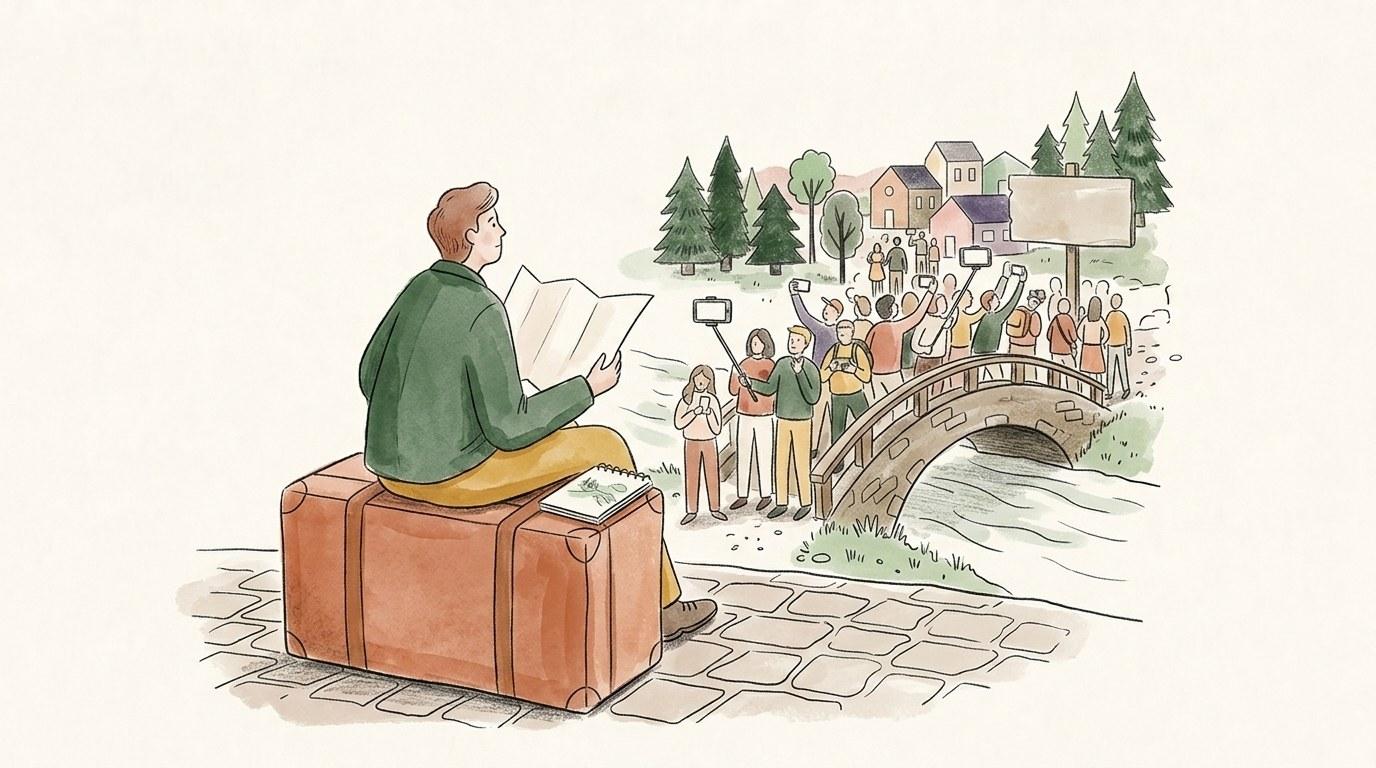
A plastic carrier bag at the checkout, a plastic straw in your cocktail, a tourist leaflet you will never read: get into the habit of saying no to anything you do not actually need. A brief word of explanation is usually enough, and shopkeepers and vendors around the world quickly understand that you are trying to protect their environment as much as your own. A tote bag folded in your pocket replaces every plastic bag on the trip.
Reduce at the source
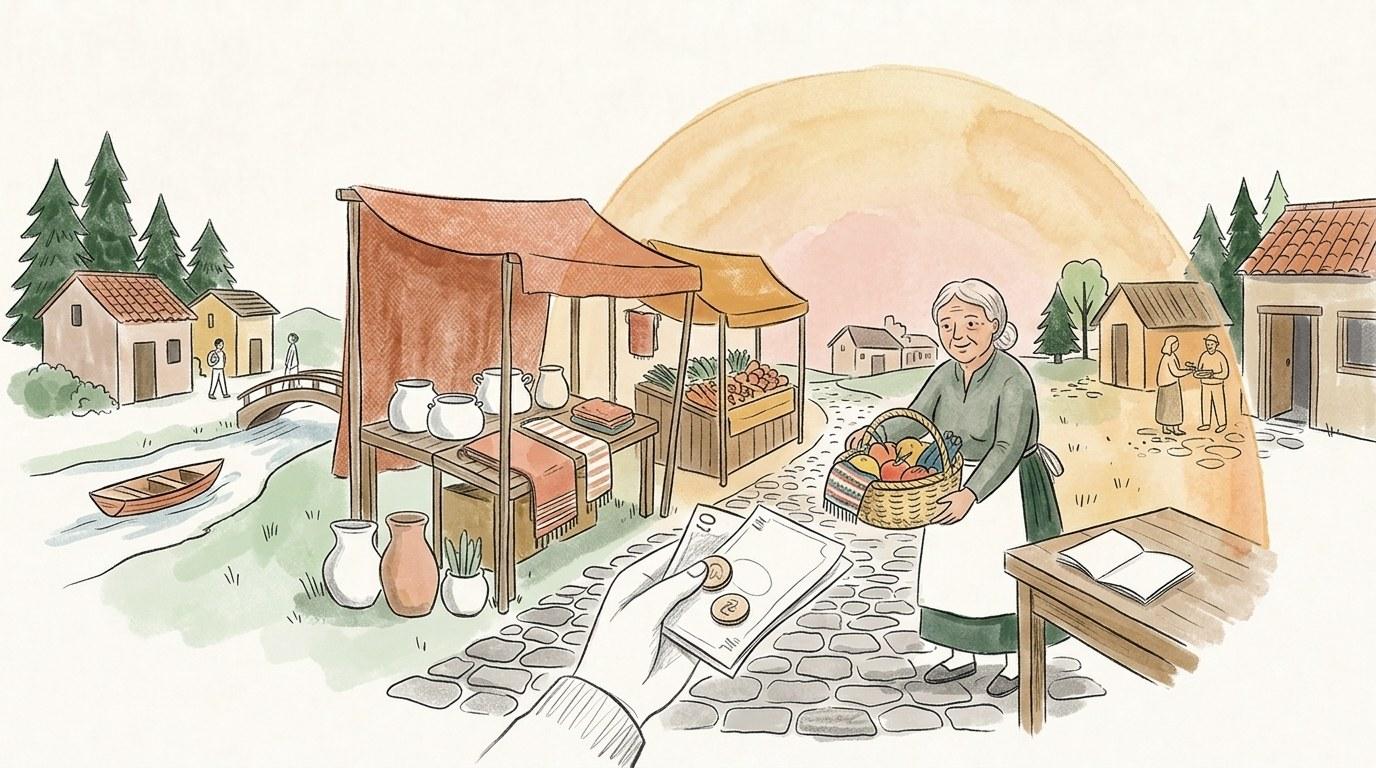
Before you zip up your bag, ask yourself honestly: what is actually useful? The less you take, the less you consume. When it comes to toiletries, solid formats (shampoo bars, cleansing balms, toothpaste tablets, solid deodorant) eliminate small plastic bottles entirely and sail through cabin baggage security without any liquid restrictions. For food, targeting local markets and bulk shops reduces packaging from the moment of purchase while supporting local producers.
Reuse for as long as possible
This is the most powerful lever in your day-to-day travel. According to the Surfrider Foundation’s Reset your Habits campaign, a single reusable bottle replaces up to 81 single-use 1.5-litre plastic bottles per person per year. Choose a filtering model if you are travelling somewhere where tap water is not safe to drink: you sidestep contamination and waste at the same time.
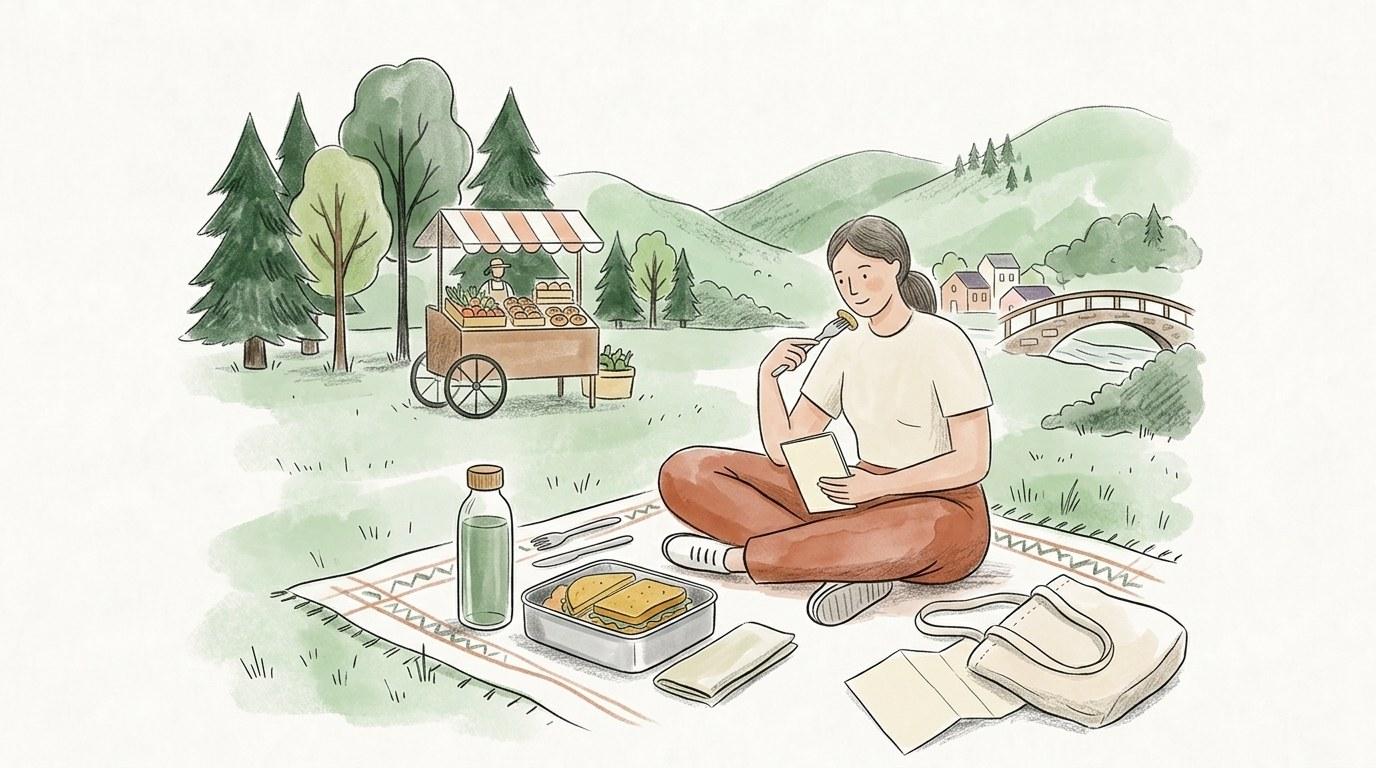
Bamboo or stainless-steel cutlery, a lunchbox for meals on the go, a collapsible cup: these few items last for years and virtually eliminate your day-to-day disposable waste. At your hotel, simply ask not to have your towels changed every day – a request that is now accepted as standard almost everywhere.
Recycle where possible (and adapt to local reality)
Recycling comes at the end of the chain, after the first three Rs. How feasible it is varies enormously depending on where you are: some countries have highly developed sorting infrastructure (the Nordic countries, Germany, Japan), while others are only just beginning to build it. Look into local practices before you leave so you can sort correctly, and do not put something recyclable into the general waste bin just because it is easier.
Compost organic matter
If your accommodation allows it, or when camping, bury organic waste well away from watercourses and marked trails. Some eco-conscious properties offer a communal compost bin. The ShareWaste app helps you find community composting spots near your accommodation in many countries.
The traveller’s zero-waste kit: the essentials
A plastic-free wash bag
Swap small plastic bottles for their solid equivalents: a shampoo bar, a cleansing bar, toothpaste tablets, a solid deodorant. Add a bamboo or replaceable-head toothbrush, reusable cotton pads and a fabric handkerchief or two. The result is a wash bag that is often more compact and lighter than a conventional one.
For drinking and eating
- Filtering reusable water bottle: essential, especially in South-East Asia, Africa or Latin America.
- Collapsible cup: handy on planes, in hostels and at street food stalls.
- Travel cutlery (bamboo or stainless steel) and a lunchbox for meals on the go.
- Reusable straw (stainless steel or glass), tucked into your wash bag.
Clothing and travel gear
Resist buying clothing or equipment you will only use once. Borrow, hire locally or opt for second-hand. On the digital side, an e-reader replaces several kilograms of guidebooks and novels, and a digital ticket is always better than a sheaf of paper.
Staying and eating with less waste
Eco-conscious accommodation often offers bulk toiletries rather than plastic bottles in the room, along with easy access to local markets. Staying with local hosts gives you a genuine immersion in daily life, and local habits are often far more low-waste than those of large chain hotels.
For food, local markets are your best bet: unpackaged produce, short supply chains and authentic culinary discovery. The Bulk Finder app helps you locate zero-waste grocery shops near your accommodation in many countries. When eating on the go, always refuse disposable cutlery and straws, even when they are handed to you automatically.
Adapting your approach to the destination
Low-waste travel is easier to pull off in Northern Europe than in South-East Asia or sub-Saharan Africa, where waste management infrastructure can be very limited. That is not a reason to give up – it is a reason to adjust your priorities.
In countries without a functioning recycling system, focus your energy on the first two Rs: refuse and reduce, before a single piece of rubbish is even created. In fragile environments (remote trekking routes, coastal areas, nature reserves), carrying your non-organic waste out in a small dedicated bag inside your rucksack costs nothing and protects irreplaceable ecosystems.
Travelling responsibly also means preparing your adventure thoughtfully on every front. To understand how this drive for consistency is reshaping the whole industry, discover how travel insurance is evolving towards a more responsible model. And if you want to understand why the cover you choose also says something about your values, read why responsible travel insurance changes the way you travel.
FAQ
Can you really travel “zero waste”?
Not completely, and it is important to be honest about that. No trip is ever truly impact-free. “Zero waste” describes a direction, not a standard of perfection. The goal is to reduce as much as you can, not to reach some impossible ideal. Every bottle avoided, every plastic bag refused, genuinely counts.
What is the single most important thing to tackle when it comes to travel waste?
A reusable water bottle, without question. Single-use plastic water bottles are the most common source of plastic waste on any trip. A filtering bottle goes with you everywhere, including countries where tap water is not safe, and spares you dozens of bottles every week.
How do you handle waste in a country with no recycling system?
Focus on the first two Rs: refuse and reduce, before waste is even created. If you end up with recyclable items and there is no suitable infrastructure locally, bring them home with you where possible. For organic waste, bury it well away from water sources and marked paths.
Are solid toiletries as effective as their conventional equivalents?
Yes, for the vast majority of everyday uses: shampoo, conditioner, soap, deodorant, toothpaste. They are more concentrated, last longer and pass through cabin baggage security with no liquid restrictions whatsoever. The only effort required is finding the formulas that suit your hair or skin type, which may take a little trial and error before you leave.
Will I have to pack more to travel with less waste?
Quite the opposite. A well-chosen kit (water bottle, cutlery, tote bag, solid toiletries) is often lighter and more compact than a bag stuffed with single-use products. You take less, you buy less on the ground, and you come home lighter – and keen to do it all over again next time.