
Sicily divides into four complementary travel zones: Palermo and the north-west for Arab-Norman palaces, the east coast (Taormina, Etna, Syracuse) for Greek grandeur and volcanic drama, the south (Agrigento, Val di Noto) for archaeology and Baroque architecture, and the Aeolian Islands for active volcanoes and unspoilt coves. Each zone deserves a minimum of two to three days to really do it justice.
Cities Worth Several Days
Palermo: twelve centuries of civilisations layered in stone
Palermo is unlike any other Mediterranean capital. Arabs, Normans, Byzantines, Spaniards: each conquering power left its mark in stone. The Palatine Chapel, at the heart of the Palace of the Normans, brings together Byzantine gold mosaics and Arab-inspired carved wooden ceilings in a single room. The cathedral, built over the foundations of a mosque, blends styles from the 12th to the 15th century. Palermo’s Arab-Norman monuments are listed as a UNESCO World Heritage Site. The Teatro Massimo, on Piazza Verdi, is one of the largest opera houses in Europe.
For a broader reflection on what this kind of cultural layering means as a travel experience, Travelling to understand, not just to see offers a useful framework.
Taormina: a Greek theatre with Etna as its backdrop
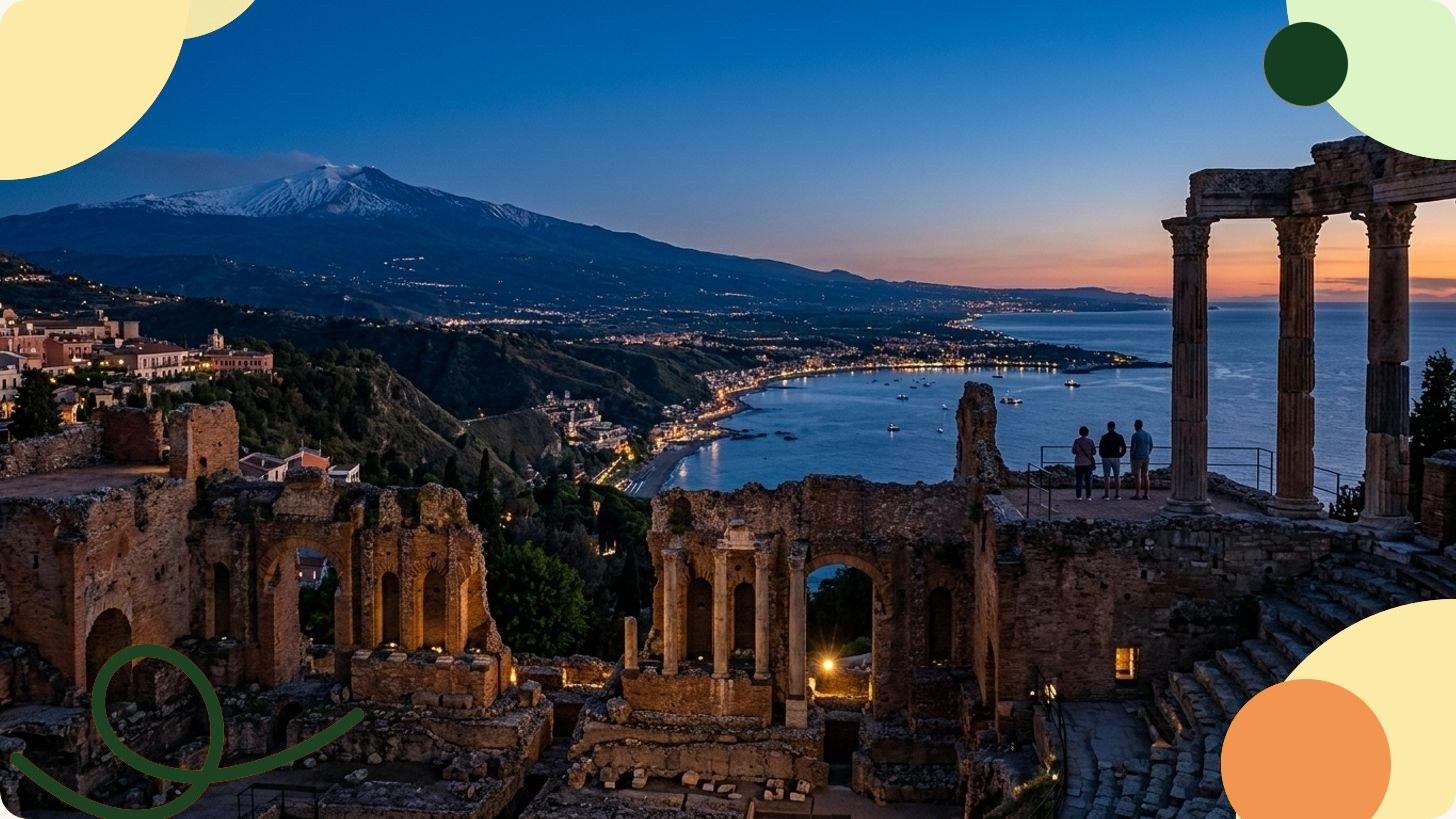
Perched on a clifftop above the sea, Taormina owes its fame to its Greco-Roman theatre dating from the 3rd century BC. From the upper tiers, snow-capped Etna and the Ionian coastline share the same frame. The town is crowded in July and August; May, June and September offer the same views in relative peace.
Syracuse: Sicily’s finest surviving Greek legacy
Founded in the 8th century BC, Syracuse was one of the most powerful cities in the ancient Mediterranean. The Greek theatre carved into the rock, the Roman amphitheatre and the Ear of Dionysius, a cave with remarkable acoustics, can all be visited within the same archaeological park. The island of Ortygia, linked to the city by two bridges, is home to the Baroque cathedral, lively markets and characterful lanes.
Archaeological Sites on a Grand Scale
The Valley of the Temples at Agrigento
The archaeological site at Agrigento covers around 1,300 hectares. The 5th-century BC temples, including the Temple of Concordia, rank among the best-preserved examples of ancient Greek architecture in the world. The site is a UNESCO World Heritage listing. Late afternoon, when golden light washes over the sandstone columns, is the best time to visit.
The Val di Noto: Sicilian Baroque born from the 1693 earthquake
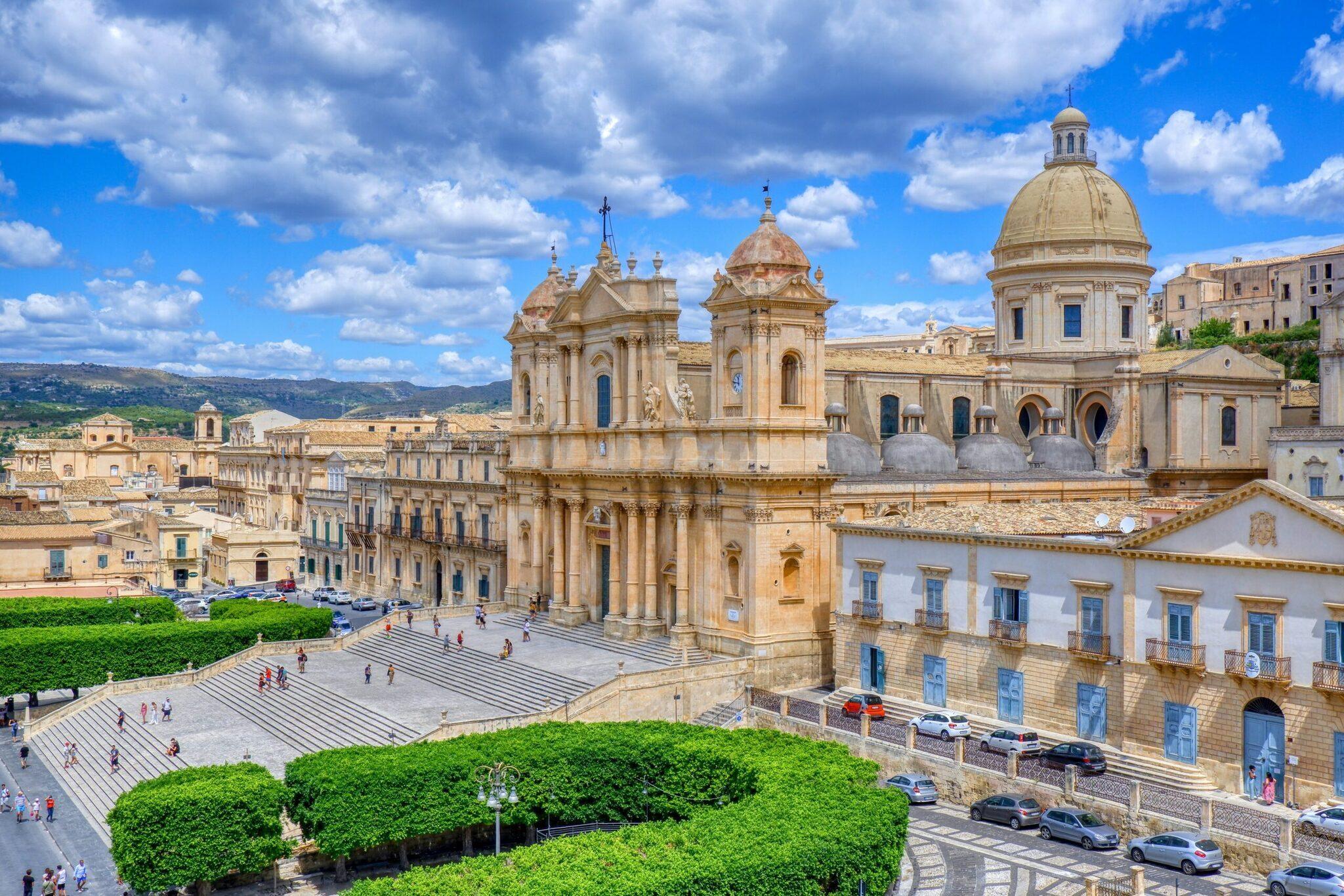
An earthquake in 1693 flattened much of south-eastern Sicily. The rebuilt towns, including Noto, Ragusa, Modica and Scicli, were reconstructed in a cohesive Sicilian Baroque style and are today UNESCO-listed as a group. Noto is the most harmonious, with its main corso lined with ochre-pink facades. Modica is famous for its spiced chocolate, made using an Aztec-inspired technique brought to the island by the Spanish during their rule.
Etna: the Volcano That Defines the Entire East Coast
Rising to 3,369 metres, Etna is the highest active volcano in Europe and a UNESCO World Heritage Site. Visible all along the east coast from Catania to Taormina, it also shapes local culture: the high-altitude wines grown on its slopes are gaining an international reputation, and the pistachios from Bronte, on the north-western flank, are prized across Italy. Access to the summit zones is via cable car from the Rifugio Sapienza; beyond that point, a local guide is required.
Beaches and Coves: Where to Swim in Sicily
Sicily’s coastline varies dramatically depending on which shore you are on.
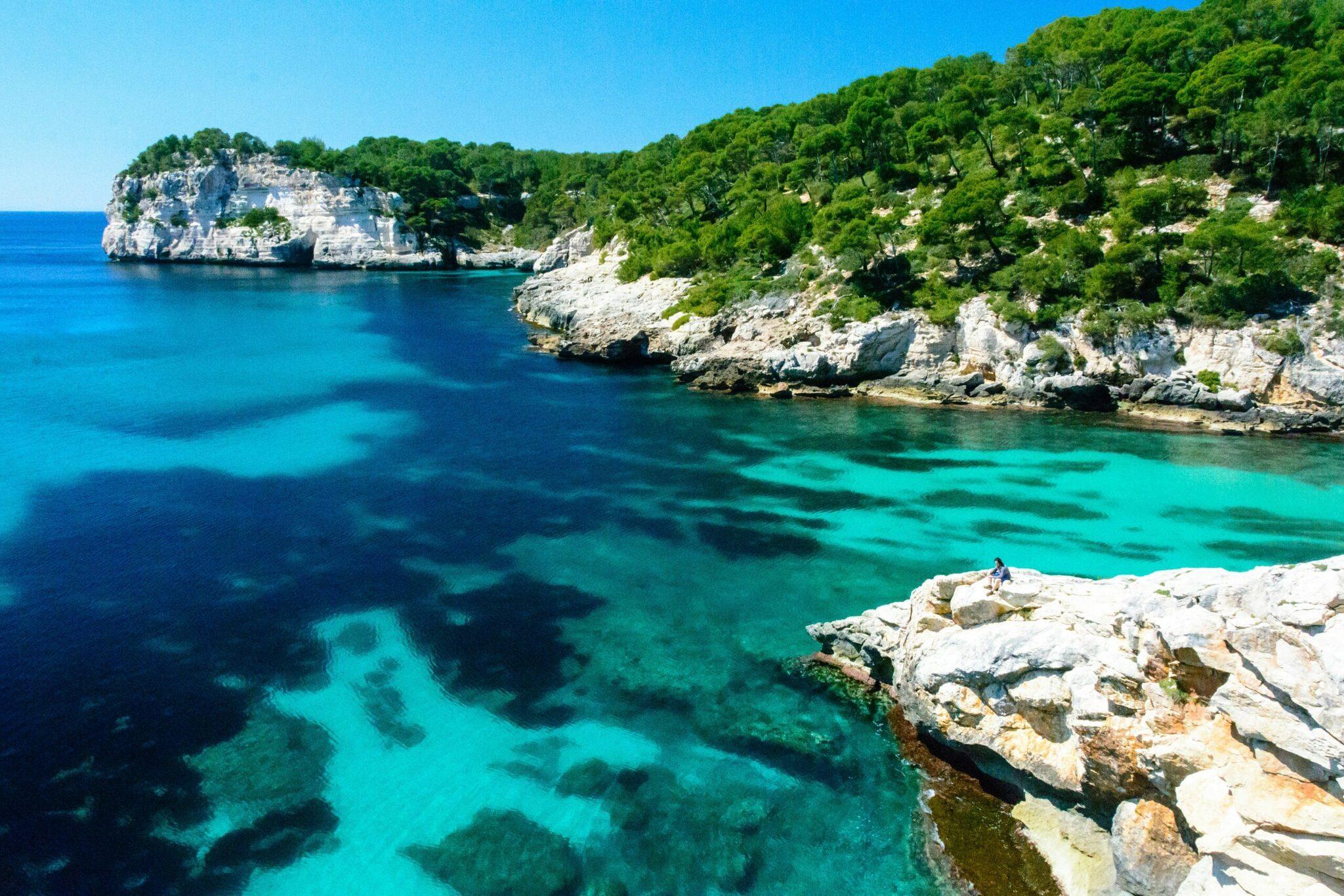
In the north-west, San Vito Lo Capo has a broad white-sand beach with turquoise waters. Nearby, the Zingaro Nature Reserve runs for 7 kilometres along the coast between Scopello and San Vito Lo Capo, with isolated coves reachable only on foot.
Near Taormina, Isola Bella is a small peninsula joined to the shore by a pebble sandbar: its clear waters are well suited to snorkelling. The descent from Taormina is by cable car or on foot down a stairway.
In the south, the Scala dei Turchi is a stepped white marl cliff that juts into the sea not far from Agrigento.
The Aeolian Islands: a Volcanic Archipelago in a Class of Their Own
The seven Aeolian Islands (Lipari, Vulcano, Stromboli, Salina, Filicudi, Alicudi, Panarea) are reachable by ferry from Milazzo, Messina or Naples. Listed as a UNESCO World Heritage Site since 2000, they are home to two active volcanoes: Stromboli, whose nocturnal lava flows can be seen from the sea, and Vulcano, with its fumaroles and thermal mud pools. Salina is the greenest and least crowded; Panarea draws a well-heeled summer crowd.
Sicilian Food: What You Will Eat at Every Stop
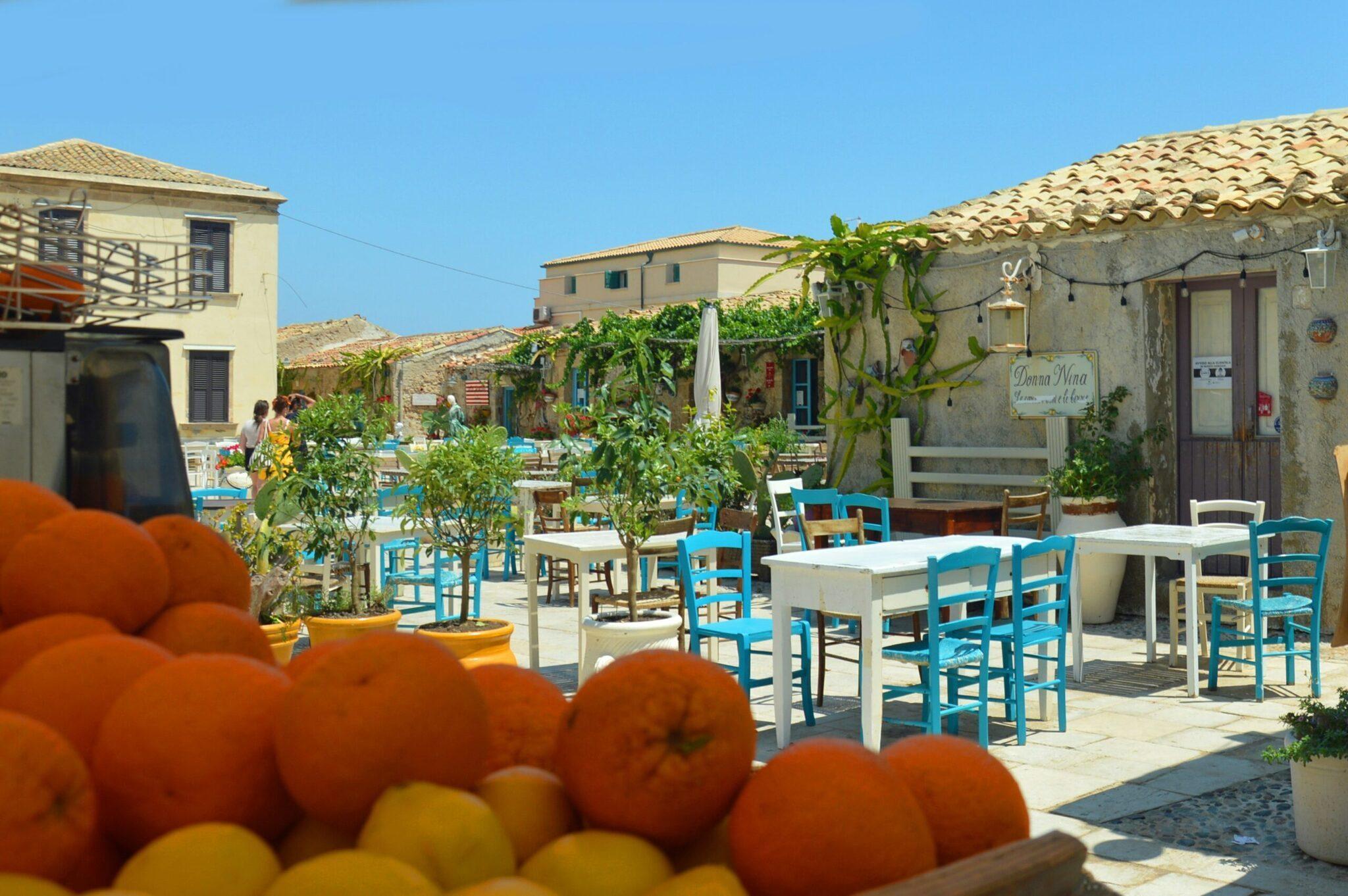
The cuisine shifts from region to region. In Palermo, street food dominates: arancini, panelle (chickpea fritters) and market specialities at every turn. Around Ragusa, sheep’s cheese and hearty inland dishes take centre stage. On the coast, tuna and swordfish are staples. Ribera’s citrus fruits and Bronte’s pistachios produce sweet specialities found across the island.
If you are still weighing Sicily against other Mediterranean destinations for the warm season, our guide to the best destinations for summer can help you compare atmospheres and ideal timing.
When to Go to Sicily
The best time to visit is April to June or September to mid-November: mild temperatures, a swimmable sea and manageable crowds. July and August are viable, but inland temperatures often top 35°C and the coast is very busy. Winter is well suited to city breaks and archaeological sites, well away from summer crowds.
FAQ
How long do you need to visit Sicily?
Ten to fifteen days allows you to cover the four main areas: Palermo and the north-west, the east coast (Taormina, Etna, Catania), Syracuse and the Val di Noto, and Agrigento in the south. A week is enough to choose one or two zones and explore them properly rather than rushing through everything.
What is the most beautiful site in Sicily?
The answer depends on what you are after: Taormina for the panoramic view (an ancient theatre with Etna and the Ionian Sea as a backdrop), the Valley of the Temples for the sheer archaeological impact, San Vito Lo Capo for the beaches. Sicily is large enough for every traveller to find their own highlight.
Are the Aeolian Islands worth a detour from Sicily?
Yes, if you have at least two to three extra days. Stromboli, with its nocturnal eruptions visible from the sea, is a rare experience anywhere in the Mediterranean. The ferry from Milazzo or Messina is the most convenient connection.
Is Sicily suitable for a family holiday?
The variety of the island makes it very adaptable: easily accessible beaches, small towns to explore on foot, and food that appeals to all ages. Etna is manageable with children as far as the cable car base station. The Aeolian Islands require more planning, but Lipari and Salina suit all types of traveller.