
India packs into a single country the kind of diversity that other continents spread across dozens of borders: Mughal marble palaces, red sand deserts, Himalayan peaks, millennia-old temples and Indian Ocean beaches. Here are 20 unmissable experiences, from the northern Golden Triangle to the little-known northeast, to help you plan a trip that truly delivers.
Get my India travel insurance quoteThe Golden Triangle: the classic first circuit
The Golden Triangle links Delhi, Agra and Jaipur across roughly 750 kilometres. It is the first circuit for the majority of visitors: three cities, three distinct atmospheres, and a concrete introduction to Mughal and Rajput India.
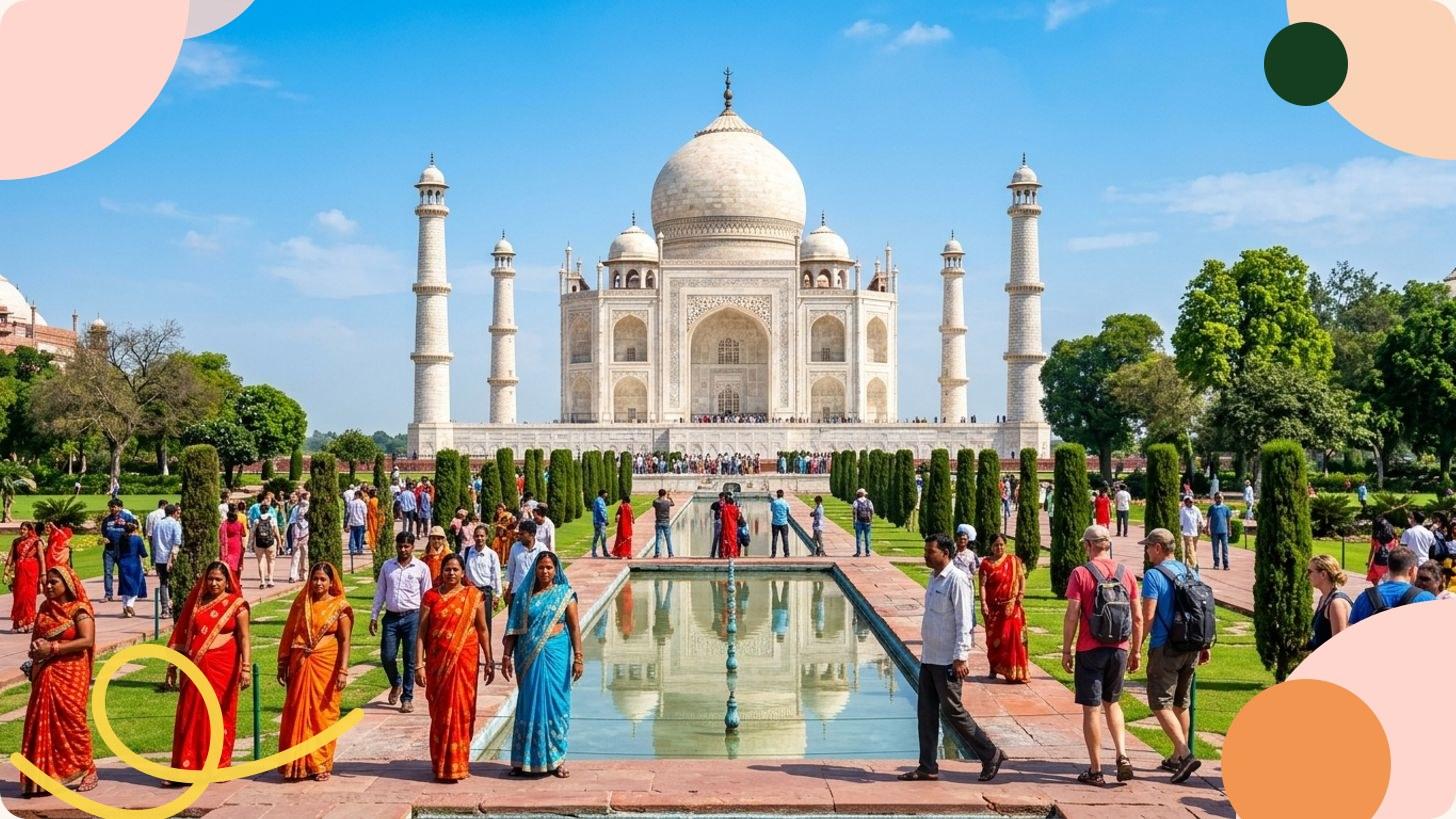
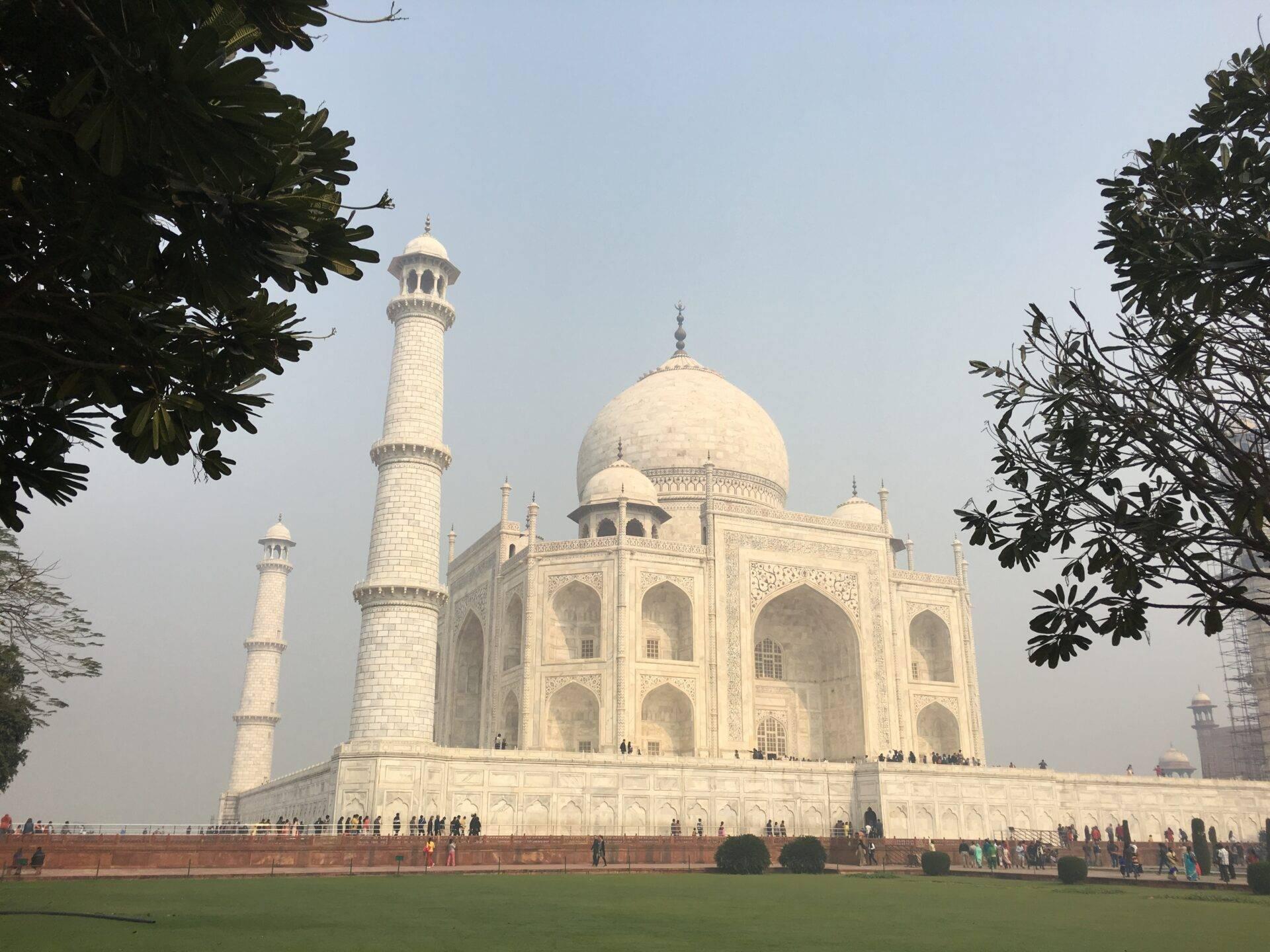
The Taj Mahal, Agra
Built in the 17th century by Emperor Shah Jahan in memory of his wife Mumtaz Mahal, the Taj Mahal is a UNESCO World Heritage Site and one of the New Seven Wonders of the World. Its white marble facade, inlaid with semi-precious stones, shifts colour throughout the day: rosy at dawn, golden at sunset. An early morning visit rewards you with the best light and smaller crowds.
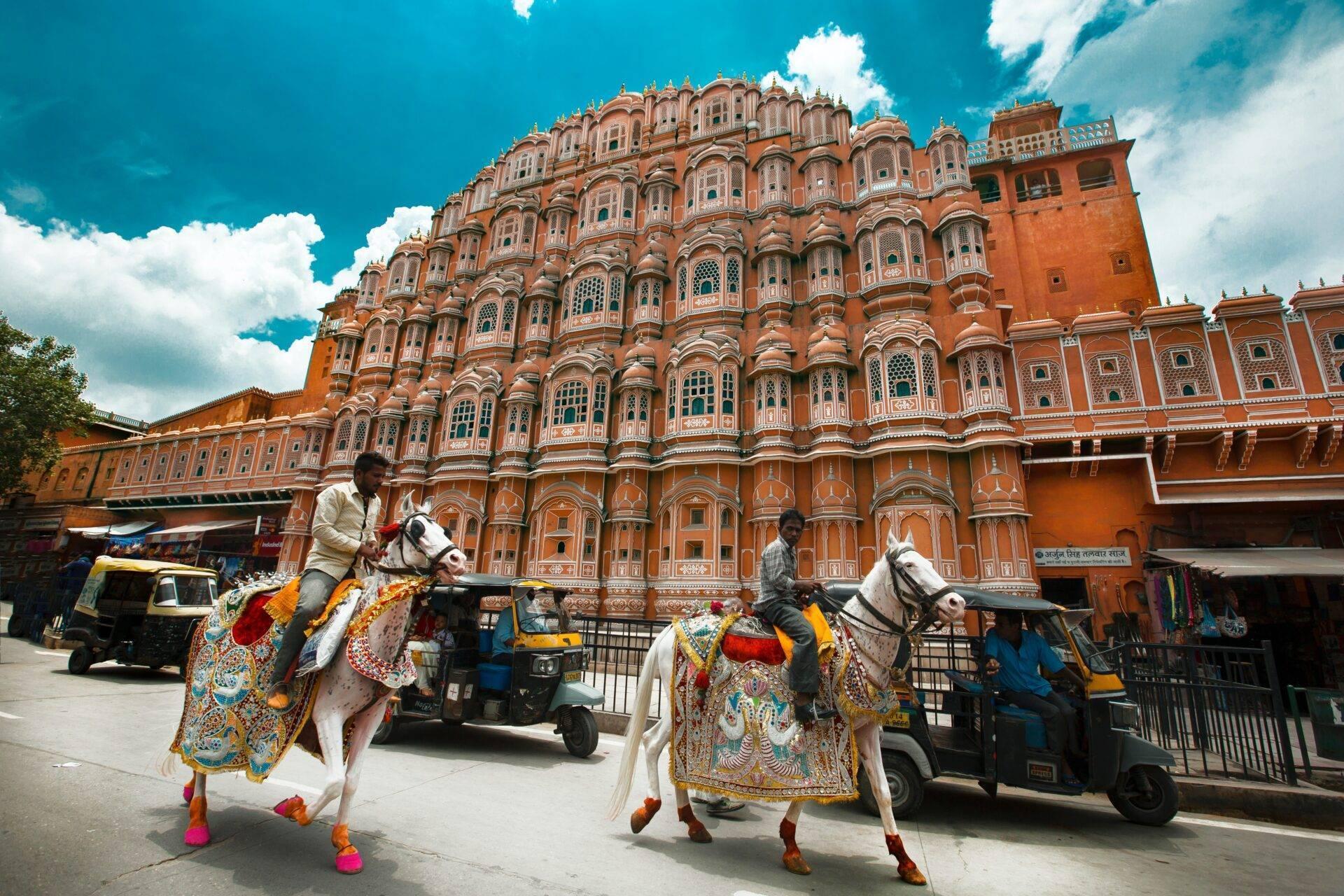
Jaipur, the Pink City
The pink hue of Jaipur’s historic buildings was applied to welcome the Prince of Wales in 1876. The Hawa Mahal (Palace of the Winds), with its 953 pink sandstone windows, is the city’s most iconic image. Jaipur also houses the Jantar Mantar, the world’s largest stone observatory and a UNESCO-listed site. The bazaars of the old city are the place to pick up Rajasthani silks and jewellery.
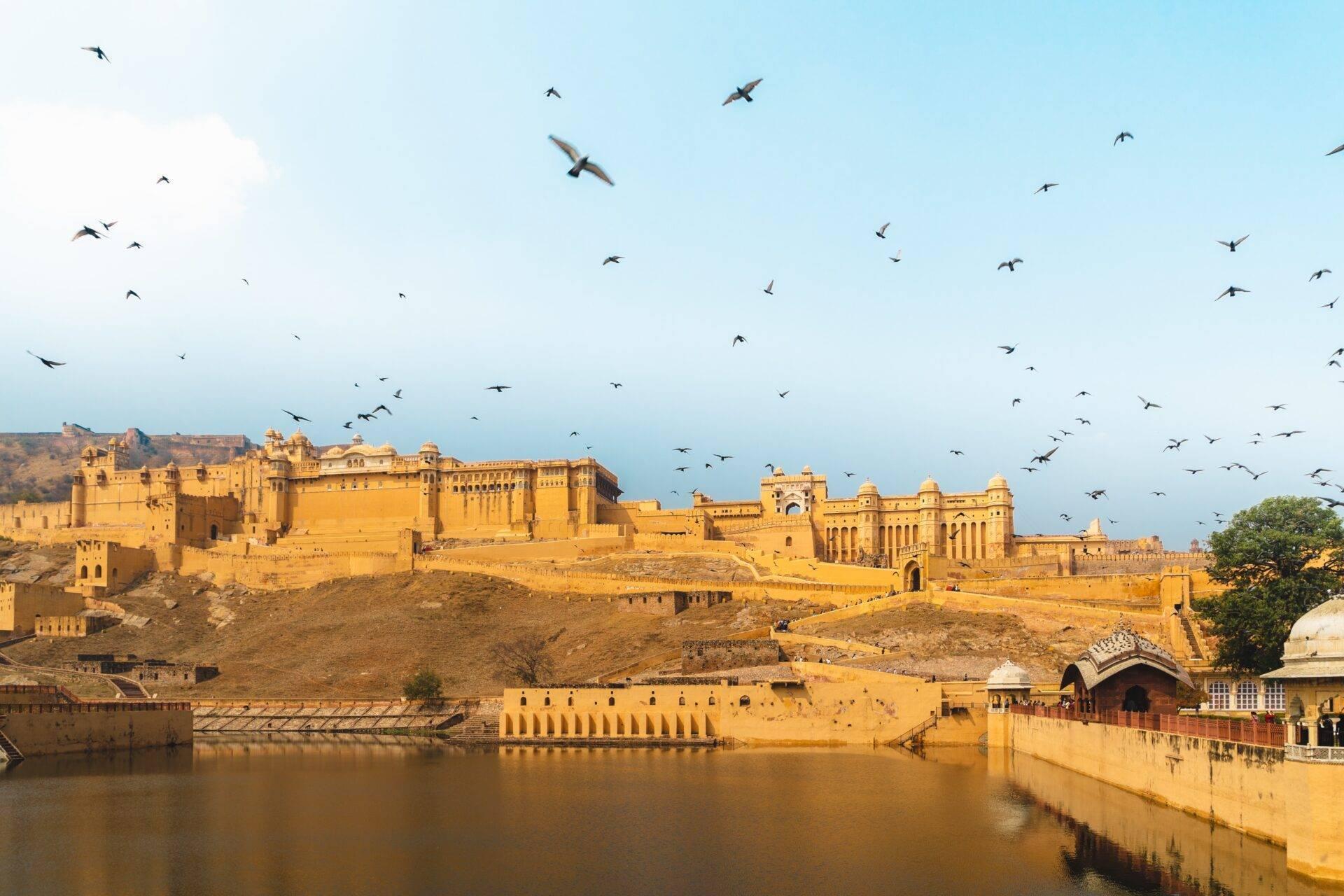
Amber Fort
Twelve kilometres from Jaipur, Amber Fort rises above a river from a rocky spur. Built in the 16th century in red sandstone and white marble, it stands as Rajput architecture at its finest. The Sheesh Mahal, a palace chamber entirely covered in mirrors that multiply candlelight, is the undisputed highlight of the complex.
Rajasthan beyond the Golden Triangle
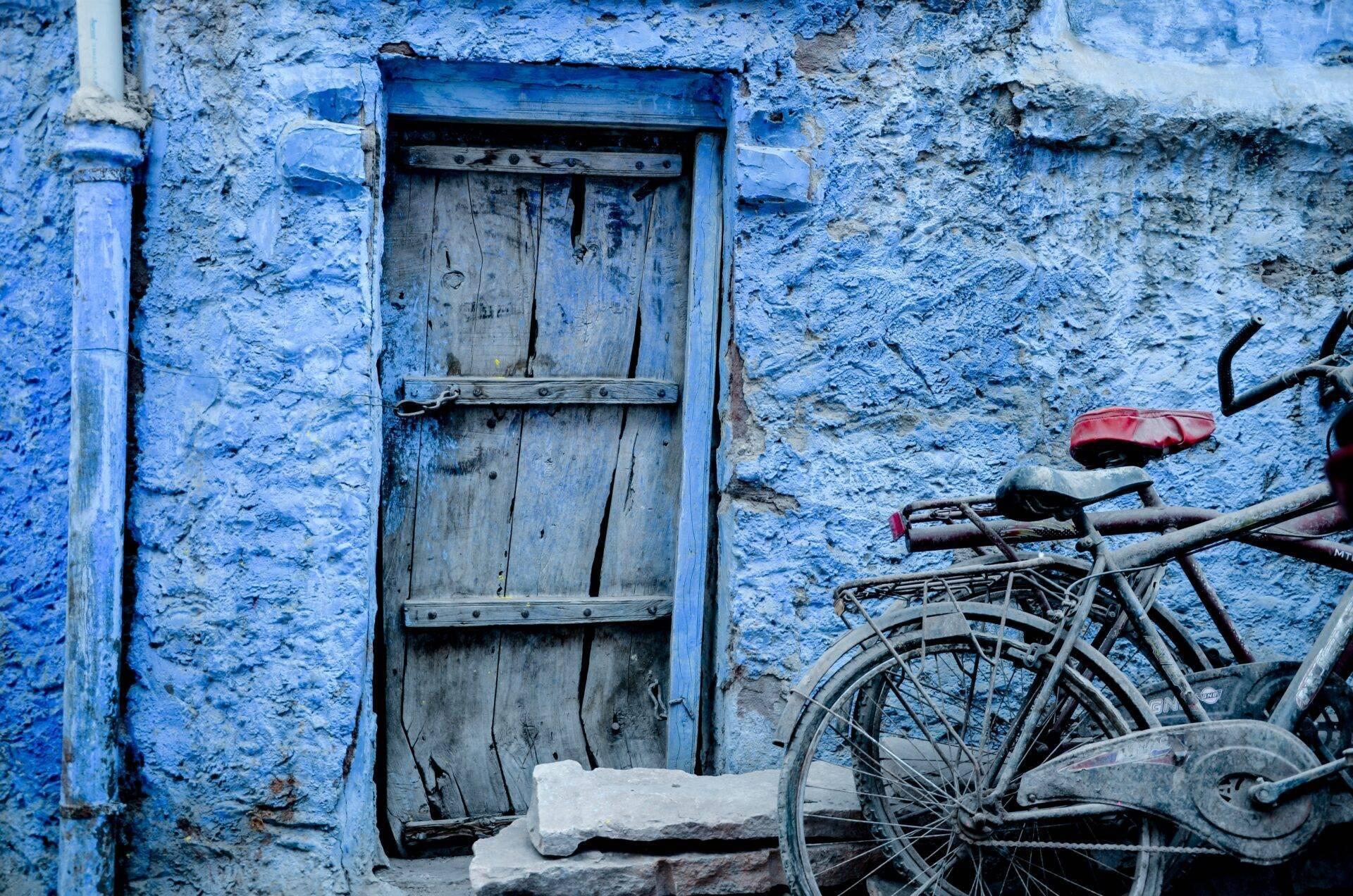
Jodhpur, the Blue City
The cobalt-blue facades of Jodhpur make up one of India’s most photographed cityscapes: the indigo hue historically marked the homes of the city’s Brahmin families. Mehrangarh Fortress, perched high above the old city, offers a sweeping bird’s-eye view over this sea of blue. The lanes of the ancient medina, where indigo walls contrast with residents’ saffron turbans, are worth at least half a day of unhurried wandering.
The Thar Desert and Jaisalmer
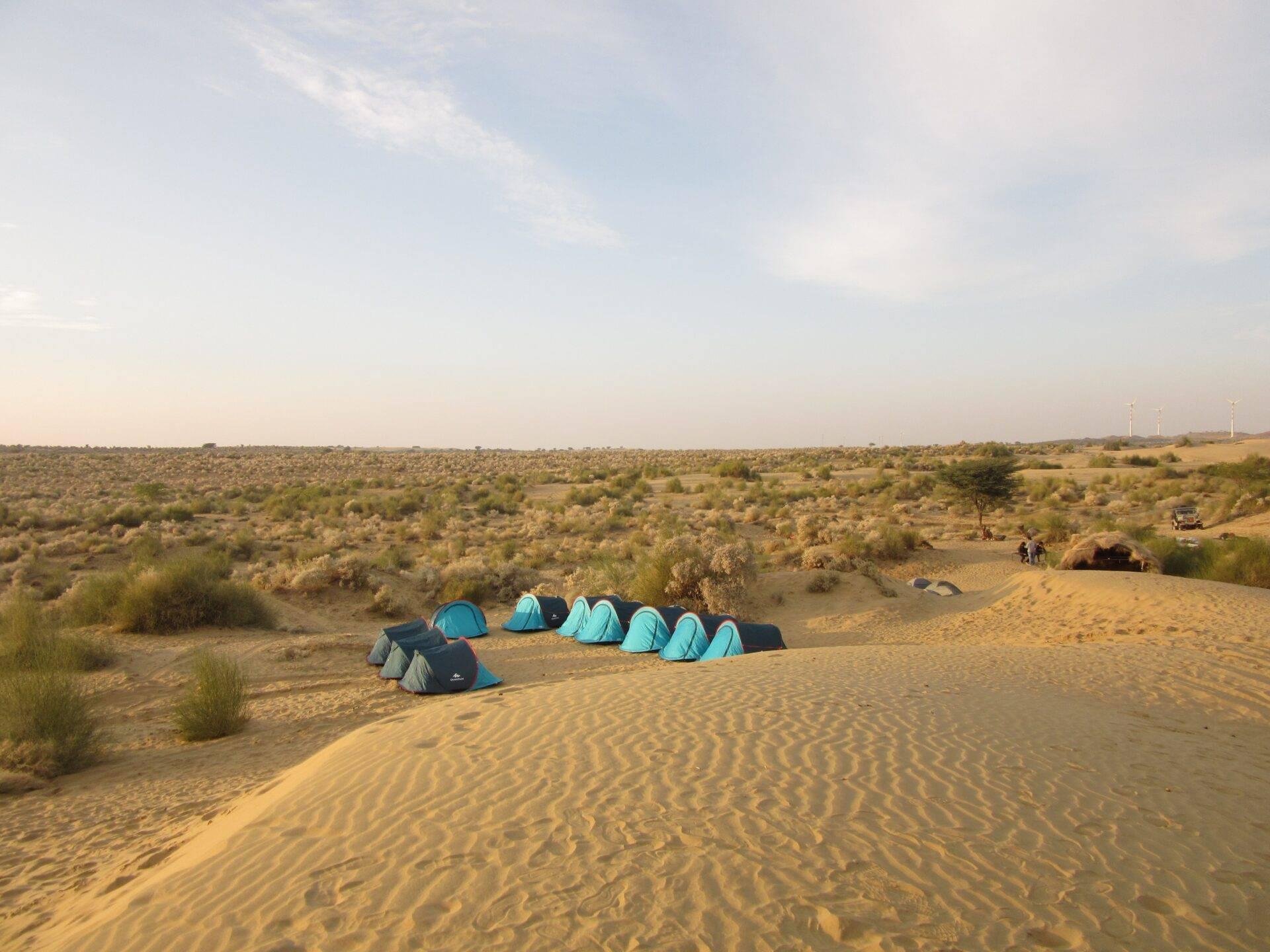
Jaisalmer, the Golden City, is an ochre sandstone fortress that appears to rise straight from the dunes. The Thar Desert surrounding it is dotted with villages and farms, making it perfect for camel rides. A minimum stay of three days is recommended to settle into the rhythm of these wide-open spaces: a night under the stars at a desert camp, far from any light pollution, is one of Rajasthan’s most memorable experiences.
Pushkar and its sacred lake
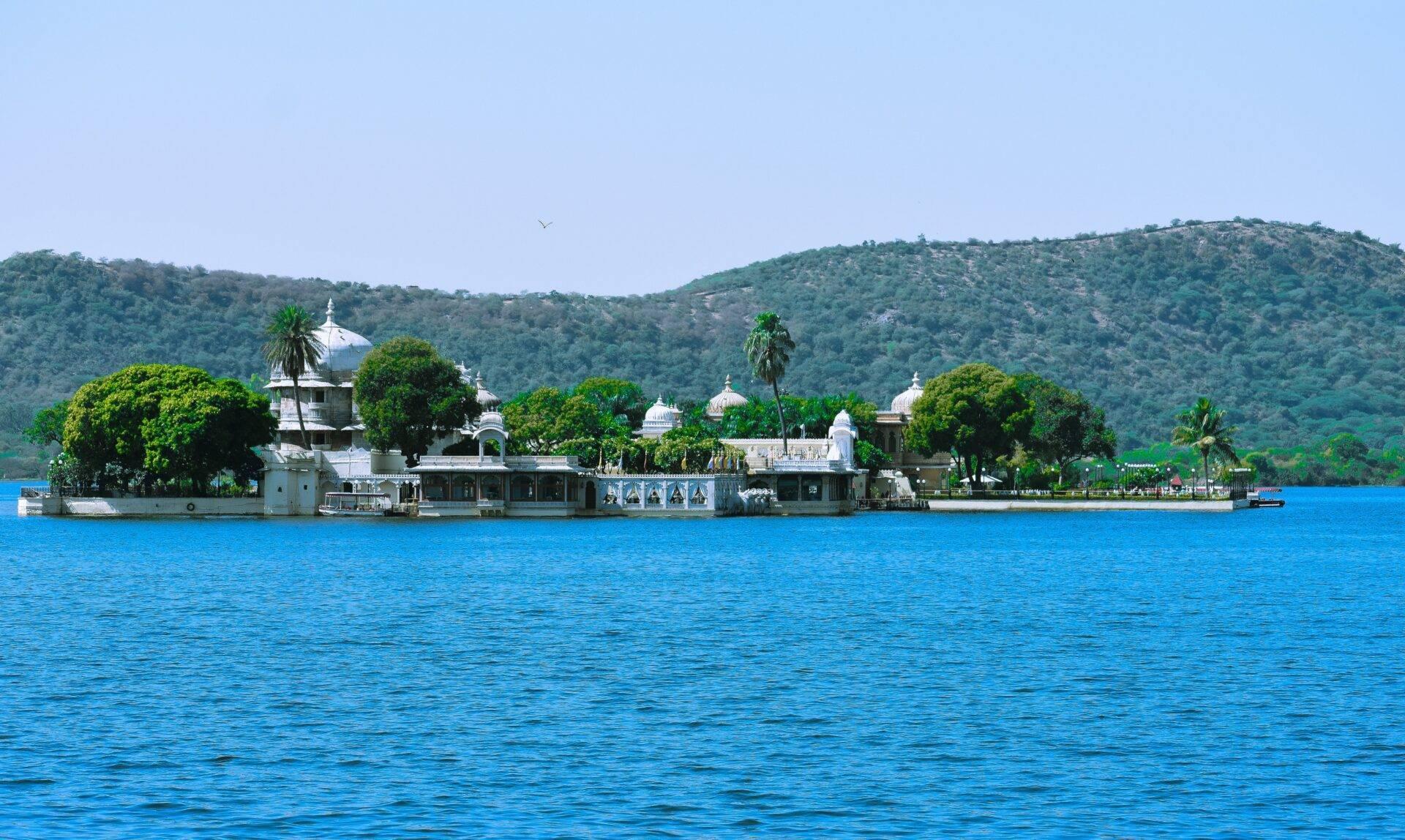
Pushkar is home to one of the world’s few temples dedicated to Brahma. Its sacred lake, ringed by white ghats, draws Hindu pilgrims throughout the year. In October and November, the town hosts a legendary camel fair: more than 10,000 animals gather on the site for a week of trading, races and colourful folk performances.
The Hindu temples of Rajasthan
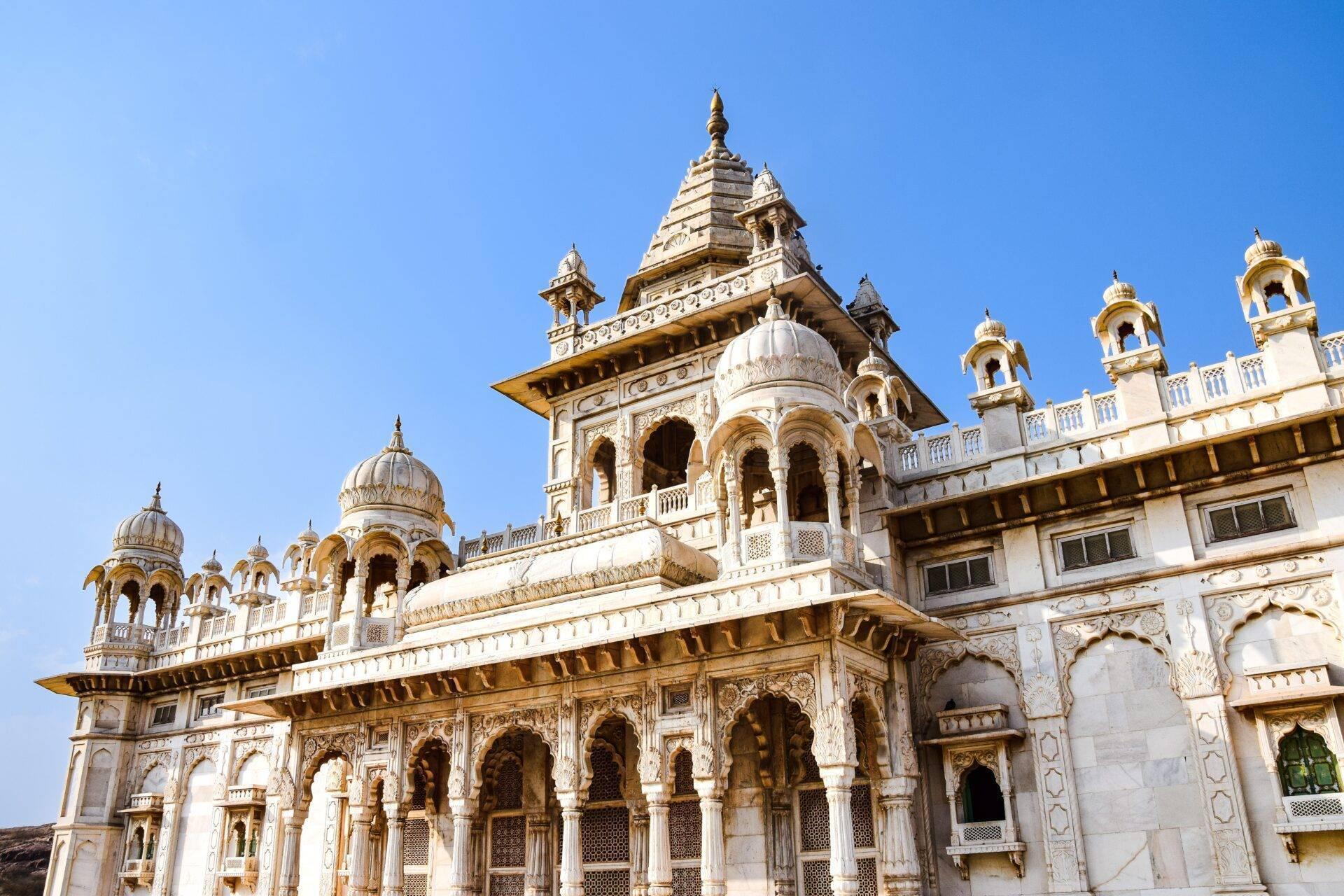
Beyond the forts and palaces, Rajasthan is home to hundreds of Hindu temples, remarkable for their whitewashed walls and sculpted ornaments. Often built on the banks of a lake or atop a hill, these quieter sanctuaries offer a peaceful immersion in local religious life, well away from the tourist crowds.
Delhi, a city of many capitals
The Mughal heritage of the capital
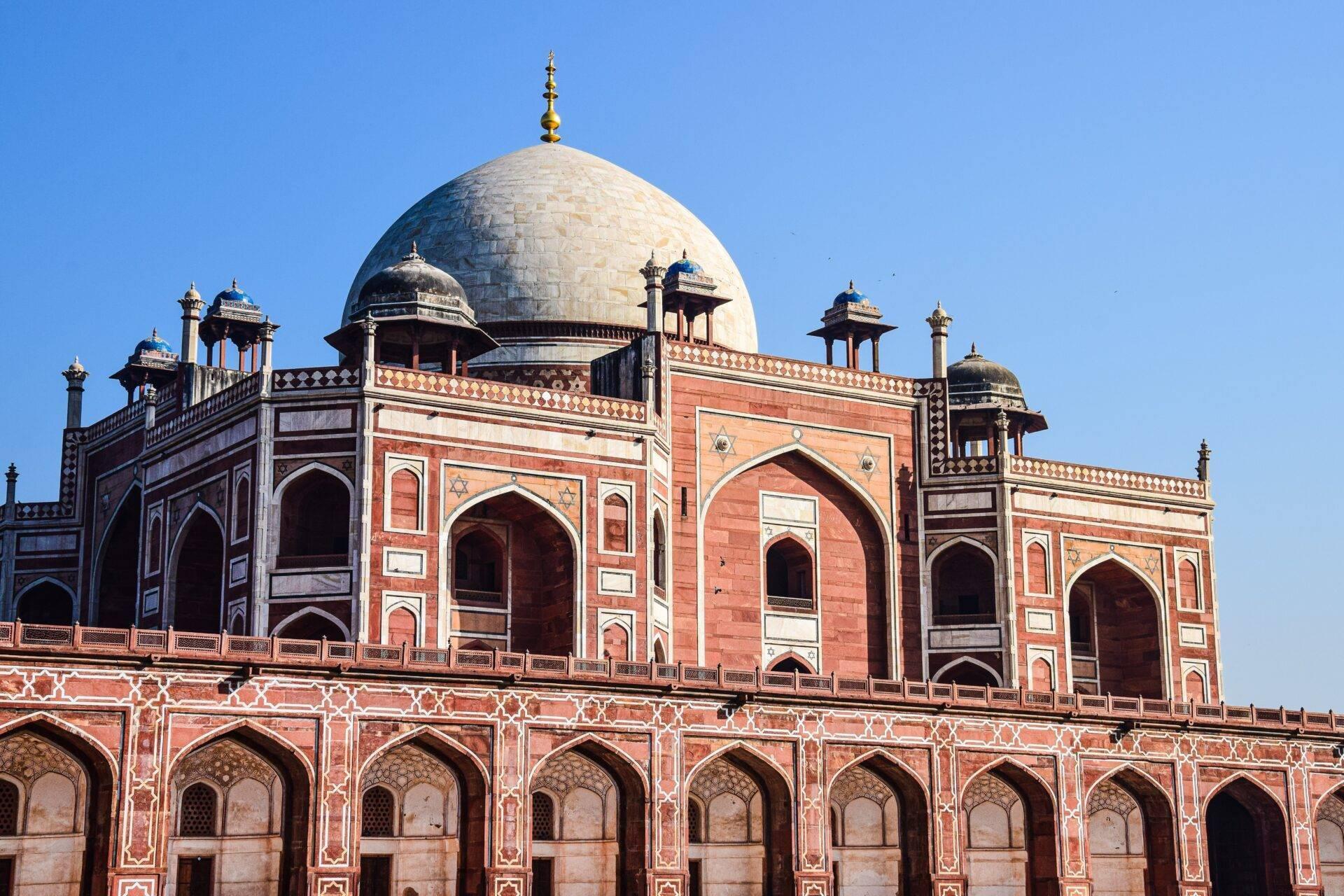
Delhi layers the traces of several successive capitals. Humayun’s Tomb, a 16th-century mausoleum in red sandstone and white marble, is often cited as the forerunner of the Taj Mahal and is listed as a UNESCO World Heritage Site. The Red Fort, the Jama Masjid mosque and the Chandni Chowk bazaar complete this tour of the old city, best experienced by rickshaw for a full immersion in everyday India.
The Qutb Minar
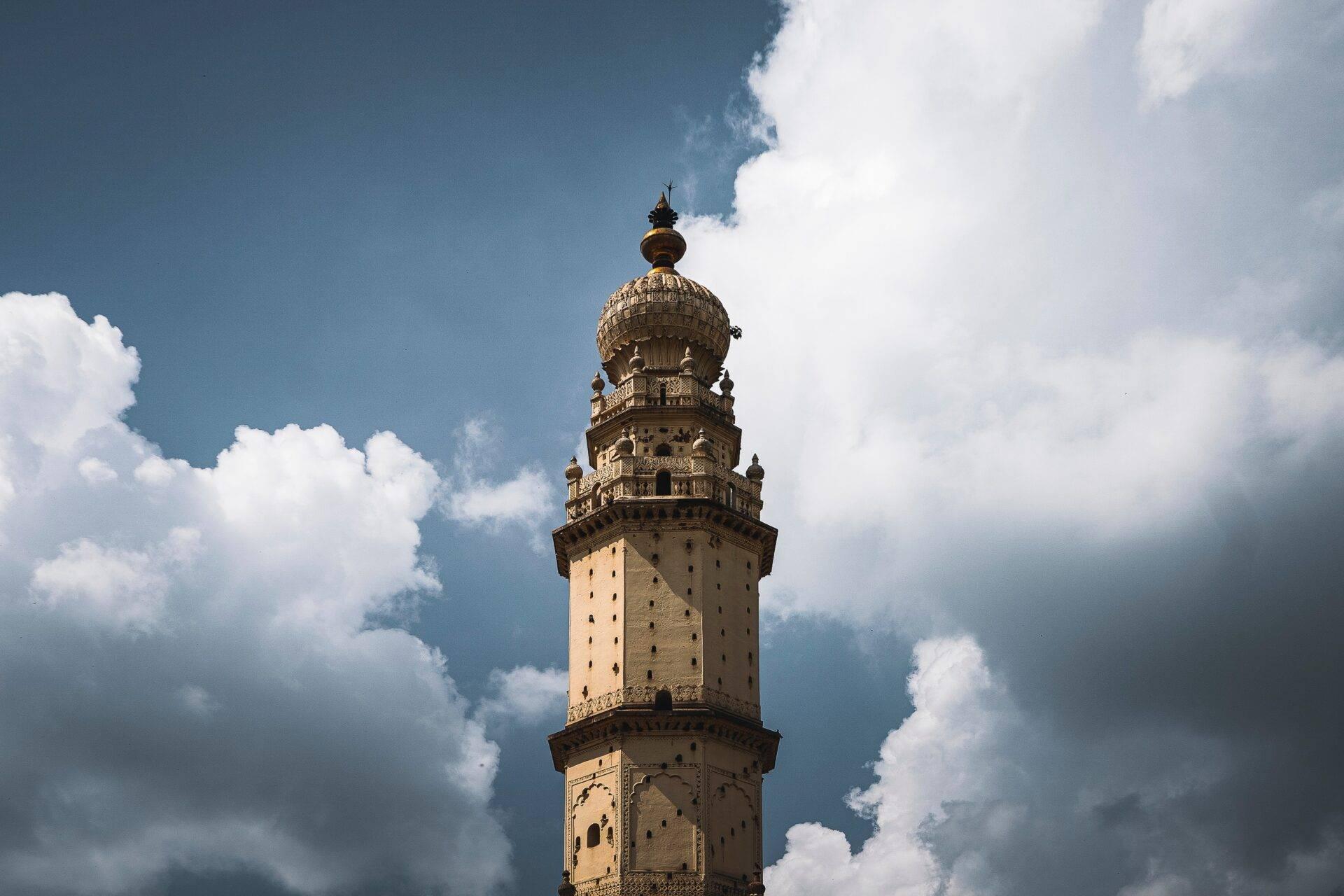
The Qutb Minar, erected in the 12th century, is a brick minaret whose carved stone ornaments illustrate the earliest stirrings of Indo-Islamic art. The surrounding complex, a UNESCO World Heritage Site, brings together mosques, tombs and an ancient iron pillar in a shaded garden, well removed from the bustle of the city centre.
Varanasi, the eternal city
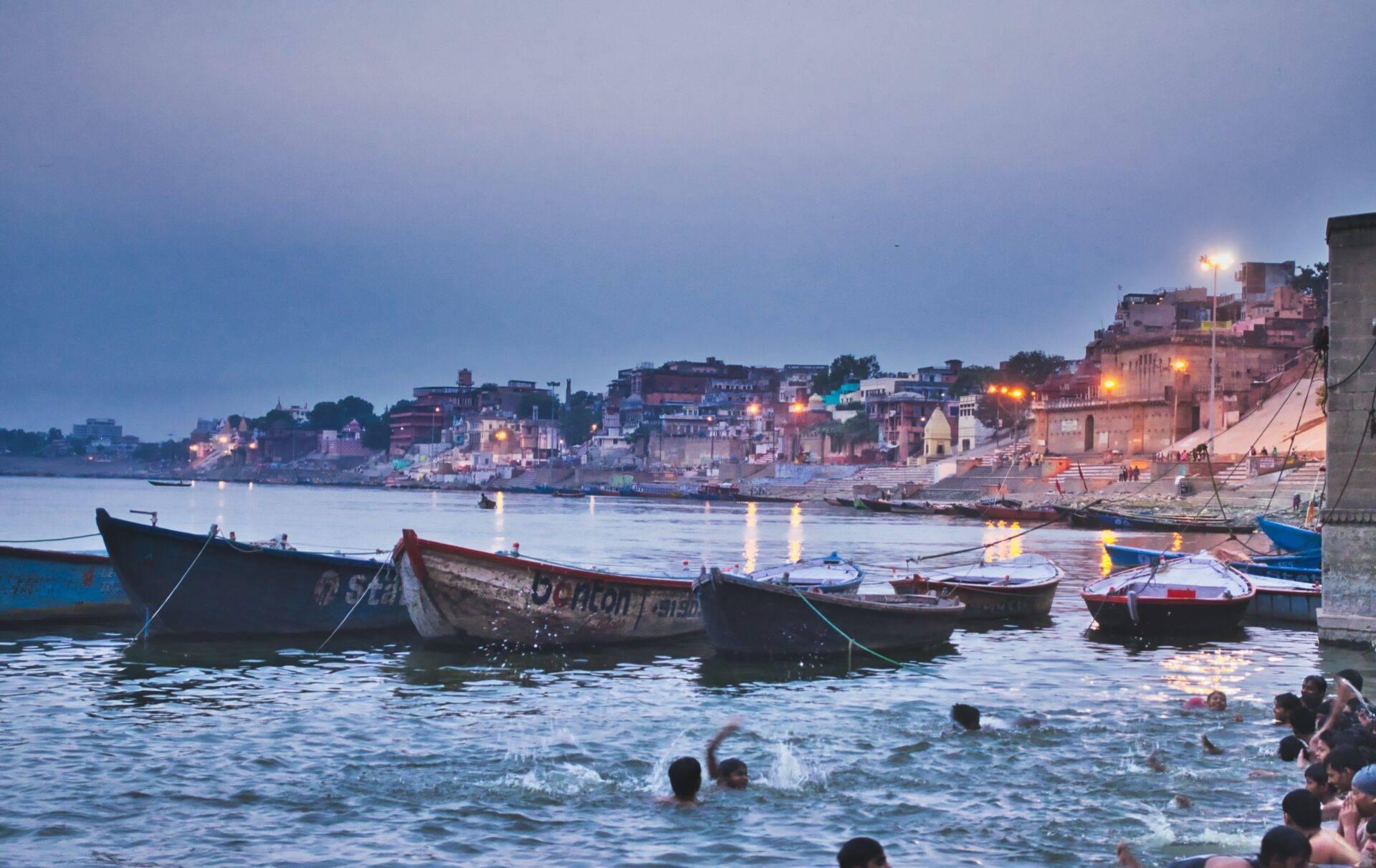
Varanasi is one of the oldest continuously inhabited cities in the world. On the ghats leading down to the Ganges, thousands of pilgrims bathe each morning in the sacred waters. The Ganga Aarti ceremony, held every evening at the water’s edge with its lamps, incense and chanting, is one of the most intensely moving experiences India has to offer. Arriving at least an hour early ensures a good vantage point from a boat.
Amritsar and the Golden Temple
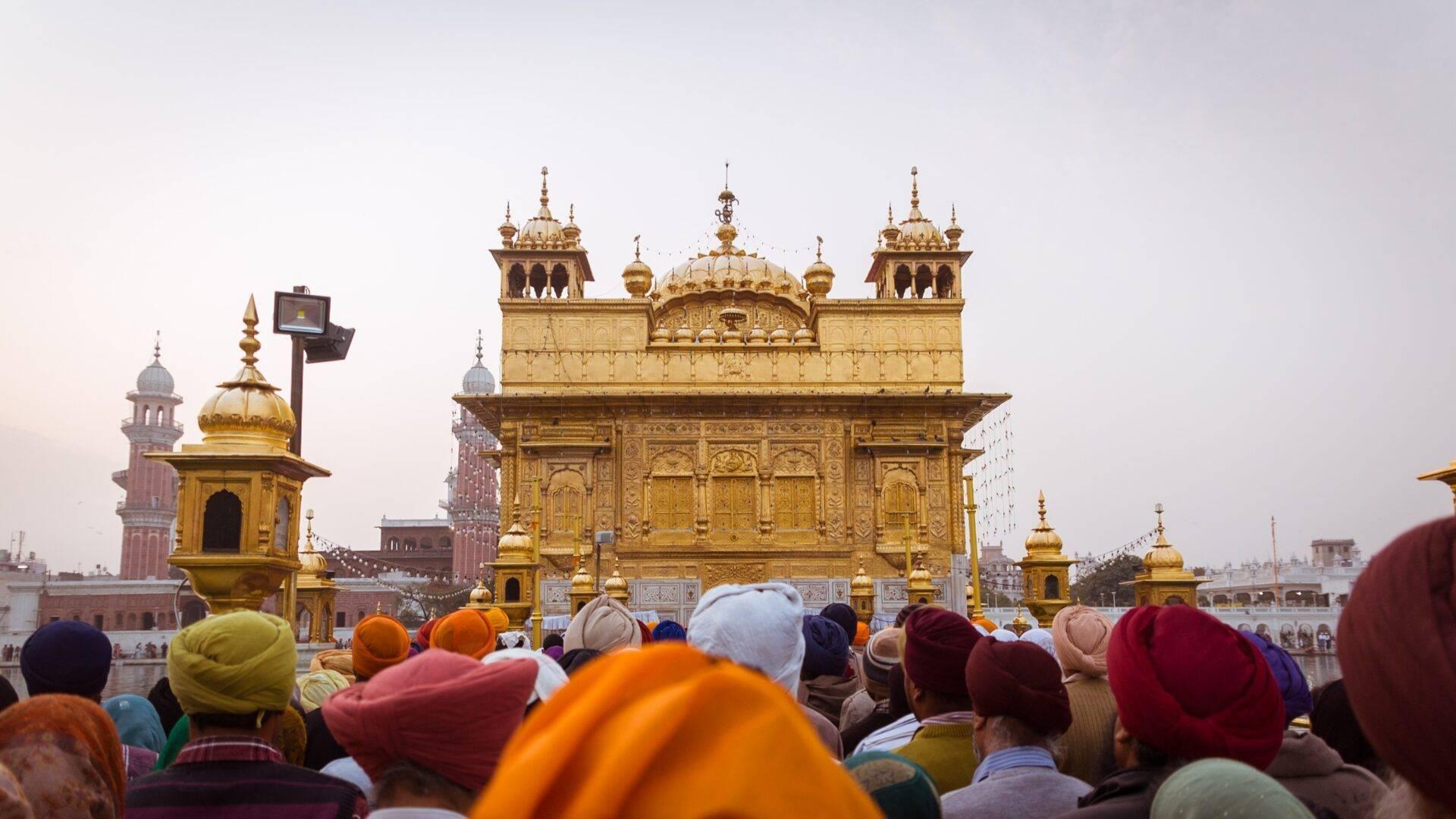
The Harmandir Sahib, known as the Golden Temple, is the holiest shrine in Sikhism. Sheathed in fine gold leaf and set on an artificial lake, it welcomes people of all faiths and serves a free meal to hundreds of thousands of visitors every day in its langar (community dining hall). The atmosphere of devotion and hospitality here is unlike anything else you will find in India.
Mumbai, the economic capital
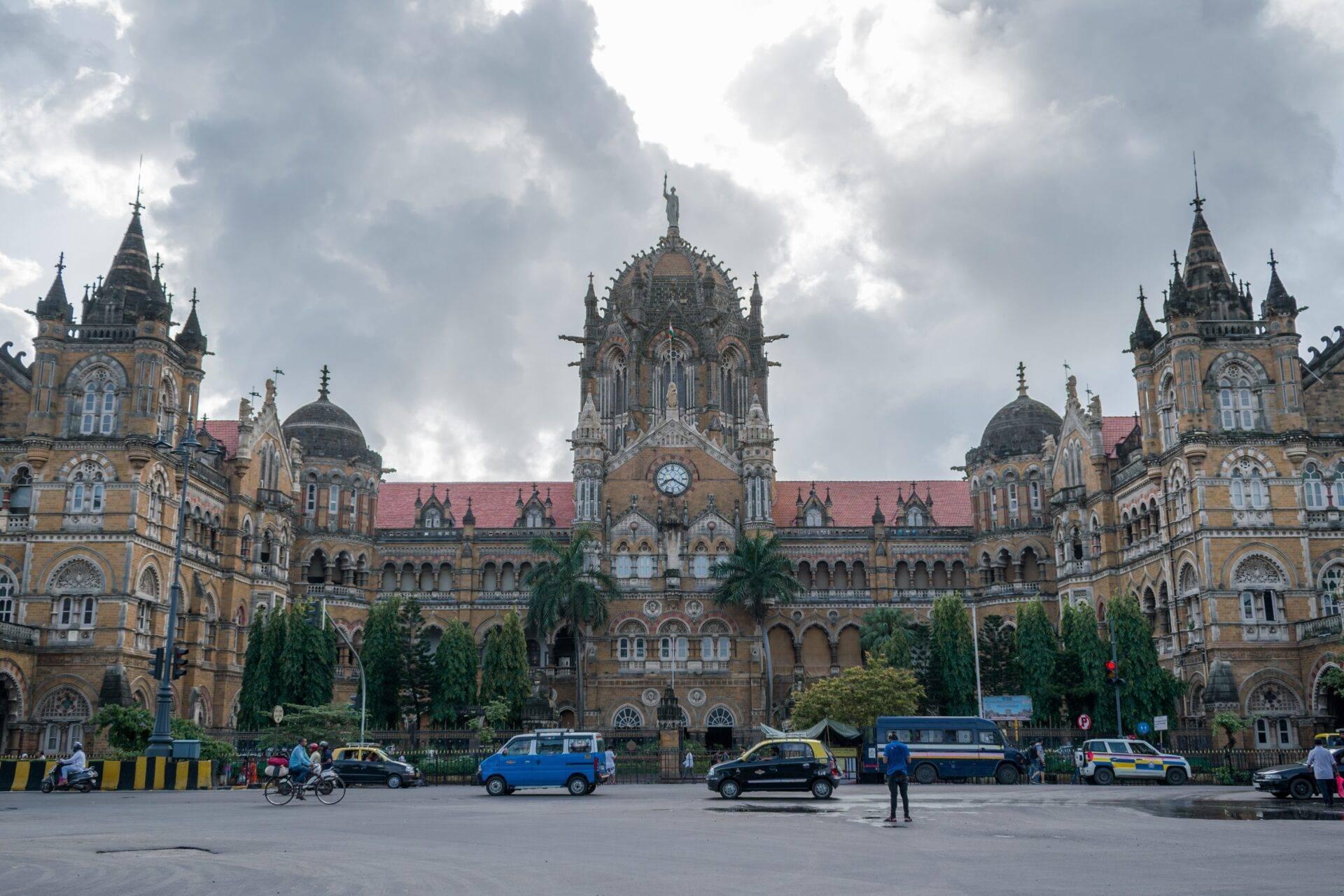
Mumbai is India’s economic and cinematic heartland. The Chhatrapati Shivaji Maharaj Terminus, a colonial-era railway station, is a masterpiece of neo-Gothic architecture and a UNESCO World Heritage Site. The Gateway of India dominates the waterfront at Apollo Bunder. The neighbourhoods of Colaba, Bandra and Dharavi each reveal a different face of this megacity: the local Bollywood industry alone produces between 800 and 900 films a year.
For practical pre-departure information (entry requirements, health, medical cover), see our dedicated guide to travel insurance for India.
The Himalayas: Ladakh and Darjeeling
Ladakh, the Little Tibet
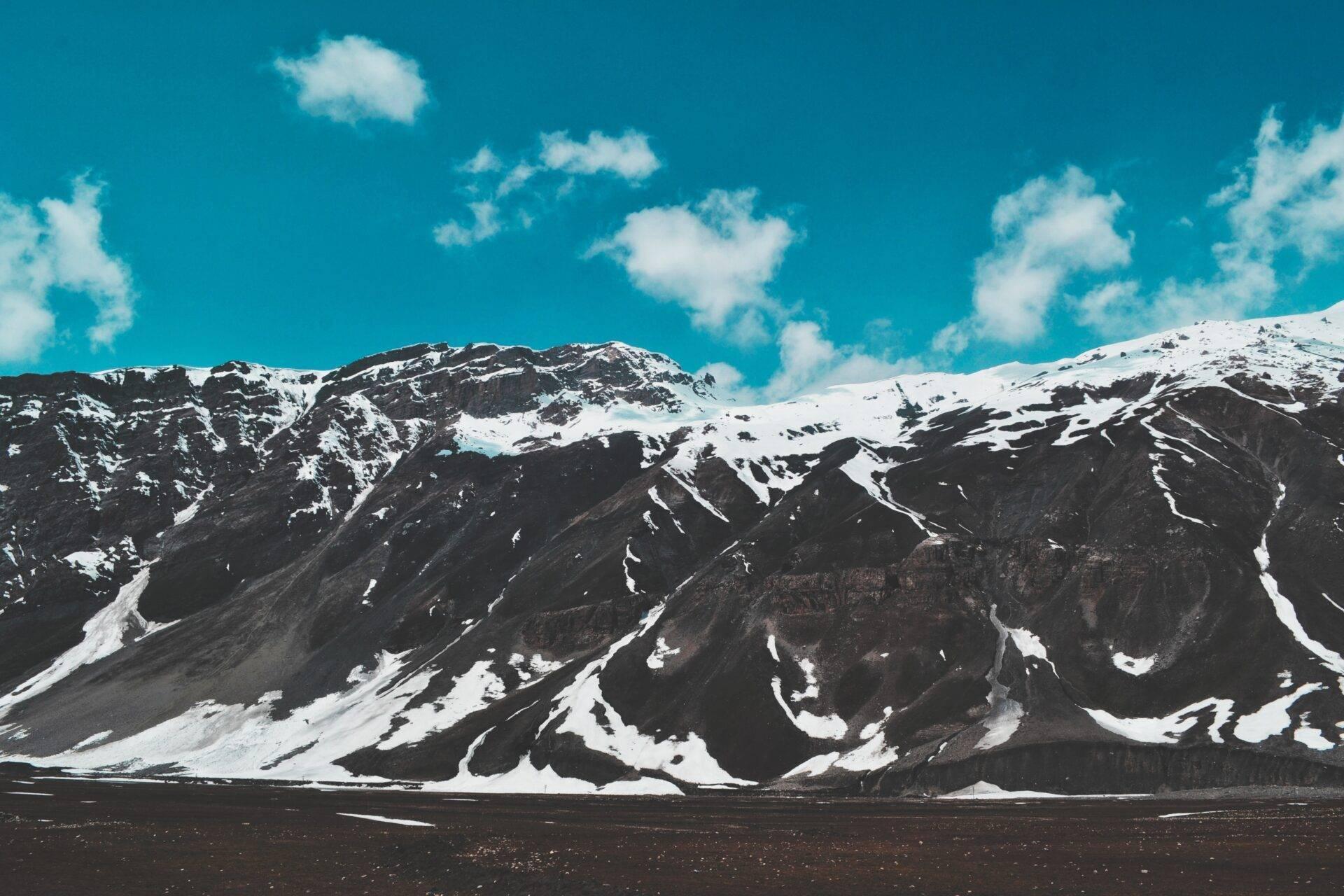
Ladakh is a high-altitude plateau of glacial, desert-like scenery. Its capital, Leh, sits at 3,500 metres above sea level. Buddhist monasteries perched above its valleys, turquoise high-altitude lakes and Himalayan mountain passes make it one of the most spectacular destinations in Asia. The best season runs from June to September, when the mountain roads are open. At these altitudes, medical cover and repatriation insurance provides a safety net for emergencies that local hospitals may not always be equipped to handle.
Darjeeling and Sikkim
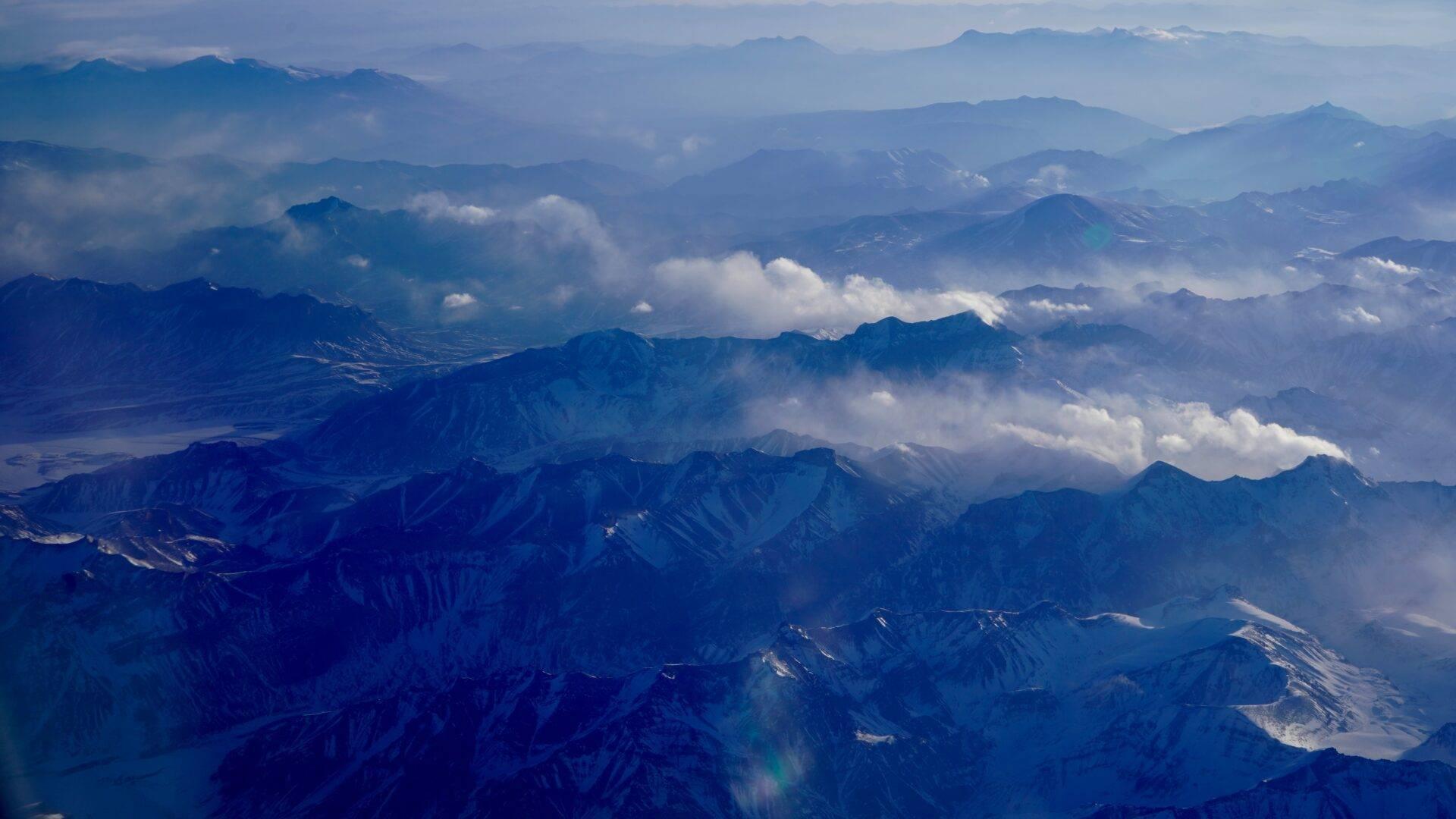
Darjeeling and Sikkim offer panoramic views of the Himalayan giants from vast tea plantations and rhododendron forests. Kangchenjunga, the world’s third highest mountain, reveals itself at sunrise from the Tiger Hill viewpoint. These regions, less visited than the northwest, provide an immersion in Tibetan and Nepalese culture, between monasteries and tea gardens.
Temples of central India
Hampi, the ruins of Vijayanagara
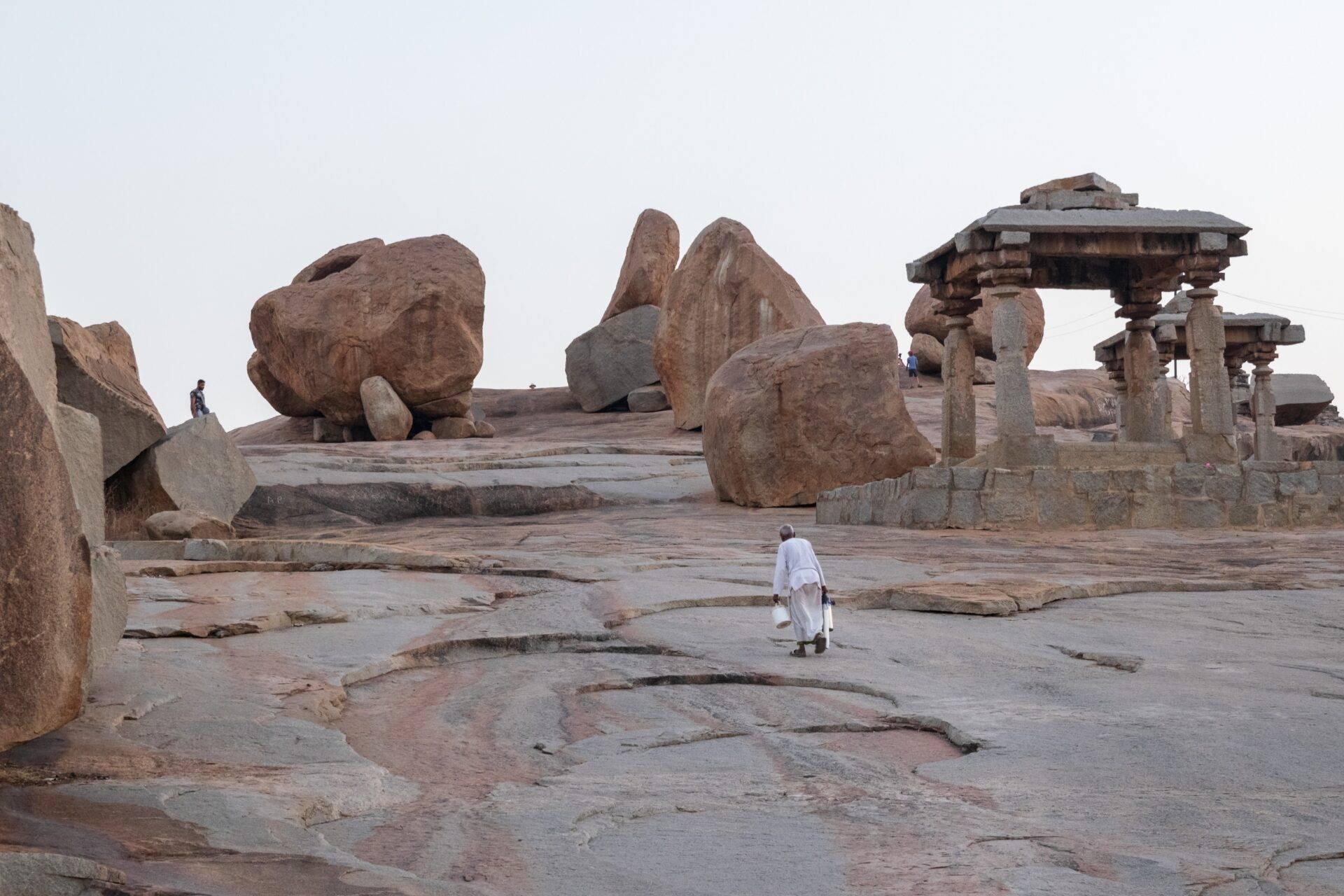
Hampi is the former capital of the Vijayanagara Empire, abandoned in 1565. This UNESCO World Heritage Site is a chaos of granite boulders amid which rise ruined temples, markets and palaces. The Virupaksha Temple, still active today, and the royal elephant stables are the two most striking symbols of this vanished city.
Khajuraho, the temples of a thousand sculptures
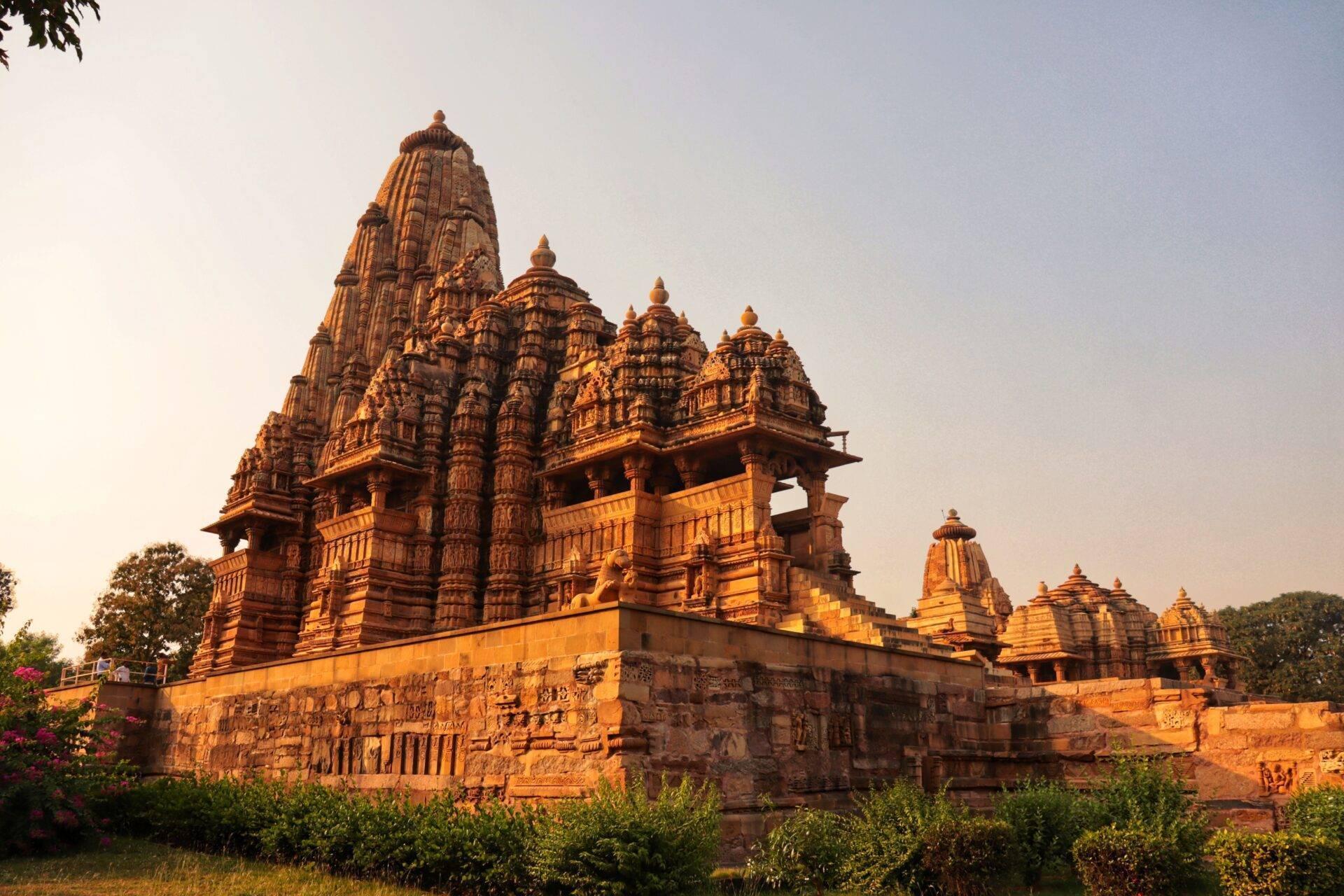
The temples of Khajuraho are listed as a UNESCO World Heritage Site. Of the eighty-five temples originally built, twenty-five remain well preserved. The Kandariya Mahadev, the masterpiece of the western group, carries 872 statues on its red sandstone facades alone. The raking light of sunset picks out every detail of these astonishingly precise bas-reliefs.
Kerala, between water and forest
The Kerala backwaters
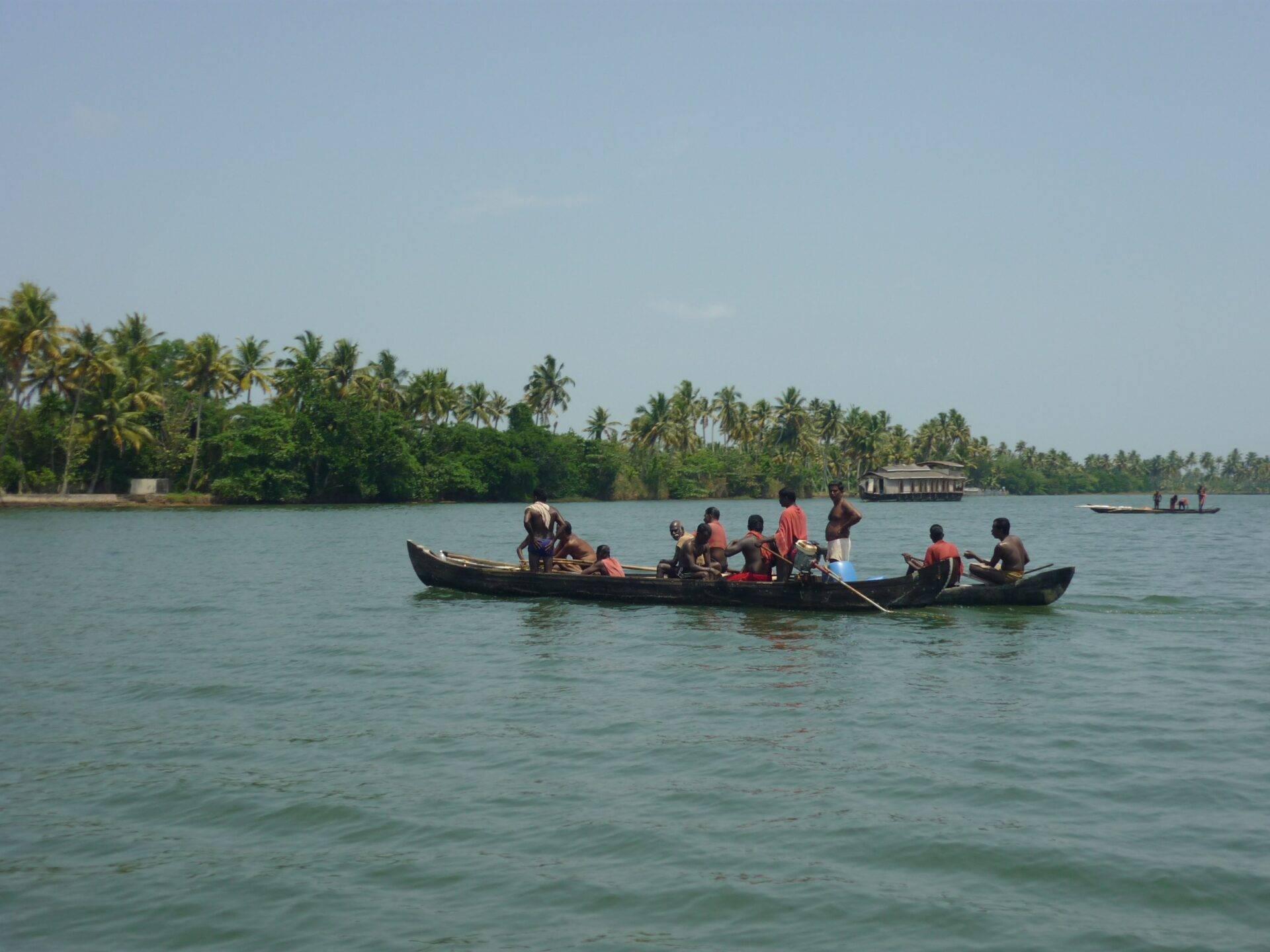
Kerala is threaded by a network of lagoons, canals and rivers best explored aboard a traditional wooden houseboat. From the deck, you can watch fishermen at work, children playing on the banks and birds gliding over the coconut palms. The routes around Alleppey (Alappuzha) and Kumarakom are the most accessible for a one- or two-day cruise.
The Western Ghats and their wild rivers
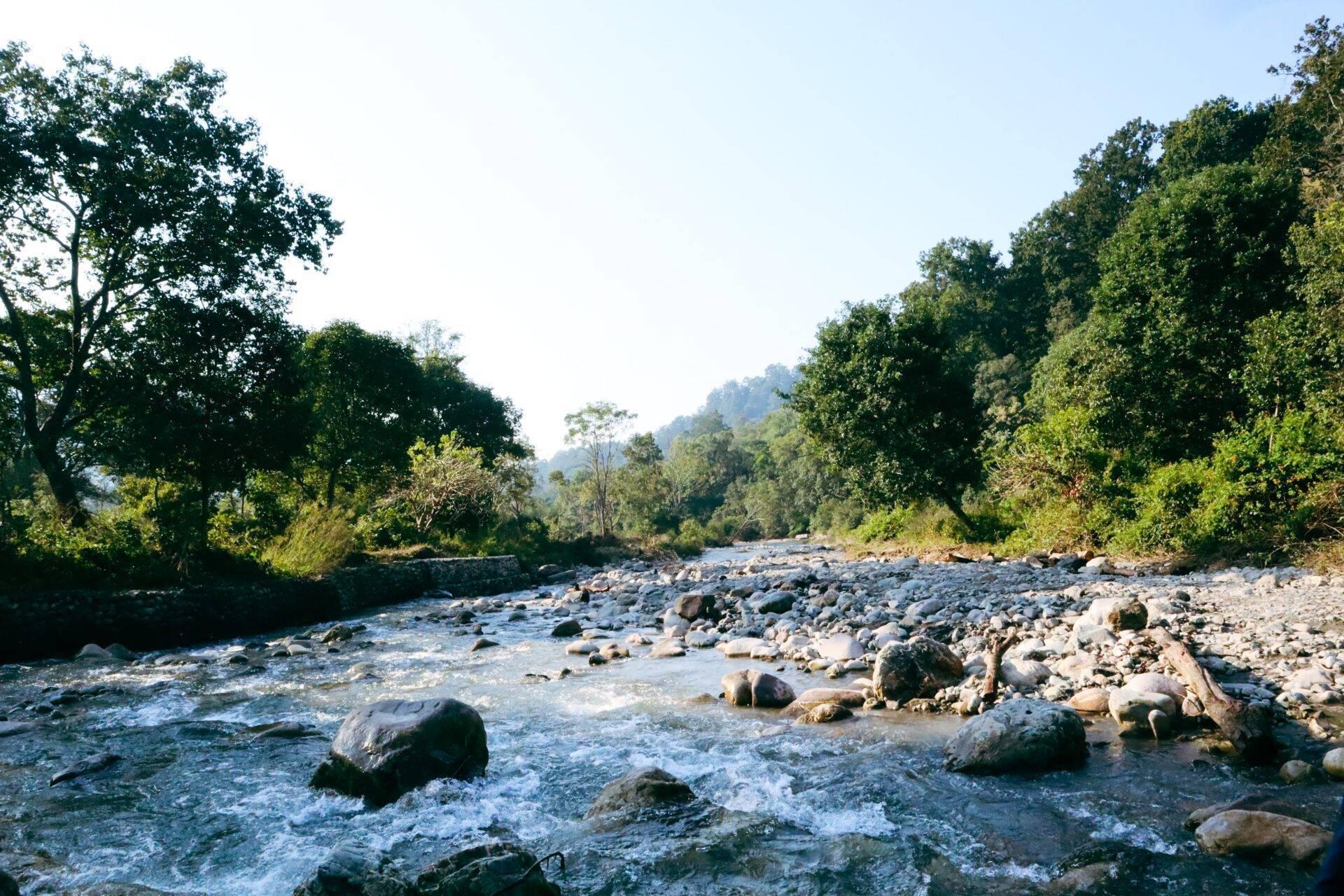
The Western Ghats, a mountain range running along India’s west coast, harbour some of Asia’s richest biodiversity. Their rocky rivers cut through dense tropical forests home to elephants and hundreds of bird species. The Munnar, Wayanad and Coorg regions are ideal bases for exploring these jungles and staying on plantation estates.
Goa, beaches and Portuguese heritage
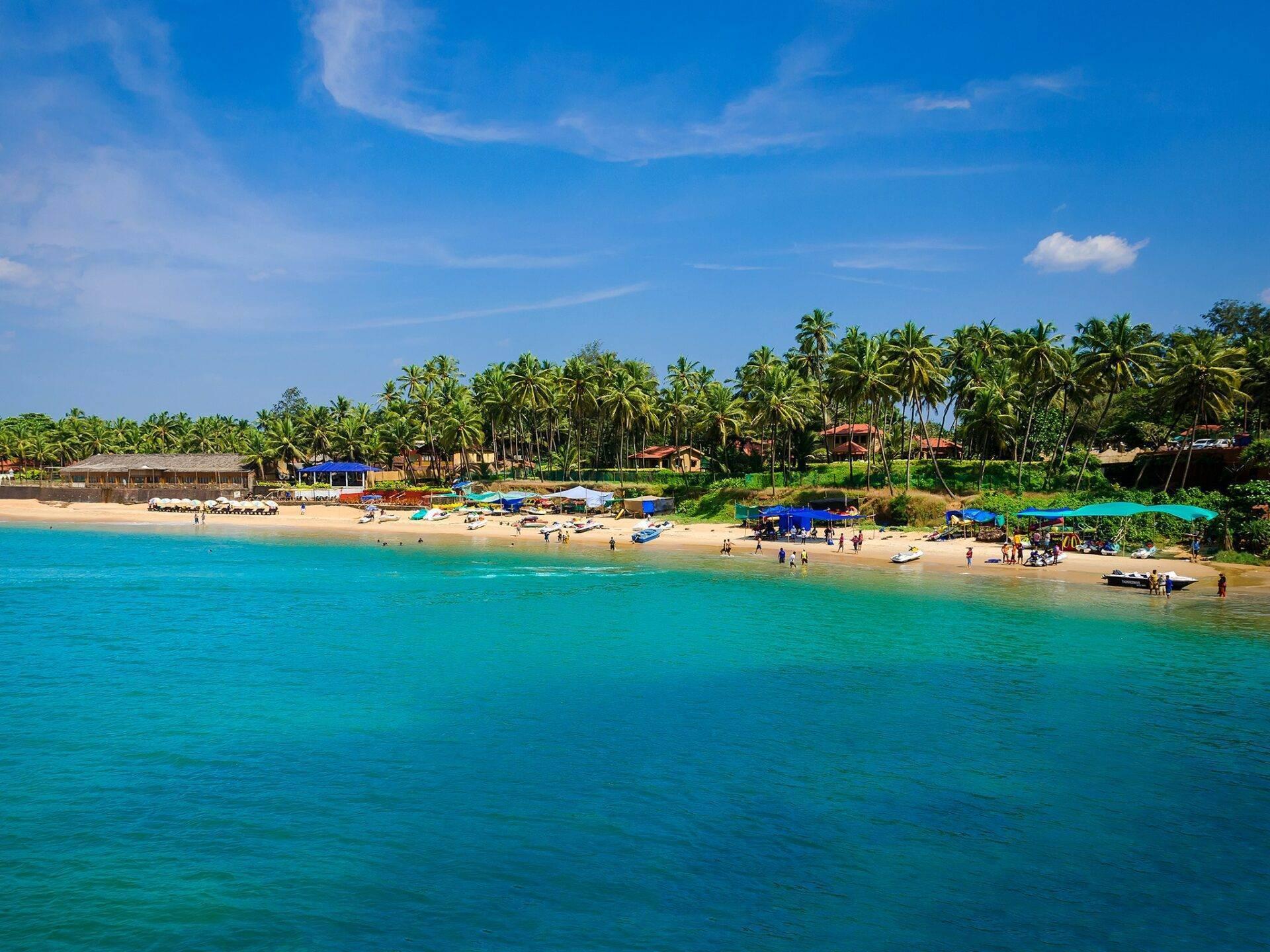
Goa is India’s best-known beach destination, with its palm-fringed shores and warm Arabian Sea waters. The region also boasts a unique colonial heritage: hundreds of baroque churches and convents, listed by UNESCO, bear witness to four centuries of Portuguese presence. The villages of Panjim and Fontainhas, with their colourful house fronts and Portuguese-style cafes, feel entirely different from the rest of India.
The northeast, India’s undiscovered side
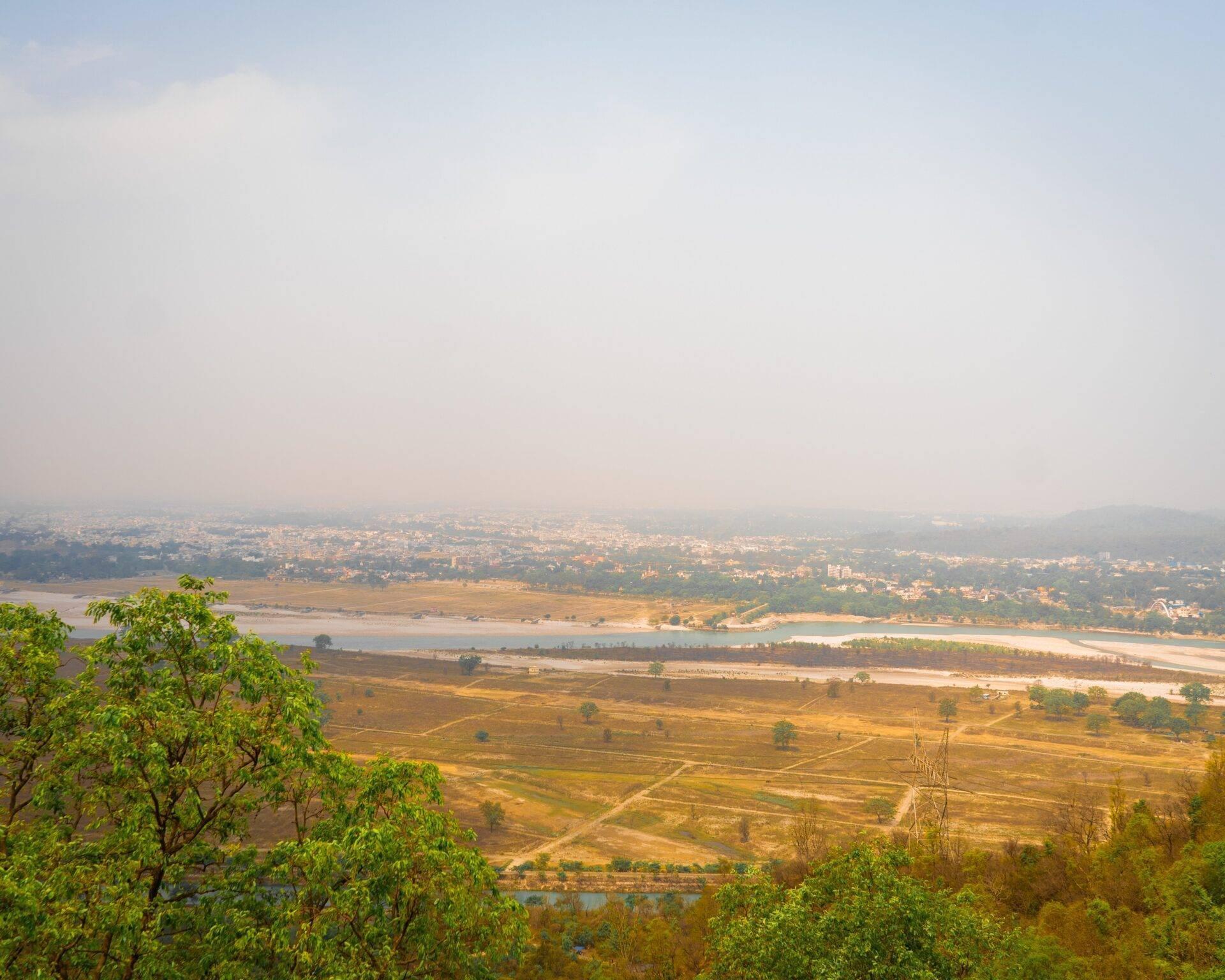
The northeastern states (Sikkim, Meghalaya, Assam, Arunachal Pradesh) rarely feature on the classic tourist trail. Terraced rice paddies, misty valleys, wild rivers and villages with living traditions make for a remarkably rich human and natural landscape. Assam is also home to Kaziranga National Park, one of the last refuges of the one-horned Asian rhinoceros and a UNESCO World Heritage Site.
When to go and how to plan your trip
From November to March, the climate is pleasant across most of India: temperatures are mild, rain is rare and skies are clear. Rajasthan, the Golden Triangle, Varanasi and the south are all at their best in winter. For Ladakh, the window opens between June and September. The monsoon (June to September) closes certain roads, but transforms the Western Ghats and the northeast into landscapes of extraordinary greenery.
For a first visit, the Golden Triangle remains the most logical starting point: two weeks are enough to combine Delhi, Agra and Rajasthan. If you are looking for other inspiring destinations, our guides on things to do in Greece and things to do in Morocco explore regions with equally striking contrasts.
FAQ
What is the best time of year to visit India?
From November to March, the climate is ideal across most regions: Rajasthan, the Golden Triangle, Kerala and Varanasi are all at their best. For Ladakh, June to September is the window to aim for. The monsoon (June to September) turns the Western Ghats and the northeast into lush, verdant landscapes, but makes some roads impassable.
How long do you need to travel India?
Two weeks cover one main axis: the Golden Triangle with Rajasthan, or Kerala combined with Goa. To take in both north and south, allow three to four weeks. Most travellers come back, as India is simply too vast to explore in a single trip.
Where should a first-time visitor to India start?
The Golden Triangle (Delhi, Agra, Jaipur) is the most popular starting point. The density of sites, the quality of accommodation and the ease of transport make it a solid introduction. From Jaipur, Rajasthan opens naturally towards Jodhpur, Jaisalmer and Pushkar.
Is India safe for travellers?
India receives millions of tourists every year. As with any large country, comfort levels vary by region. In tourist areas, organised accommodation and transport provide reliable reference points. Check the travel advice from your foreign ministry before departure.
Do you need travel insurance for India?
Healthcare in India’s major cities is accessible, but costs at private facilities can be high. In remote areas such as Ladakh or the Western Ghats, hospitals are scarce. Medical cover and repatriation insurance is strongly recommended, particularly for high-altitude destinations or extended stays.