
The Algarve packs some of Europe’s most photographed beaches into less than 200 km of coastline: limestone and ochre cliffs carved by the Atlantic, sea caves you can only reach by water, long wild stretches and hidden coves barely marked on any map. Here are eight beaches with very different personalities, from the Barlavento (west coast) to the Sotavento (east coast), to help you find the one that truly fits your trip.
Insure my trip to PortugalPraia da Marinha: limestone cliffs and marine life
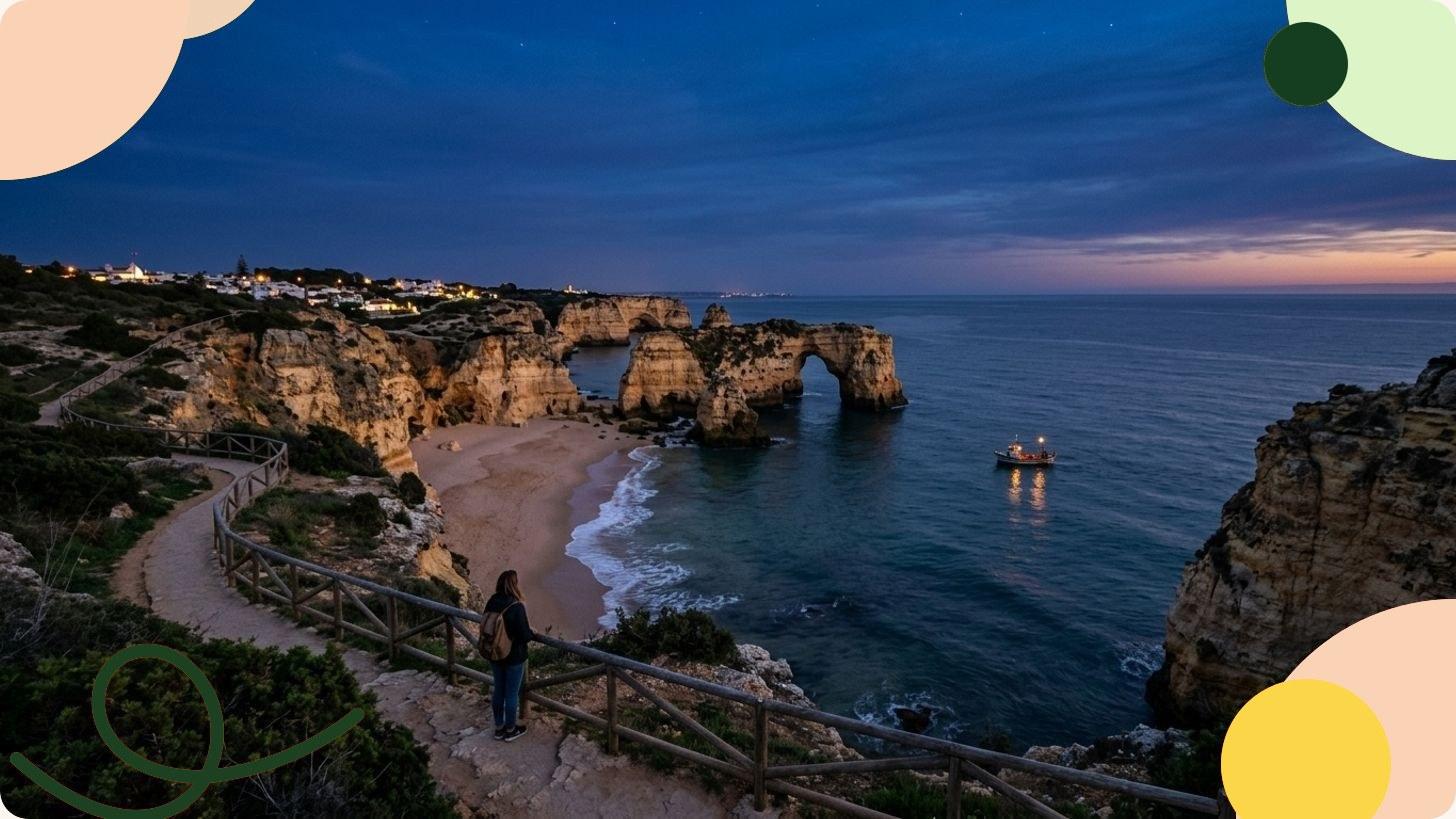
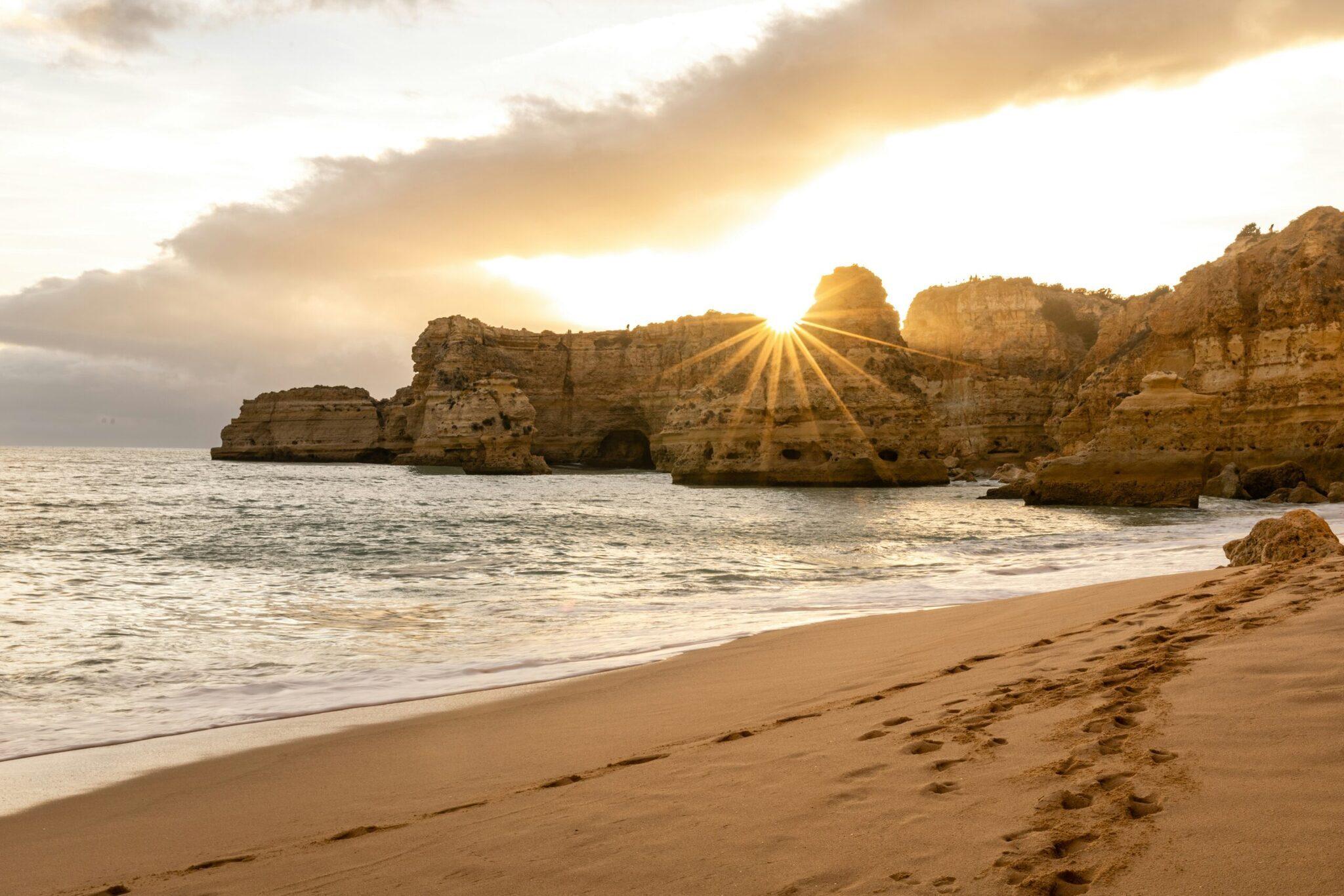
Tucked 8 km south-east of Lagoa, Praia da Marinha regularly features on lists of Europe’s most beautiful beaches. What sets it apart is a series of rock pinnacles, arches and limestone caves forming an extraordinary natural backdrop. At low tide, the exposed rocks shelter sea anemones and starfish. For snorkelling, the water clarity is outstanding. The beach is small: arrive early, as the car park fills up quickly on mornings in July and August.
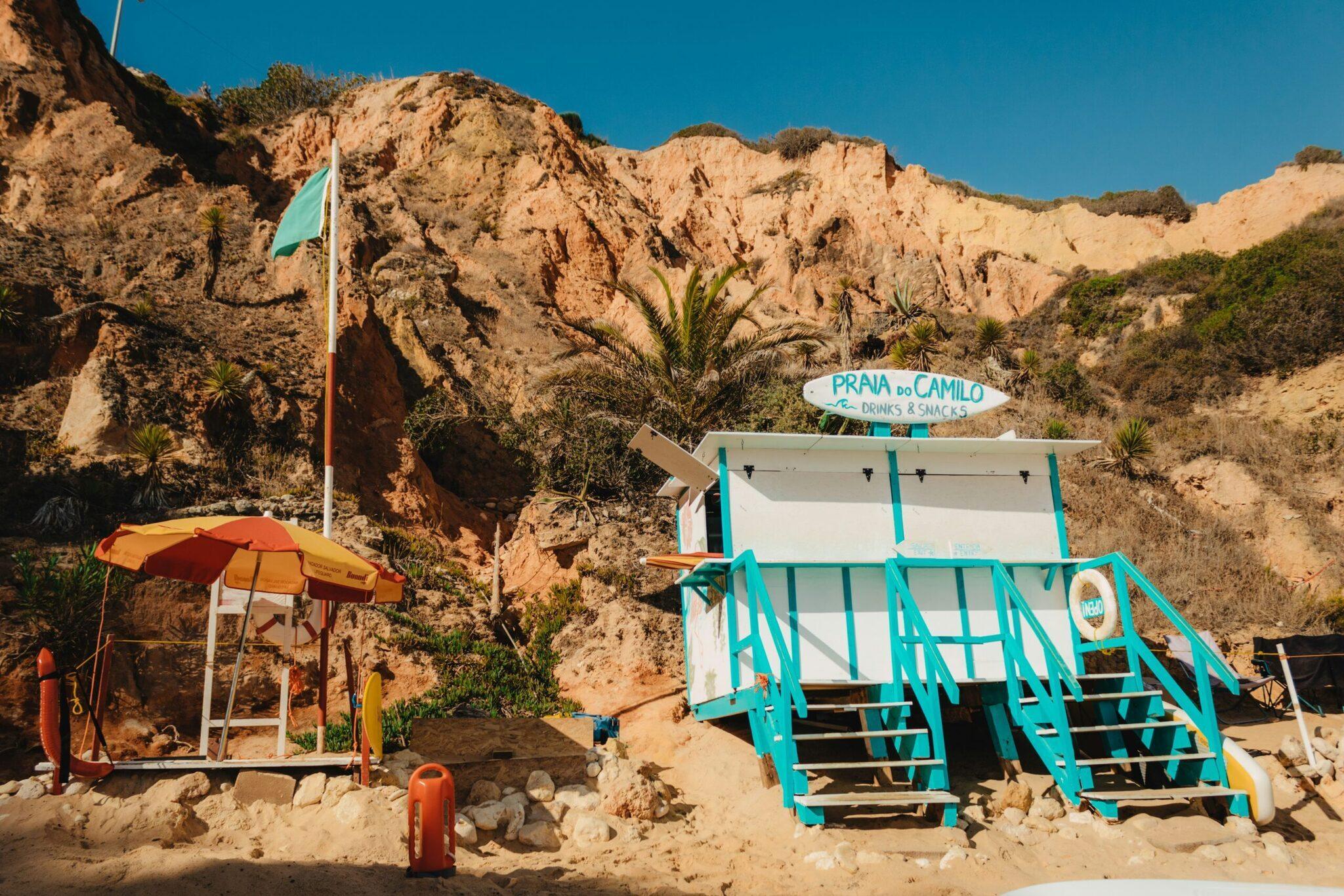
Praia do Camilo: Lagos’s secret cove
A wooden staircase descends between two cliff faces to reach Praia do Camilo, a compact cove with fine sand and clear water. The view from the clifftop across the rock formations is one of the most striking on the Lagos coastline. The beach is small and fills up fast on busy days: visit outside peak season or early in the morning to make the most of it.
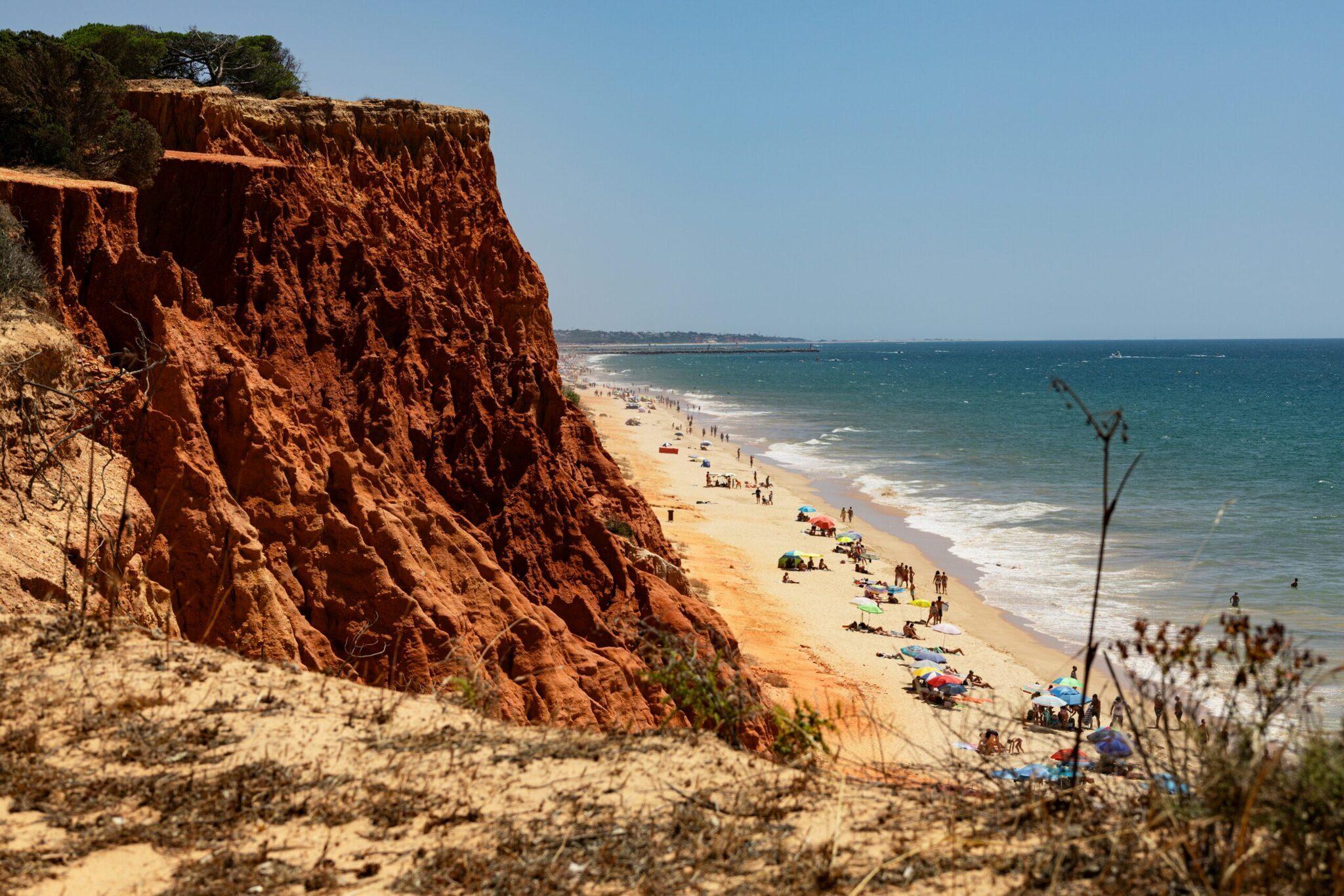
Praia da Falésia: six kilometres of ochre and red cliffs
Eight kilometres east of Albufeira, Praia da Falésia is one of the longest beaches in the Algarve, with 6 km of unbroken sand. The first thing that strikes you is a wall of layered cliffs in white, ochre and deep red, shifting in colour throughout the day. For a long morning walk, a surf session or paddleboarding, it is one of the best spots in the region. Several marked access paths lead down from the clifftop to the beach.
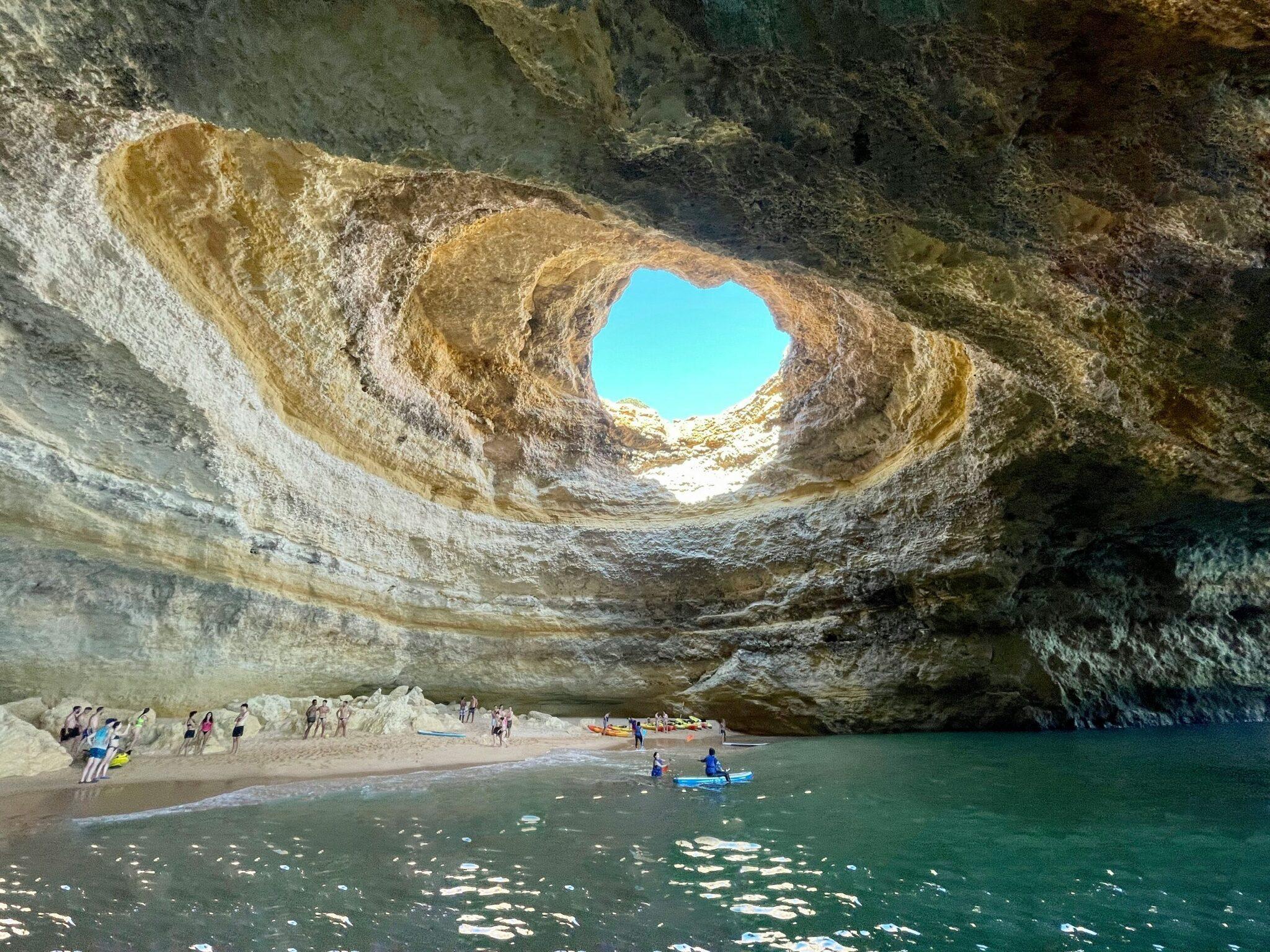
Praia de Benagil and Algar de Benagil: a cave only reachable by sea
The beach at Benagil itself is modest: a crescent of sand wedged between two cliffs, pleasant but not exceptional. What earns it worldwide fame is the neighbouring Algar de Benagil cave. Accessible only by sea, this limestone cavity contains an inner beach bathed in natural light that filters through a circular opening in the ceiling. By kayak, paddleboard or boat trip from Benagil or Portimão, you can venture inside and discover one of the most photographed geological formations in Portugal.
The Algarve is renowned for its remarkable concentration of natural arches, sea stacks and sea caves, and Algar de Benagil is the most celebrated example in Europe.
Praia da Rocha: Portimão’s lively beach
Two kilometres from the centre of Portimão, Praia da Rocha is one of the widest and most popular beaches in the Algarve. Fine sand, beach bars, watersports clubs and restaurants with terraces: this is the option for those who want a lively atmosphere. The cliffs flanking the beach offer open views across the Atlantic, and the seafront promenade is a pleasant stroll even off season.
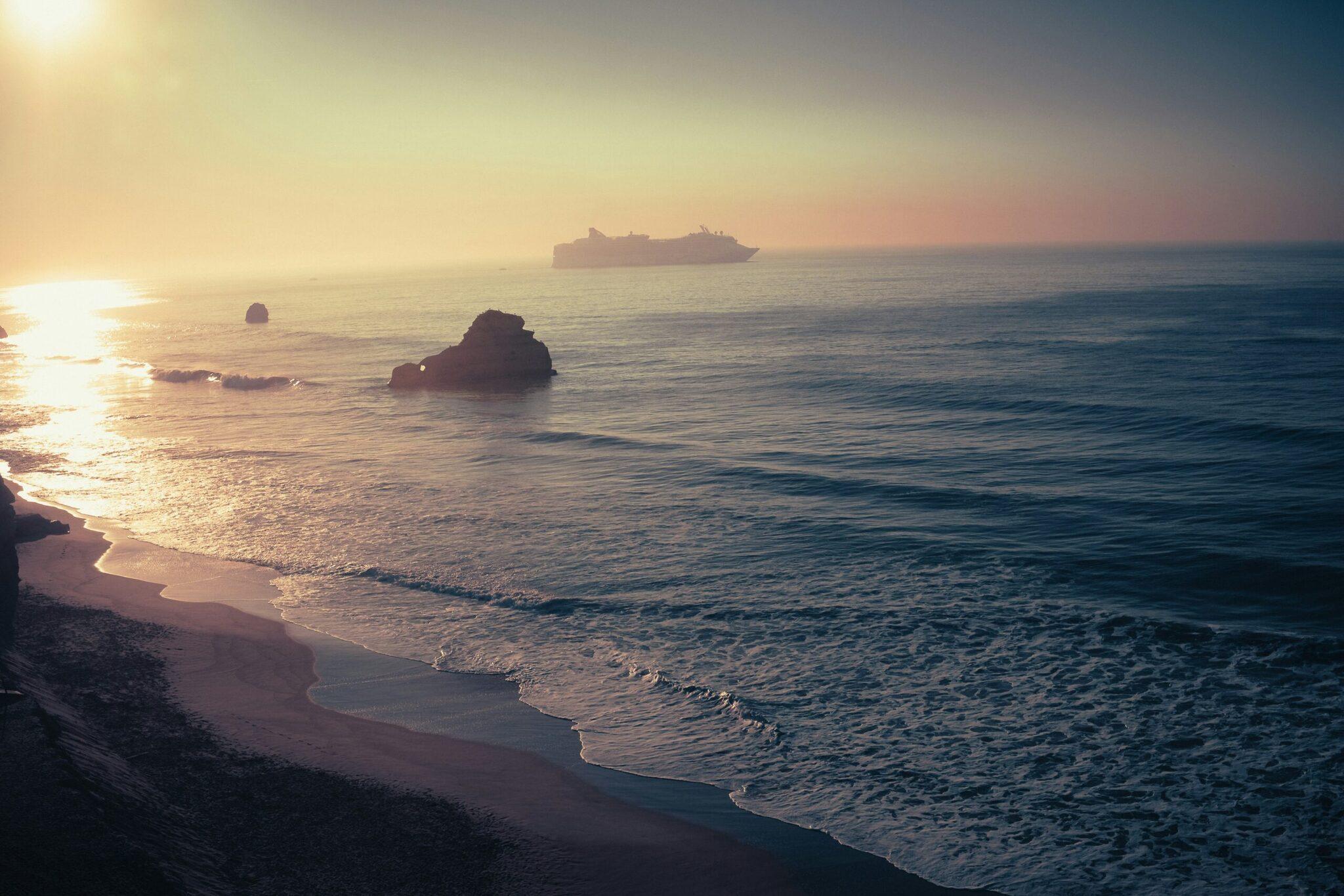
Praia de Odeceixe: where the River Seixe meets the Atlantic
Praia de Odeceixe marks the natural boundary between the Algarve and the Alentejo. Seen from above, it resembles a horseshoe nestled between the ocean and the River Seixe. This dual water frontage gives it a real practical advantage: surfers head for the Atlantic waves while families with young children settle on the river side to enjoy calm, shallow water. Reached from the hilltop village of Odeceixe nearby, it remains one of the most characterful beaches on the coast.
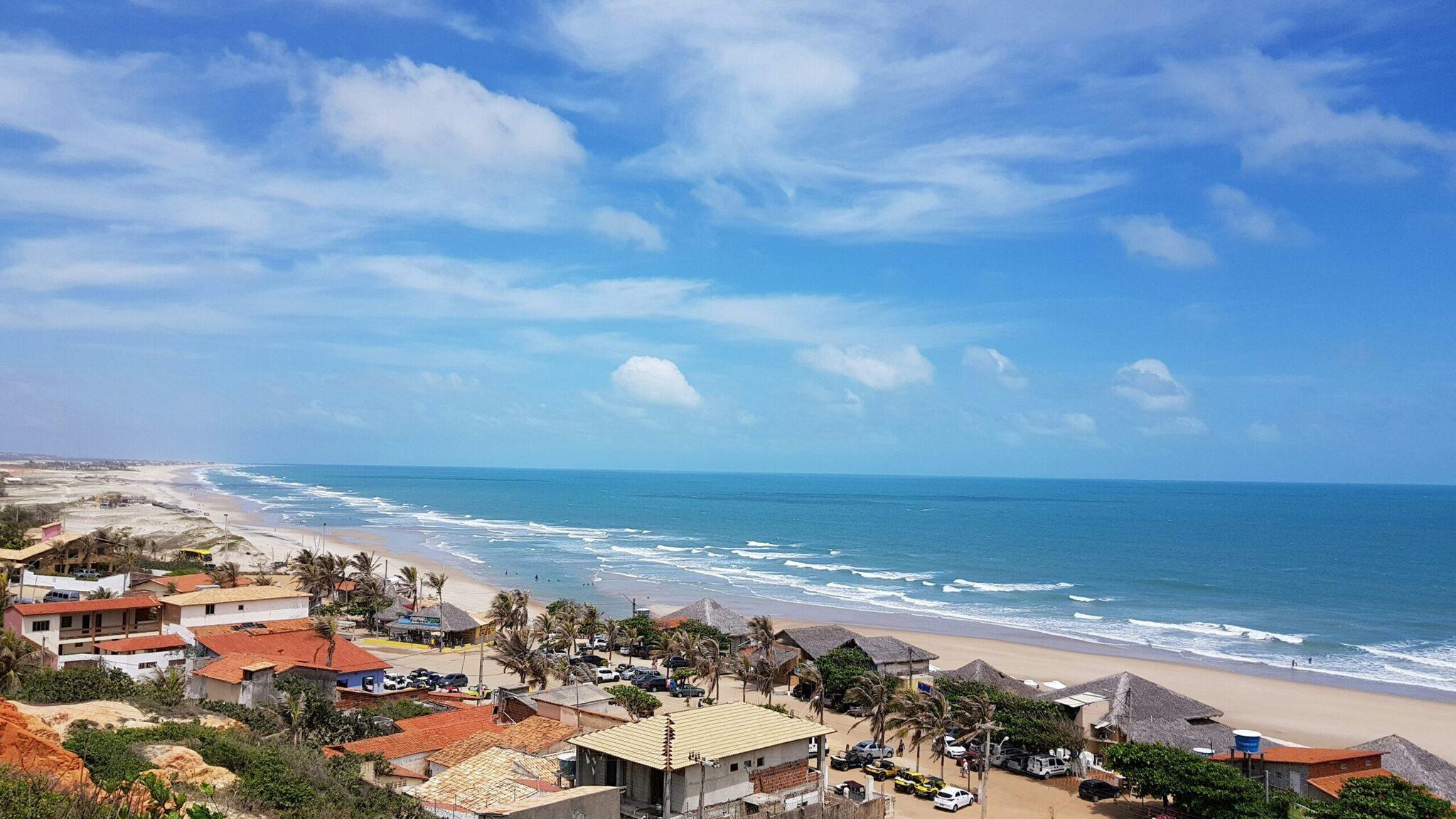
Praia do Amado: the waves of the Costa Vicentina
South of the village of Carrapateira on the Algarve’s west coast, Praia do Amado is a wild beach framed by dark cliffs and dunes. The Atlantic’s reliable swell makes it one of the most sought-after surf destinations in the region, with several surf schools on site and competitions held here every year. Even without a board, the relaxed atmosphere and unspoilt setting make it worth the journey. This is the beach for those who want space, nature and a bit of wind in their hair.
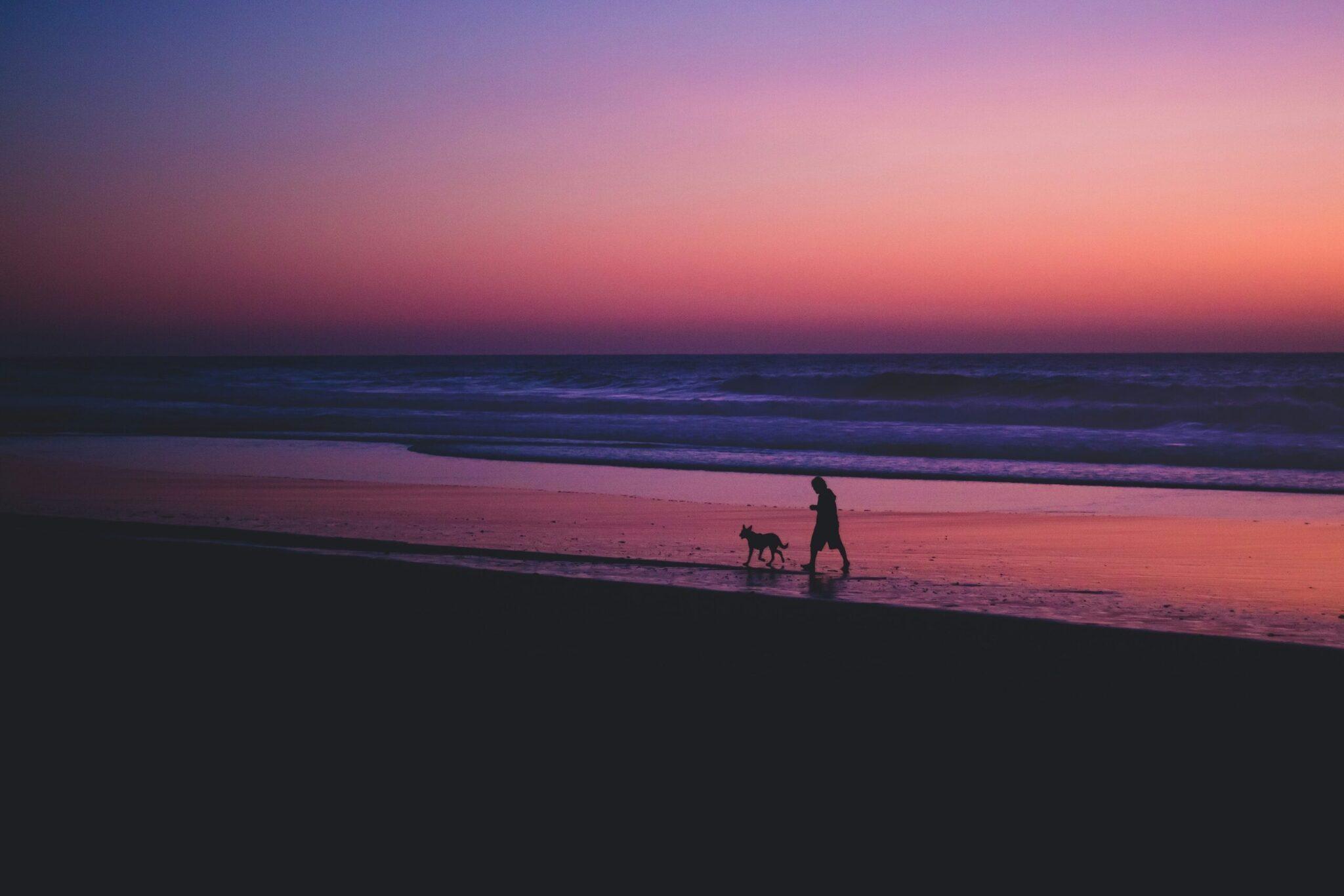
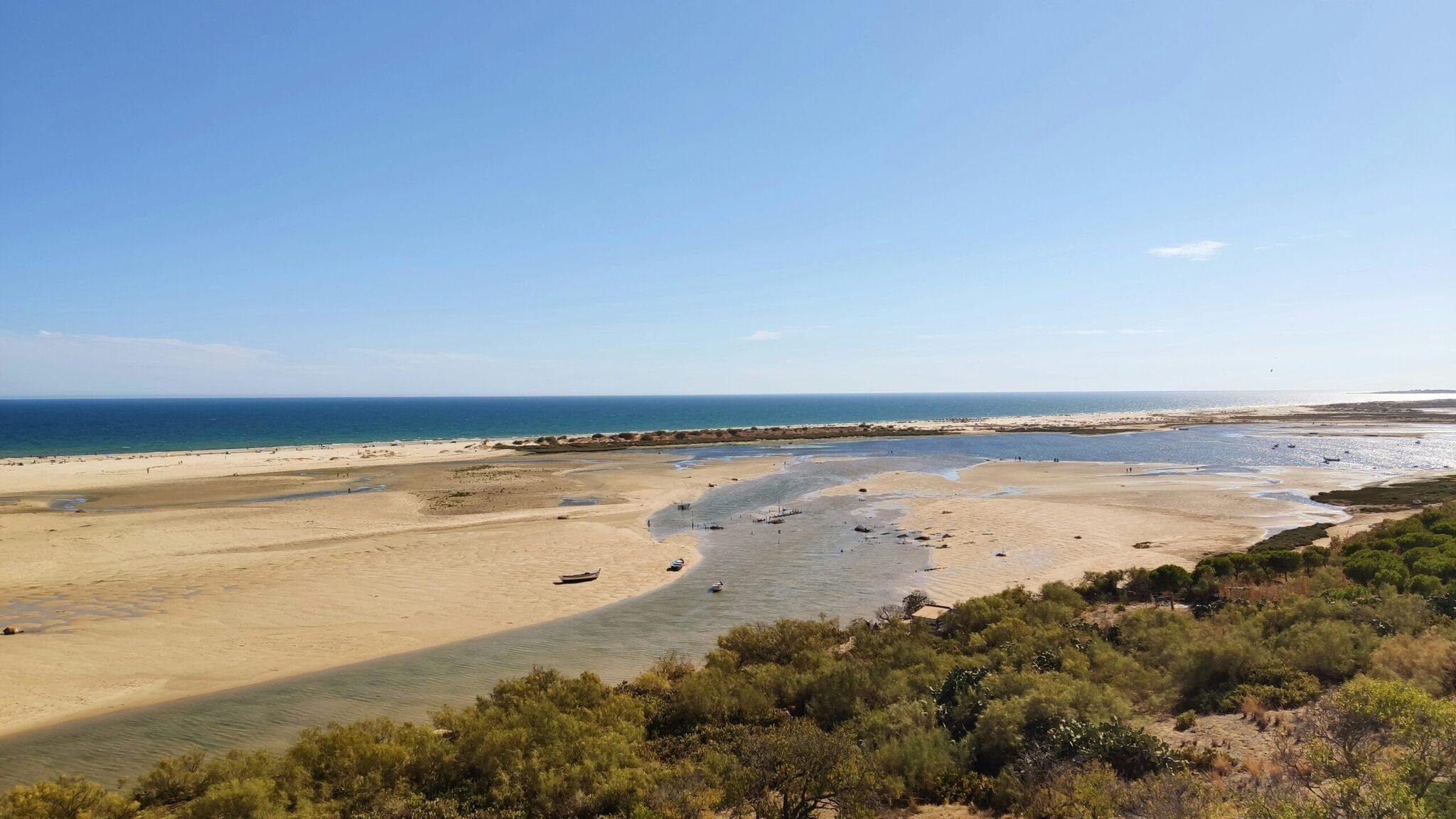
Praia de Cacela Velha: the quiet gem of the Ria Formosa
At the eastern tip of the Algarve, Praia de Cacela Velha stretches for around 1.7 km of sand along the Ria Formosa. Most visitors reach it by boat from Sítio da Fábrica (crossing from €1.50) or on foot from Praia da Manta Rota. That detail makes all the difference: even at the height of summer, the beach stays relatively uncrowded. The sandbanks shift with the tides and wind, the water is shallow and a vivid blue-green, and the village of Cacela Velha, with its whitewashed houses and small fortress, looks down over the whole scene from the hillside.
Which beach should you choose?
The Algarve breaks down into three distinct personalities:
- West coast and Costa Vicentina: wild scenery, powerful waves, a back-to-nature feel. Praia do Amado and Praia de Odeceixe for surfers; Praia da Marinha and Praia do Camilo for those who love dramatic rock formations.
- East coast and Ria Formosa: calmer, warmer water, sheltered lagoons, far fewer crowds. Praia de Cacela Velha leads the way.
- Central coast (Albufeira to Portimão): the best-known and most accessible beaches. Praia da Falésia, Praia de Benagil, Praia da Rocha.
If you want to explore beyond the beaches, our guide Things to Do in Portugal: 20 Must-Sees has plenty of ideas for the rest of the country. Still weighing up your summer destination? Our Where to Go in July guide can help you decide. And if you are drawn to beaches further afield, the best beaches in Brazil and the best beaches in South Africa offer very different but equally captivating worlds.
FAQ
Which is the most beautiful beach in the Algarve?
There is no single answer. Praia da Marinha is universally praised for its limestone formations and crystal-clear water. Praia da Falésia draws visitors with its 6 km of colourful cliffs. Algar de Benagil is the most dramatic if you enjoy geological curiosities. Praia de Cacela Velha is the top pick for those looking to escape the crowds.
How do you get to the Benagil Cave?
The cave is accessible by sea only. You can hire a kayak or paddleboard on Benagil beach, or join a boat trip departing from Benagil or Portimão. Swimming from the beach to the cave is possible for confident swimmers, but always depends on sea conditions on the day.
Which Algarve beach is best for families?
Praia de Odeceixe offers calm, shallow water on the River Seixe side, ideal for young children. Praia de Cacela Velha, with its warm, shallow waters in the Ria Formosa, also suits families looking for a peaceful setting. Praia da Rocha has plenty of facilities and a wide expanse of sand.
When is the best time to visit the Algarve for beaches?
The beach season runs from June to September. July and August are the hottest and busiest months. June and September offer a good balance: pleasant sea temperature, fewer crowds and often more competitive prices.
Are the Algarve beaches crowded in summer?
The most accessible beaches, such as Praia da Rocha, Praia da Falésia and Praia de Benagil, can get very busy in July and August. Arriving early in the morning helps considerably. Praia de Cacela Velha and Praia de Odeceixe tend to stay less crowded thanks to their more challenging access.