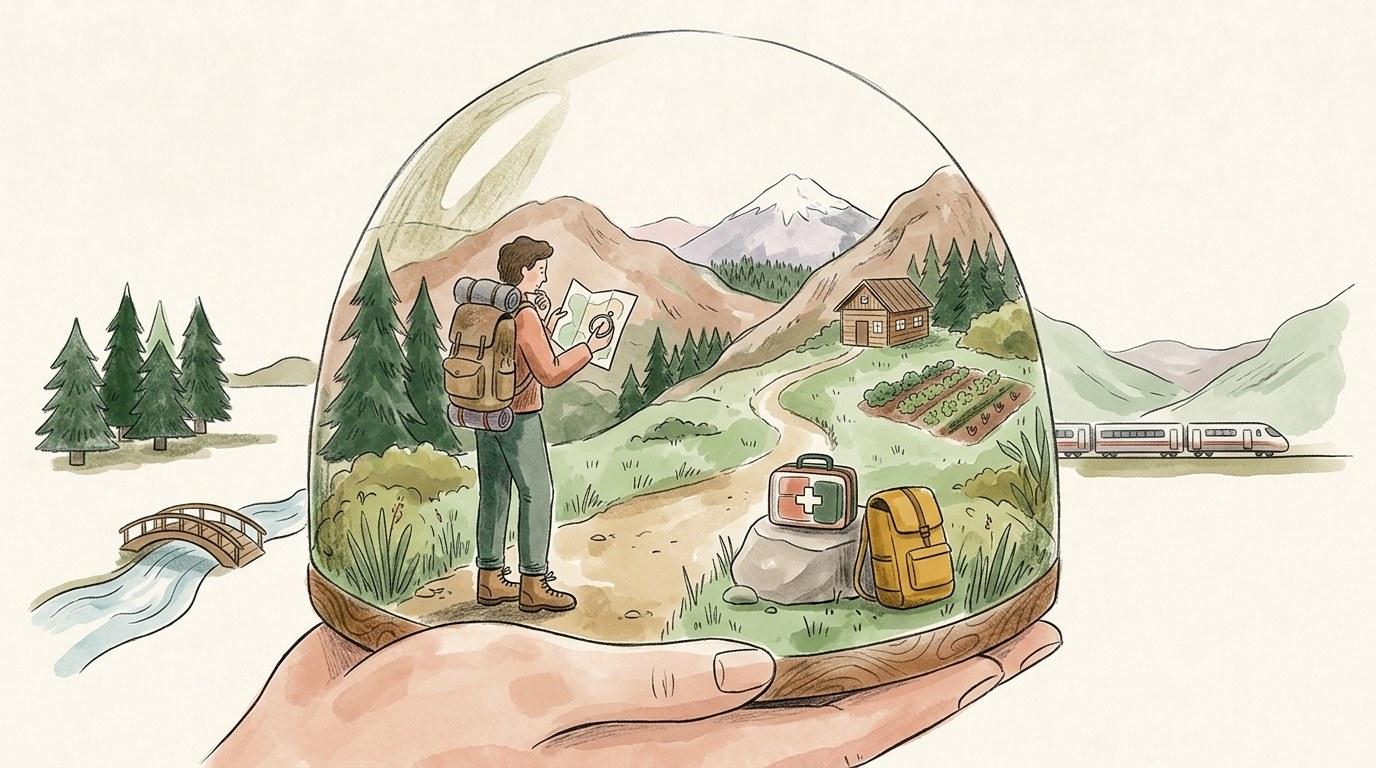

Responsible travel means exploring the world in a way that minimises environmental and social impact while supporting local economies. In 2025, this approach has gone mainstream: according to Booking.com’s annual study, 79% of travellers make sustainable tourism a priority, and 93% say they want to incorporate sustainable choices into their trips, more than double the 42% recorded in 2016.
Growth Backed by the Numbers
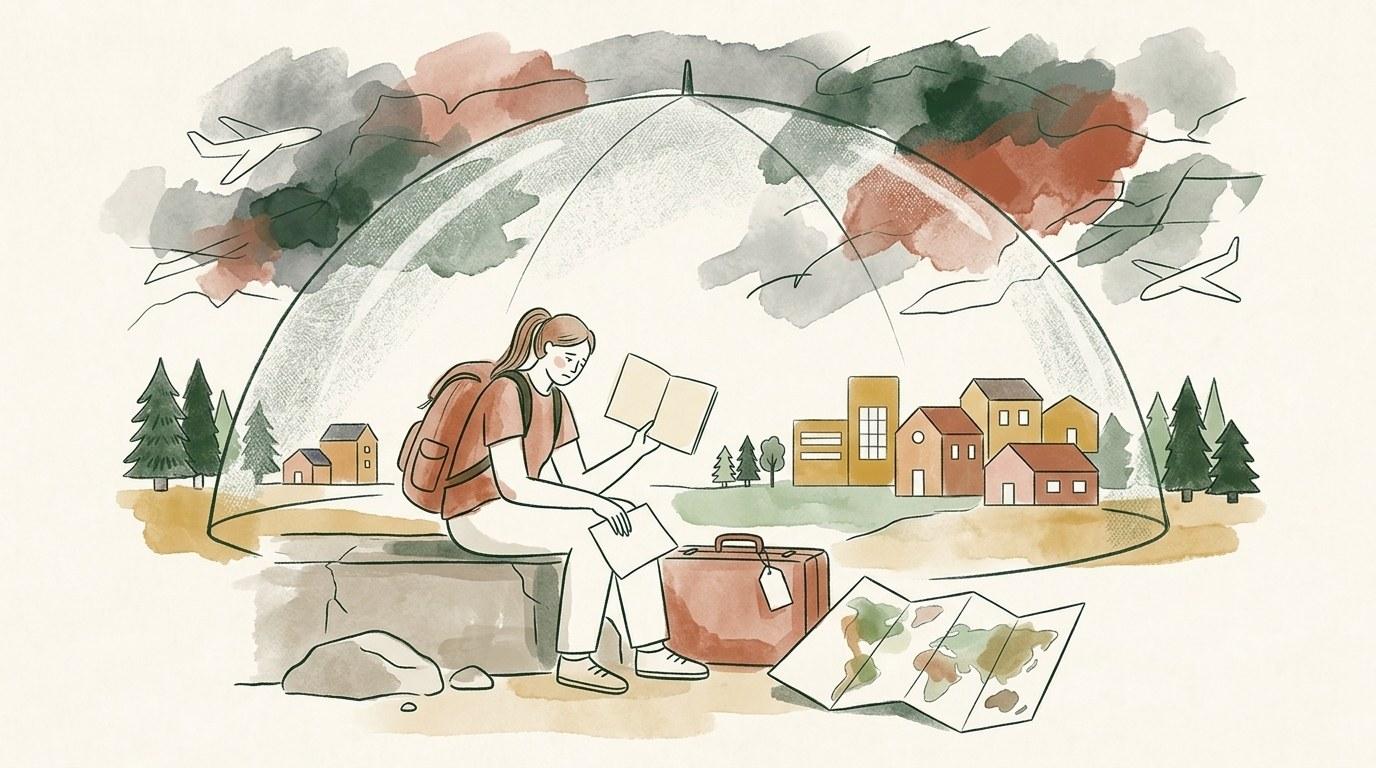
Attitudes are shifting fast. But on-the-ground reality tempers that enthusiasm: according to the 2024 Sustainable Tourism Barometer, 71% of French travellers still have a vague or non-existent understanding of sustainable tourism, and only 16% actually put sustainable practices into action during their trips.

Credit: Our treehut in the jungle by Christian Haugen, CC BY 2.0, via Openverse.
The gap between intention and practice remains the sector’s biggest challenge. Among the identified barriers, 89% of French travellers believe that travelling sustainably costs as much, if not more, than conventional tourism. Yet several affordable options do exist, starting with how you choose to get there.
To explore how these shifting expectations are reshaping the tourism market, read our analysis of the travel trends for 2025.
Transport: Your Biggest Impact
Transport accounts for the largest share of a trip’s carbon emissions. In response, flight alternatives are gaining ground: long-distance rail, intercity carpooling and cycling itineraries are attracting a growing number of footprint-conscious travellers.
For journeys where flying remains unavoidable, many airlines offer carbon offset programmes. Industry experts recommend, however, that you reduce before you offset: choosing a destination reachable by train rather than a budget flight is still the most effective action you can take.
Slow travel (travelling less frequently but for longer) is emerging as a concrete answer: it cuts the number of journeys while deepening your experience of a place.
Accommodation That Puts Its Money Where Its Mouth Is
Eco-lodges, certified hotels, labelled guesthouses: the responsible accommodation sector has grown considerably. In 2024, 55% of French travellers felt that hotels communicate their eco-friendly actions more clearly, up from 36% the previous year.
To identify a genuinely committed property, a few practical pointers:
- Recognised certifications: national labels (Clef Verte, EU Ecolabel) or international certifications (Green Globe, Rainforest Alliance).
- Local roots: short supply chains, locally hired staff.
- Resource management: a clear, visible policy on water and energy conservation.
The Behaviours That Actually Make a Difference
Beyond transport and accommodation, responsible travel shows up in everyday choices. According to Booking.com, 46% of travellers actively respect local customs and traditions, 39% support local businesses and artisans through their spending, and 34% choose alternative destinations to avoid overtourism.
These practical actions help preserve the natural and cultural heritage of destinations. 52% of French travellers now say they are aware of tourism’s impact on local communities, not just the environment.
Cultural events are another concrete expression of responsible tourism: eco-friendly festivals show how culture, celebration and sustainability can go hand in hand.
Travel Responsibly and Well Protected
Caring for the planet and for local communities also means not placing unnecessary strain on a destination’s healthcare infrastructure. An injury, a tropical illness or an accident abroad can draw on limited local resources and lead to unexpected costs.
Taking out suitable travel insurance before you go is fully in keeping with a responsible approach: you receive prompt care, medical costs are covered in line with your policy, and you avoid adding pressure to local health systems.
Protect my tripFAQ
What exactly is responsible travel?
Responsible travel encompasses all the practices that aim to reduce tourism’s environmental and social impact: choosing lower-emission transport, staying in committed accommodation, buying local, respecting local cultures and avoiding overcrowded areas. It is not a single certification but a set of habits to adapt to your destination and circumstances.
Is responsible travel more expensive?
Not necessarily. While some options (high-end eco-lodges, solidarity tourism) do carry a premium, other responsible practices can actually cut costs: travelling off-peak, taking the train rather than flying, choosing local markets over tourist restaurants. According to the 2024 Sustainable Tourism Barometer, 89% of French travellers believe it costs more, a perception that does not always reflect reality.
How do I choose eco-friendly accommodation?
Look for accommodation carrying recognised certifications (Clef Verte, EU Ecolabel, Green Globe). Also check the property’s local approach: locally hired staff, short supply chains, and transparent water and energy management.
How can I reduce my carbon footprint when travelling?
The most effective step is to cut down on flights, especially short-haul routes that can be replaced by train. When flying is unavoidable, choose economy class (which spreads the footprint per passenger) and certified offset programmes. On the ground, use public transport, cycle or walk.
Can you travel responsibly on an international trip?
Absolutely. Responsible international travel means supporting local guides and operators, respecting environmental regulations (nature reserves, protected areas) and cutting down on single-use plastic. Some destinations are actively developing ecotourism, such as Costa Rica, Rwanda and Bhutan.