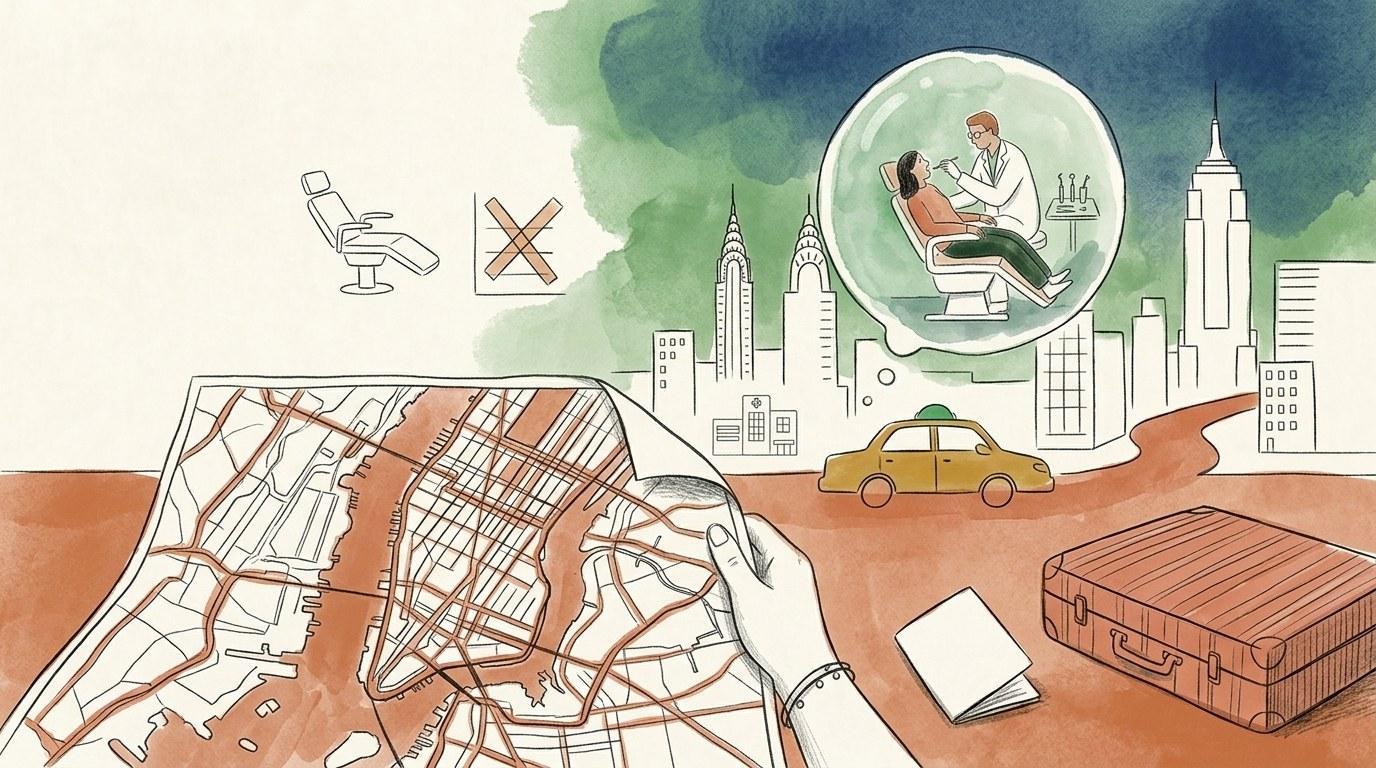


Travelling freely means leaving without fear that the unexpected will turn into a financial disaster. A well-chosen travel insurance policy does not restrict that freedom; it makes it possible. It covers medical expenses abroad, repatriation and on-the-ground assistance: risks your bank card rarely covers well, and that state healthcare simply does not cover outside Europe.
Why travel insurance always ends up last on the list
Between booking flights, sorting accommodation and planning itineraries, travel insurance tends to slip to the bottom of the to-do list. Two common assumptions drive this: “my bank card covers me” and “it only happens to other people.”
Neither belief is entirely wrong. But the real issue is not how likely an incident is; it is what it costs when one does happen. Travel insurance does not change the odds of something going wrong. It changes what that something costs you financially.
The financial risks nobody truly plans for
Medical bills abroad: amounts that can overwhelm without cover
Outside Europe, state healthcare provides no cover for medical treatment. Within Europe, the EHIC (European Health Insurance Card) allows partial reimbursement of emergency care, calculated at domestic rates that are often far below actual local costs.
In 2025, the average cost of a hospital stay abroad exceeds €25,000. In the United States, emergency surgery can reach €40,000 without being at all exceptional. Without insurance, you foot that bill upfront, or your family does it for you.
Travel insurance covers these costs directly through cashless treatment, sparing you from freezing large sums on your card and waiting weeks for reimbursement.
To understand precisely what your standard health cover includes abroad, read our guide on the differences between travel insurance and health insurance.
Medical repatriation: the guarantee everyone forgets until they need it
Medical repatriation cover is the most frequently overlooked benefit when buying a policy, and one of the most critical. A medically equipped aircraft costs up to €40,000. For serious cases requiring an onboard medical team on a long-haul flight, the bill can go even higher.
No public body reimburses these costs if you were uninsured at the time. Travel insurance does not just pay for the transport; it arranges everything. Your insurer coordinates with local medical teams, selects the receiving hospital and ensures continuity of care between the two countries.
Get my travel insuranceRound-the-clock assistance: never facing the unexpected alone
Behind the promise “travel freely, but never alone” lies a practical reality: a helpline available at any hour. Lost documents, a medical emergency in the middle of the night, a family member hospitalised abroad: you have access to advisers who know local procedures, speak your language and can mobilise the right contacts on the ground.
This benefit is hard to put a price on. Its value becomes clear the moment you are alone in a crisis, far from home.
To see in concrete terms what travel insurance changes in a real situation, read our article on what actually changes the day you need it.
Your bank card cover: useful, but with real blind spots
Bank card cover is often cited as a reason not to buy travel insurance. The protection is real, but it comes with significant limits worth knowing before you travel.
Strict activation conditions. Cover only applies if you paid for the entire trip (flights, accommodation) with that card. A partial payment via another method can reduce or even void the protection.
Time-limited. Protection is capped at 90 consecutive days abroad. Some standard cards drop to 30 or 60 days, which effectively rules out extended trips or round-the-world journeys.
Sports activities excluded. Riding a scooter in South-East Asia, off-piste skiing, high-altitude trekking, diving: most bank cards exclude anything beyond swimming and light walking.
Medical limits too low for some destinations. Even premium cards (Visa Premier, Mastercard Gold), whose medical cover can reach €155,000, may fall short in the United States, where a ten-day hospital stay can exceed that figure.
Excluded countries. Destinations listed as high or very high risk by the French Foreign Ministry are generally excluded from card cover.
Before you travel, read the full terms and conditions of your card (not the marketing brochure) to understand what you are actually covered for.
Matching your cover to your destination and trip
Recommended medical cover limits vary by destination:
- Schengen area (required for visa applications): minimum €30,000 of medical cover.
- Non-EU Europe, Asia, Africa, Latin America and the Caribbean: aim for at least €150,000.
- United States and Canada: €500,000 recommended, given the exceptional cost of North American healthcare.
The nature of your trip matters as much as the destination. A short beach break carries very different risks from a solo trip lasting several months or a high-altitude trek. For extended travel, our guide on how to get insured for a round-the-world trip covers everything you need to know.
What to check before you buy
Four points to review carefully in your policy’s terms and conditions:
- Medical reimbursement limits: are they appropriate for your destination? A €30,000 ceiling is not enough for the United States.
- Excesses: some policies apply a fixed excess (€50 to €150) or a proportional one on medical costs, applicable to each claim.
- Exclusions: sports activities, pre-existing conditions, countries under travel advisories, and waiting periods before cover activates.
- How claims are settled: does the insurer pay the provider directly (cashless), or do you pay upfront and claim back afterwards? In an emergency, this distinction matters enormously.
Travel insurance is sometimes marketed with apparently broad guarantees but exclusions that significantly narrow the real cover. To avoid the pitfalls, read our analysis on why travel insurance is so often mis-sold and how to choose wisely.
FAQ
Is travel insurance compulsory?
It is required for any Schengen visa application, with a minimum of €30,000 in medical cover. For other destinations, it is not legally mandatory, though some countries recommend or require proof of cover upon entry. Even where there is no legal obligation, the potential financial exposure in the event of an incident is reason enough to take it out.
Does my health insurance cover treatment abroad?
Within Europe, the EHIC allows partial reimbursement of emergency care at local rates. Outside Europe, state healthcare generally provides no cover at all. Your private health top-up insurance may contribute, but rarely to the levels required for high-cost destinations such as the United States or Canada. Cover varies significantly depending on your policy.
Can I take out travel insurance after departure?
Most policies require purchase before departure. Some allow cover to be taken out up to the day of travel, but rarely afterwards. A waiting period may apply to certain benefits even for last-minute purchases.
What should I do in a medical emergency abroad?
Call your insurer’s assistance line immediately; it is available 24 hours a day. Report any significant treatment before paying for it: without prior authorisation from your insurer, you may have to pay upfront and lose the right to direct cover.
Is a Visa Premier or Mastercard Gold card enough?
These cards offer broader cover than standard cards (cancellation protection, higher medical limits), but their limitations are real: cover only applies if the entire trip was paid with that card, sports activities are generally excluded, and the medical limit may prove insufficient for destinations with very high healthcare costs. Read your card’s full terms and conditions before you travel.