
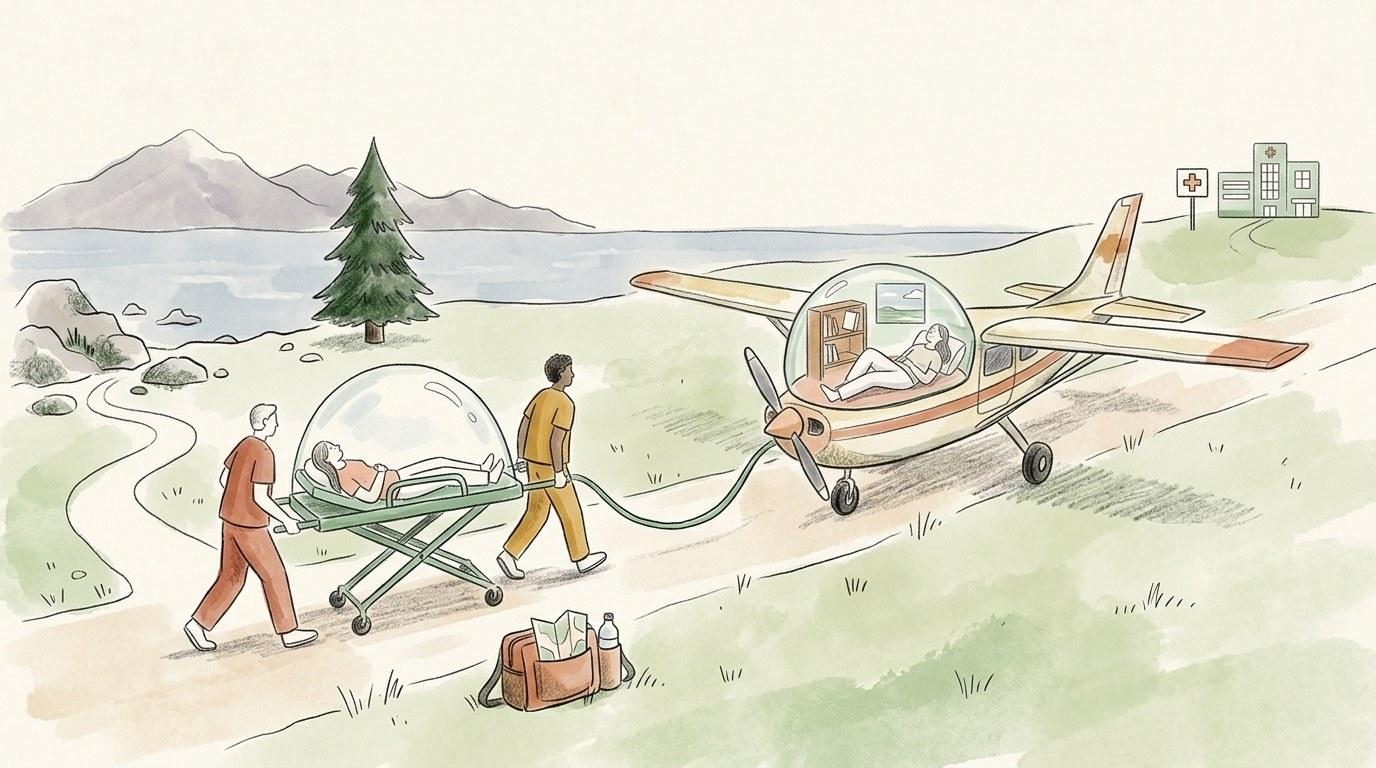

Medical repatriation insurance guarantees a medically supervised journey home if your health requires it while you are travelling abroad. This is not a luxury add-on: state health insurance does not cover this type of transfer, and a dedicated air ambulance can cost upwards of €40,000 — and as much as €250,000 depending on the distance and equipment involved. Taking out cover before you leave is the only way to access it.
What is medical repatriation insurance, exactly?
A medical transfer organised by your insurer
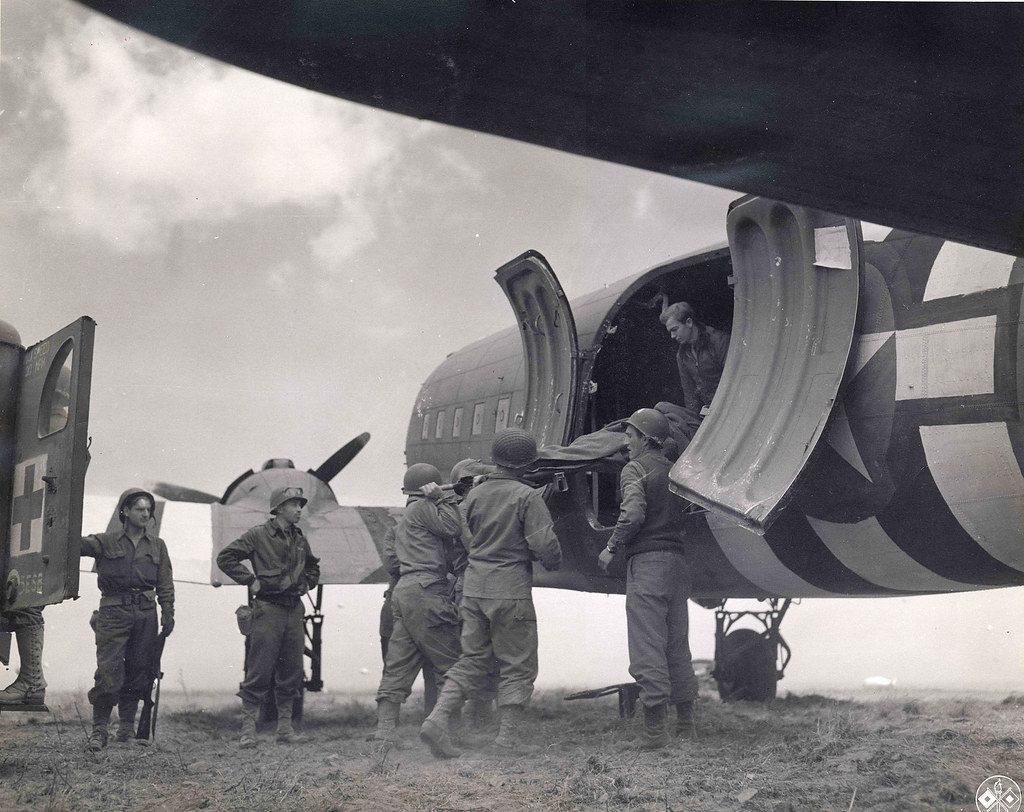
Credit: img_051_lg by PhotosNormandie, CC BY-SA 2.0, via Openverse.
Medical repatriation is a supervised transfer from the country where you are staying to a healthcare facility at home (or to your residence, depending on your condition). It is far more than an early flight: it is a complex logistical operation, coordinated around the clock by a specialist medical team that determines the most appropriate mode of transport for your situation.
There are three levels of transport, depending on severity:
- Accompanied commercial flight: for stable situations (simple fractures, non-urgent hospitalisations)
- Medically equipped commercial flight: with healthcare staff on board, for cases requiring continuous monitoring during travel
- Dedicated air ambulance: reserved for serious emergencies (stroke, heart attack, major trauma), available 24 hours a day, seven days a week
What state health insurance does not cover
State health insurance and standard supplementary health cover do not reimburse medical repatriation costs from abroad. These expenses fall entirely on you without an appropriate travel insurance policy. This is a point that is often underestimated: make sure you understand the differences between travel insurance and health insurance before you go.
Why can repatriation costs be financially devastating?
The figures speak for themselves. Here are realistic cost ranges by mode of transport:
| Mode of transport | Estimated cost |
|---|---|
| Ground ambulance | €500 to €3,000 |
| Air ambulance (helicopter) | €5,000 to €20,000 |
| Commercial flight with medical assistance | €10,000 to €40,000 |
| Dedicated air ambulance | €40,000 to €250,000 |
| Repatriation of remains | €2,000 to €5,000 |
As a concrete example, a medical evacuation from Thailand can reach €87,000. Without insurance, you or your loved ones must bear that cost alone, from overseas, in the middle of a crisis.
Take out repatriation insuranceWhen does repatriation cover actually kick in?
A medical decision, not a personal one
This is the single most important point: the decision rests with your insurer’s doctors, in consultation with the medical team on the ground. Cover is activated when:
- Your condition is at risk of deteriorating because adequate local care is unavailable
- Your life is in danger
- An unforeseeable and unintentional accident prevents you from returning home under your own steam
- You are medically stable enough to travel, but require specialist care back home
Simply wanting to return earlier or preferring treatment at home is not sufficient to trigger a repatriation.
What to do in an emergency
- Call the 24/7 assistance number shown on your policy certificate or insurance card (keep this on you at all times)
- Give your policy number and the medical details of the situation
- Your insurer’s medical team contacts the doctors on the ground, assesses the situation and organises the transfer
Never make your own way home without prior agreement from your insurer: doing so risks forfeiting all entitlement to reimbursement.
What medical repatriation insurance covers (beyond the transport itself)
A comprehensive repatriation policy will typically include, depending on the contract:
- Medically supervised transport home (to your residence or a healthcare facility)
- A return flight for a travel companion (spouse or parent travelling with you)
- A visit from a family member in the event of extended hospitalisation abroad
- Repatriation of remains in the event of death abroad, including consular formalities
- Return of luggage or vehicle if you are unable to bring them back yourself
- Post-repatriation support: home help, childcare (subject to the policy)
These additional benefits vary considerably from one policy to another. Check them carefully: they make all the difference when things go seriously wrong. For a clearer picture of how these guarantees work in practice, see our guide Travel insurance: what actually changes the day you need it.
What medical repatriation insurance typically does not cover
Several situations are commonly excluded. These vary between insurers, but the most frequent are:
- Pre-existing conditions not disclosed at the time of taking out the policy
- Accidents linked to extreme sports (paragliding, mountaineering, deep-sea diving…) without a specific add-on
- Incidents involving alcohol or illegal substances
- Trips exceeding the maximum covered duration (often 90 days, depending on the policy)
- Pregnancy beyond 28 weeks, depending on the policy wording
- Destinations under an official government travel warning at the time of taking out cover or departing
Before you go: read the full policy terms and conditions, paying particular attention to the exclusions list and the definition of “pre-existing condition” – it varies between insurers. The kind of surprises that can bring a trip to a complete halt are worth identifying before you leave.
How to choose the right repatriation insurance
The criteria that actually matter
Repatriation insurance should never be chosen on price alone. Here are the key points to assess for your trip:
- The medical expenses and repatriation cover limit: opt for high limits if you are travelling outside Europe or to countries with very high medical costs (USA, Japan, Australia)
- The definition of repatriation: does it cover only the nearest hospital, or does it include return to your home?
- Activities covered: if you plan to play sport, check the specific clauses or available add-ons
- Round-the-clock assistance in your language: essential for coordinating a transfer from abroad
- Maximum trip duration covered: particularly important for extended trips
Repatriation insurance alone, or a full travel insurance policy?
A comprehensive travel insurance policy typically combines repatriation cover with overseas medical expenses, cancellation, baggage and personal liability. For trips of under a year, an all-in-one policy is usually more practical and more cost-effective than standalone repatriation cover.
FAQ
Is repatriation insurance included in credit card cover?
Some premium credit cards (Visa Premier, Mastercard Gold, etc.) include an assistance and repatriation benefit. However, the medical expenses limits are often low, and the activation conditions can be restrictive (ticket purchased with the card, capped trip duration). Always check your card’s terms and conditions before relying on it as your sole cover.
Does state health insurance cover repatriation from abroad?
No. State health insurance does not cover the cost of medical repatriation from abroad. It may reimburse certain medical expenses within EU countries via the European Health Insurance Card (EHIC), but it does not cover the organisation or cost of a medically supervised transfer home.
Can you take out repatriation insurance after you have already left?
The vast majority of policies require cover to be taken out before departure and before any incident has occurred. Taking out a policy from abroad after an accident or illness is generally impossible, or will not provide any entitlement for the current situation. Always arrange your cover before you board your flight.
What is repatriation of remains?
In the event of death abroad, travel insurance policies typically cover repatriation of remains: transport of the body home in accordance with consular formalities, a regulation coffin, and administrative coordination. This is a separate benefit from medical repatriation, but is often included in the same policy.
Do you need repatriation insurance when travelling within Europe?
Yes. The European Health Insurance Card (EHIC) gives you access to healthcare in EU countries, but it does not cover medical repatriation. In the event of a serious accident requiring a medically supervised transfer home, you would be without cover without specific travel insurance – even if you are only a few hours away.