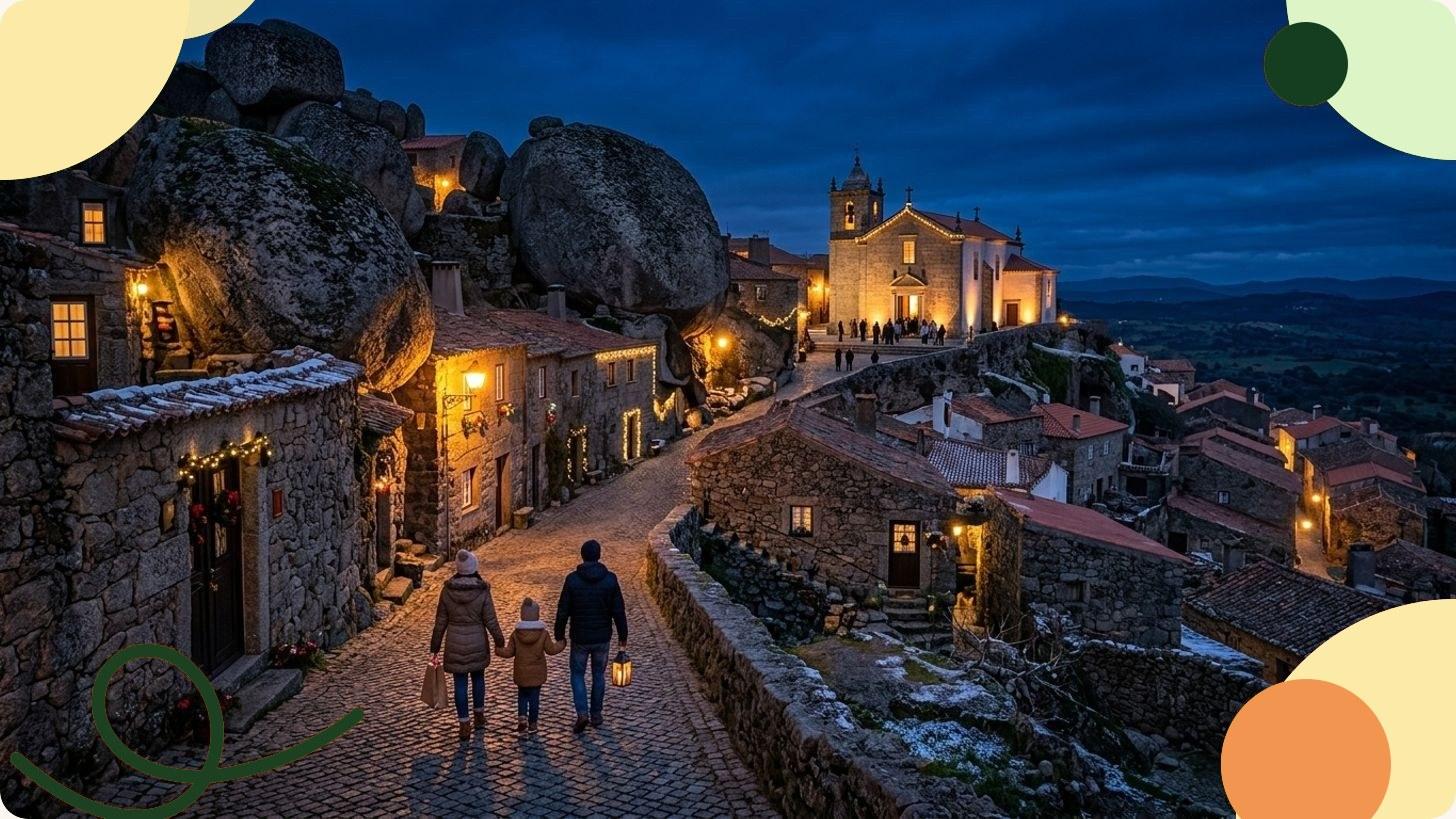

For an offbeat Christmas in Europe, the village of Monsanto, perched among the granite boulders of central Portugal, offers an atmosphere that no festive tour circuit can replicate. Far from crowded markets and uniform fairy lights, the holiday here unfolds in the silence of ancient stone and the rhythm of Portuguese rural tradition.
Get my travel insurance quoteMonsanto, the village built among the rocks
Located in the Castelo Branco region, about three hours’ drive from Lisbon, Monsanto takes its name from the Latin “mons sanctus” (sacred mountain). The village was built into the hillside by working directly with the colossal granite boulders that punctuate it: some serve as walls, others as rooftops, others as foundations. This extraordinary landscape, unique in Europe, is the result of a remarkable adaptation to the terrain rather than any aesthetic choice.
In 1938, a national competition awarded Monsanto the title of “the most Portuguese village in Portugal”, as part of a drive to celebrate rural heritage. As a prize, a silver Barcelos cockerel, one of Portugal’s most enduring symbols, was presented to the village and has been on display at the Torre de Lucano ever since. The title has had a lasting protective effect: Monsanto was shielded from development and retains its medieval character almost entirely intact today.
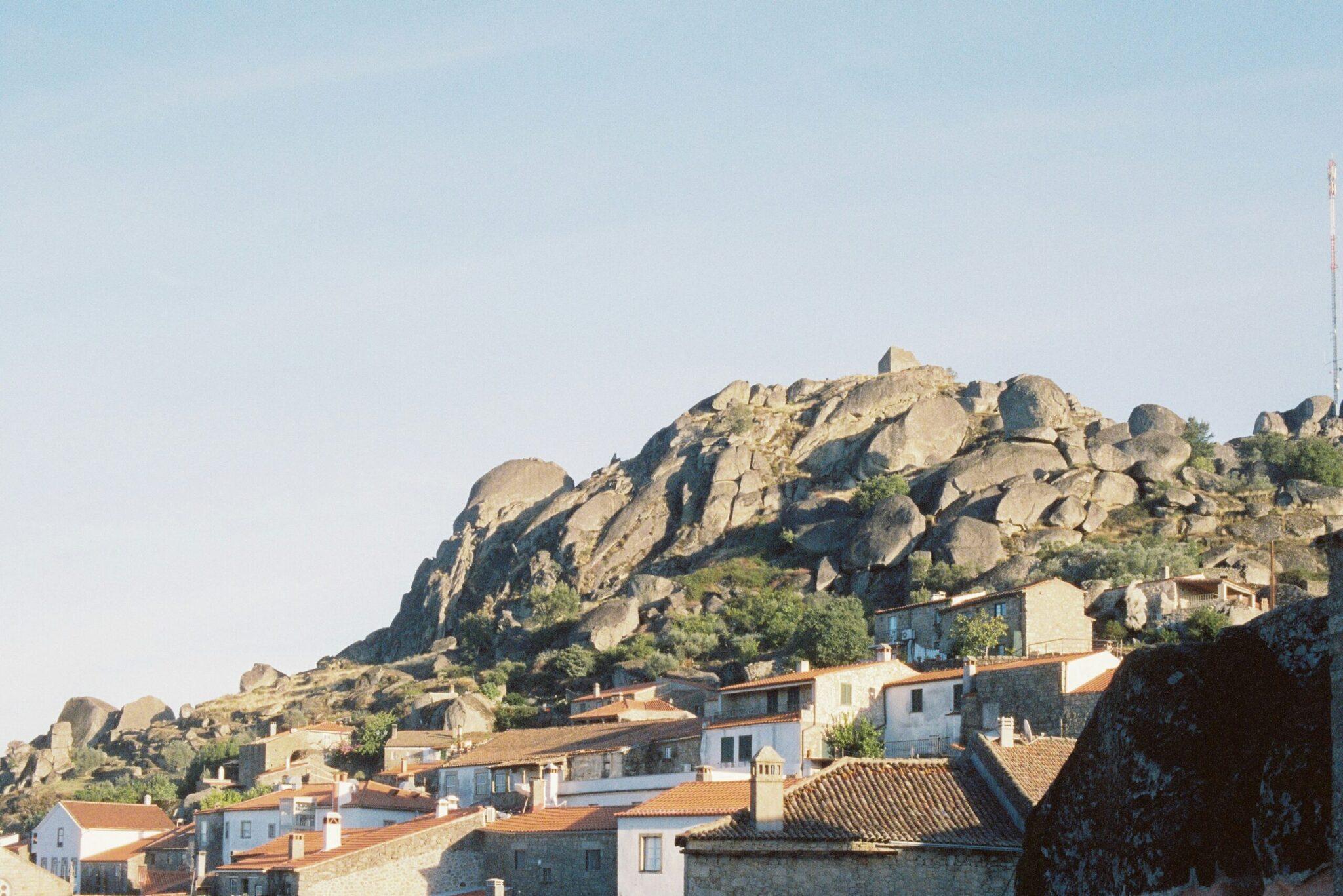
At the top of the village, the castle built in the 12th century by Gualdim Pais, Grand Master of the Knights Templar, surveys the surrounding plain from its ruins. The climb up the cobblestones is steep, but the view from the top more than rewards the effort. Close to the castle, the Chapel of São Miguel houses sarcophagi carved directly into the rock, relics of human habitation stretching back well before the Middle Ages.
What Christmas really looks like in Monsanto
In December, the village shifts to a quieter rhythm. Morning mist rolls in around the boulders, the cobbled lanes stay calm, and the Christmas decorations visible in windows and doorways are, for the most part, handmade. This is precisely what draws travellers who seek out something less showy: a Christmas without spectacle, where atmosphere matters more than lights.

For those who love Christmas in all its forms, this mineral stillness makes for a striking contrast with the most beautiful Christmas markets in Europe, as enchanting as those can be. Every traveller finds their own kind of magic.
The missa do galo and rural traditions
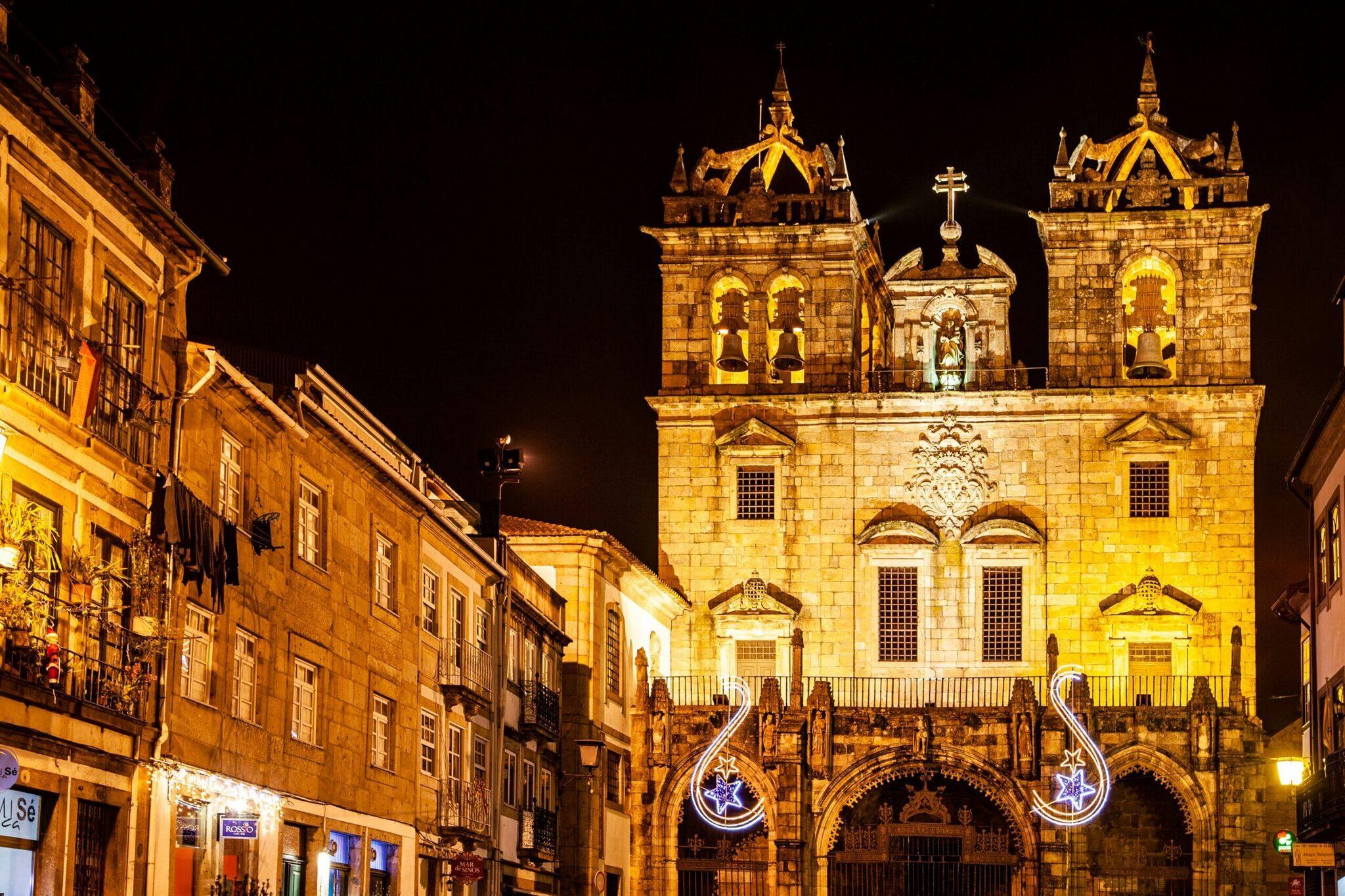
In Portugal, Christmas Eve is shaped by the “missa do galo”, the midnight mass. In rural villages, this tradition carries an intensity that larger cities have largely lost: singing fills the stone naves, and the service brings together locals and visitors alike in a moment of genuine warmth and reflection.
The consoada: Christmas Eve dinner
The consoada is the traditional Portuguese Christmas Eve meal. At its heart is bacalhau cozido, salt cod boiled with vegetables, a simple dish that symbolises sharing in rural Catholic tradition. The leftovers the following day are turned into roupa velha, a kind of hash fried in a pan.
The bolo rei, a festive brioche studded with candied and dried fruit, is another fixture of the Christmas table across Portugal. In small villages like Monsanto, these flavours carry all the more meaning in a setting of simple, generous hospitality.
Planning your visit to Monsanto in December
Monsanto can be explored on foot in half a day. Bring sturdy shoes: the cobblestones can be slippery in winter, and the climb to the castle is quite steep. From Lisbon, allow around three hours by road. The village has very limited public transport links; a car is practically essential.
If you would prefer a Christmas with more sunshine, the sunny Christmas destinations guide offers some beautiful alternatives. For a very different Nordic atmosphere, Christmas in Copenhagen is well worth considering too.
FAQ
Can you visit Monsanto in winter?
Yes. Outside the busy summer season, the village is much quieter, which makes for a more immersive visit. In December, bring shoes suited to wet cobblestones and dress warmly: nights at this altitude can be cold.
How do you get to Monsanto from Lisbon?
Allow around three hours by motorway. The village is not directly served by public transport from Lisbon; a car is the most practical option.
What is the missa do galo in Portugal?
It is the Christmas Eve evening mass, literally the “rooster’s mass” in Portuguese. It is particularly vibrant in rural villages, where it brings the whole community together for a simple, heartfelt celebration.
What is the consoada?
The consoada is the traditional Portuguese Christmas Eve meal, centred on bacalhau cozido (salt cod boiled with vegetables). Bolo rei, a brioche cake filled with candied and dried fruit, rounds off the festive table.
Why is Monsanto called “the most Portuguese village in Portugal”?
The title was awarded in 1938 during a national competition to celebrate rural heritage. As a prize, the village received a silver Barcelos cockerel, which has been on display at the Torre de Lucano ever since. The title also helped protect Monsanto from development over the decades.