
Czech Republic, Hungary, Austria: for a summer trip through Central Europe, this triangle packs in medieval castles, imperial cities, thermal baths and UNESCO-listed landscapes, all within a couple of hours of each other by train. A 10-to-14-day itinerary linking Prague, Vienna and Budapest gives you more than enough to fill every day without ever feeling rushed.
Czech Republic: castles, spa towns and unspoilt nature
The Czech Republic holds a remarkable concentration of UNESCO World Heritage sites within a territory of roughly 80,000 km². Each region has its own distinct character, and Prague is merely the gateway.
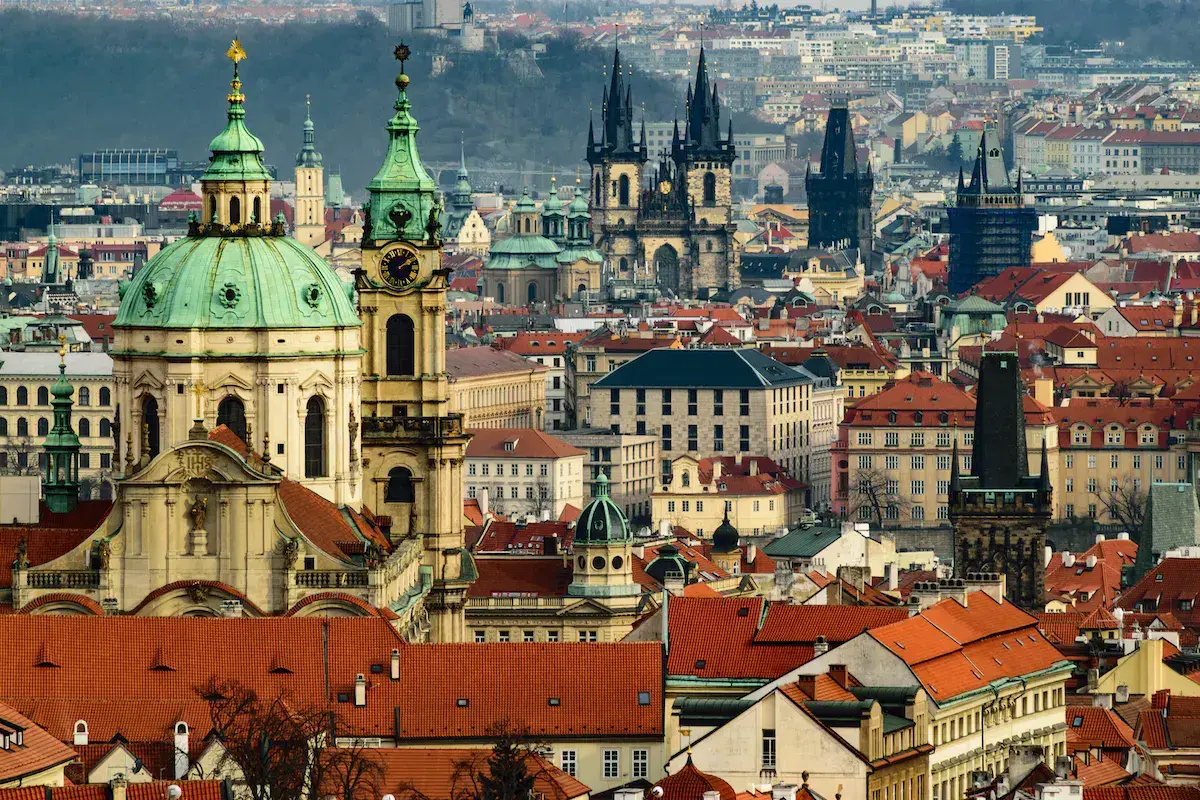
Prague, the historic capital
The Old Town astronomical clock has been ticking since 1410, making it one of the oldest still in working order anywhere in the world. It draws a crowd at every full hour as the figures parade across the tower face.
Prague Castle commands the city from Hradčany hill. St Vitus Cathedral houses stained-glass windows by leading Czech artists of the 20th century and royal tombs spanning ten centuries of history. The terraced gardens open onto the red-tiled rooftops of Malá Strana and the Vltava river below.
To escape the summer heat, the Žluté lázně leisure complex on the Vltava offers grassy beaches, paddleboarding, water-skiing and pedalo hire. In the heart of the city, Františkánská zahrada is a quiet, shaded and entirely free green retreat.
An evening at the National Theatre for an opera or ballet, or a visit to the National Gallery and its collection of Czech Gothic painting, rounds off a stay in the capital nicely.
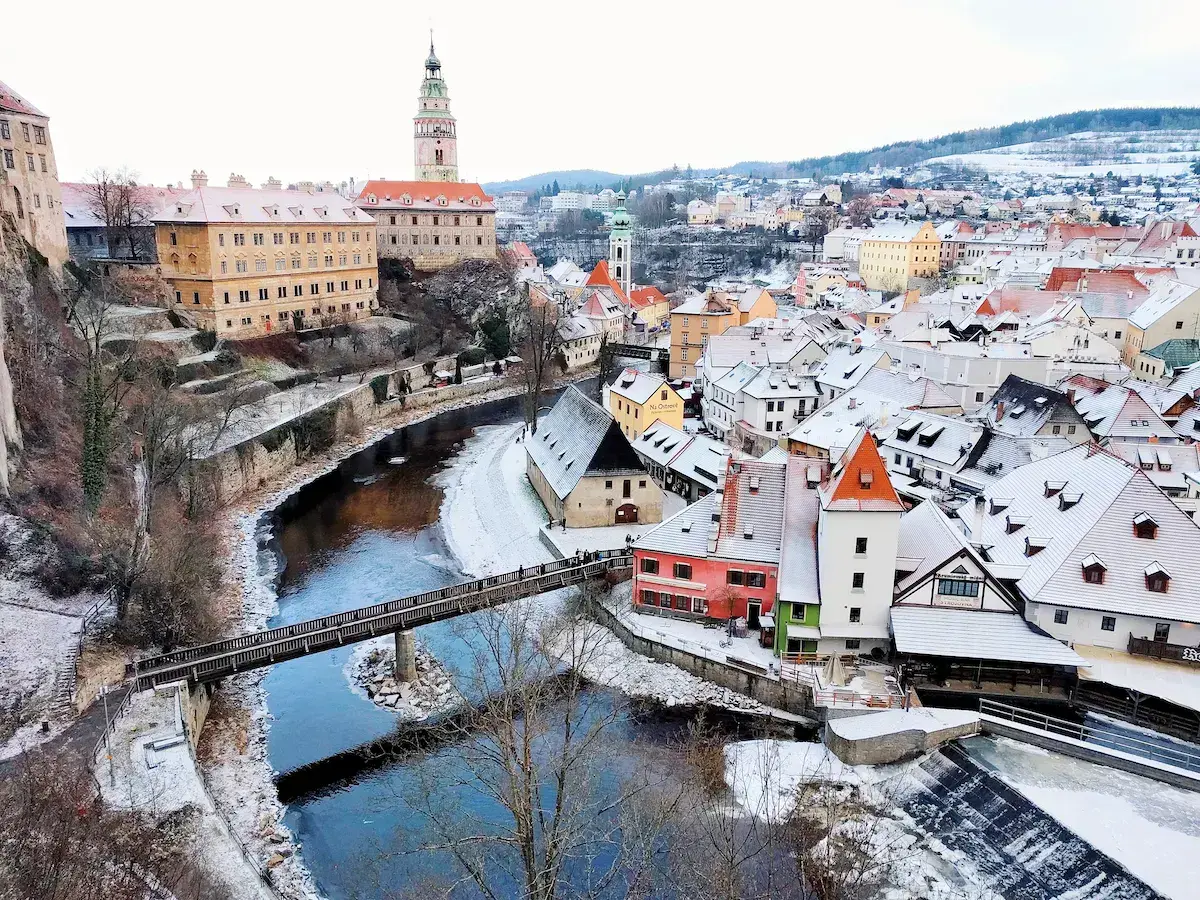
Český Krumlov: a castle in the Vltava’s bends
About three hours from Prague, Český Krumlov is a UNESCO World Heritage town. Its castle, founded in the 13th century, is one of the largest castle complexes in the Czech Republic. The watchtower offers a 360-degree panorama over the Vltava’s winding meanders and the Renaissance rooftops of the historic centre.
The castle’s baroque theatre and the revolving open-air stage in the gardens – whose set literally rotates mid-performance – host summer shows throughout the season. The Seidel Studio, dedicated to early-20th-century photographers, brings everyday life of that era vividly back to life.
Practical tip: Český Krumlov is very busy in July and August. Booking accommodation in advance and arriving early in the morning means you can enjoy the cobbled lanes before the crowds descend.
Krkonoše National Park
For walkers and hikers, the Krkonoše Mountains are home to the highest peaks in the Czech Republic. A UNESCO Biosphere Reserve since 1992, the park protects ecosystems ranging from boreal forest to alpine tundra. From the town of Pec pod Sněžkou, a cable car climbs to the summit ridge with views stretching as far as Poland.
Karlovy Vary: Bohemia’s spa town par excellence
Karlovy Vary is the great spa town of western Bohemia, the favoured retreat of European high society before 1914. Its Belle Époque architecture lines the river Teplá, with colonnaded promenades, pastel facades and hot springs still flowing freely in their historic pavilions. The town hosts its international film festival each year, one of the oldest in Europe.
Hungary: from the Danube to the Great Plain
At 1,500 km from Paris, Hungary shifts the scenery at every stop, from its cosmopolitan capital to the wide steppes of the Great Plain. Our guide to 20 things to do in Hungary complements this article with a wider selection of activities and regions.
Budapest: baroque grandeur and thermal baths
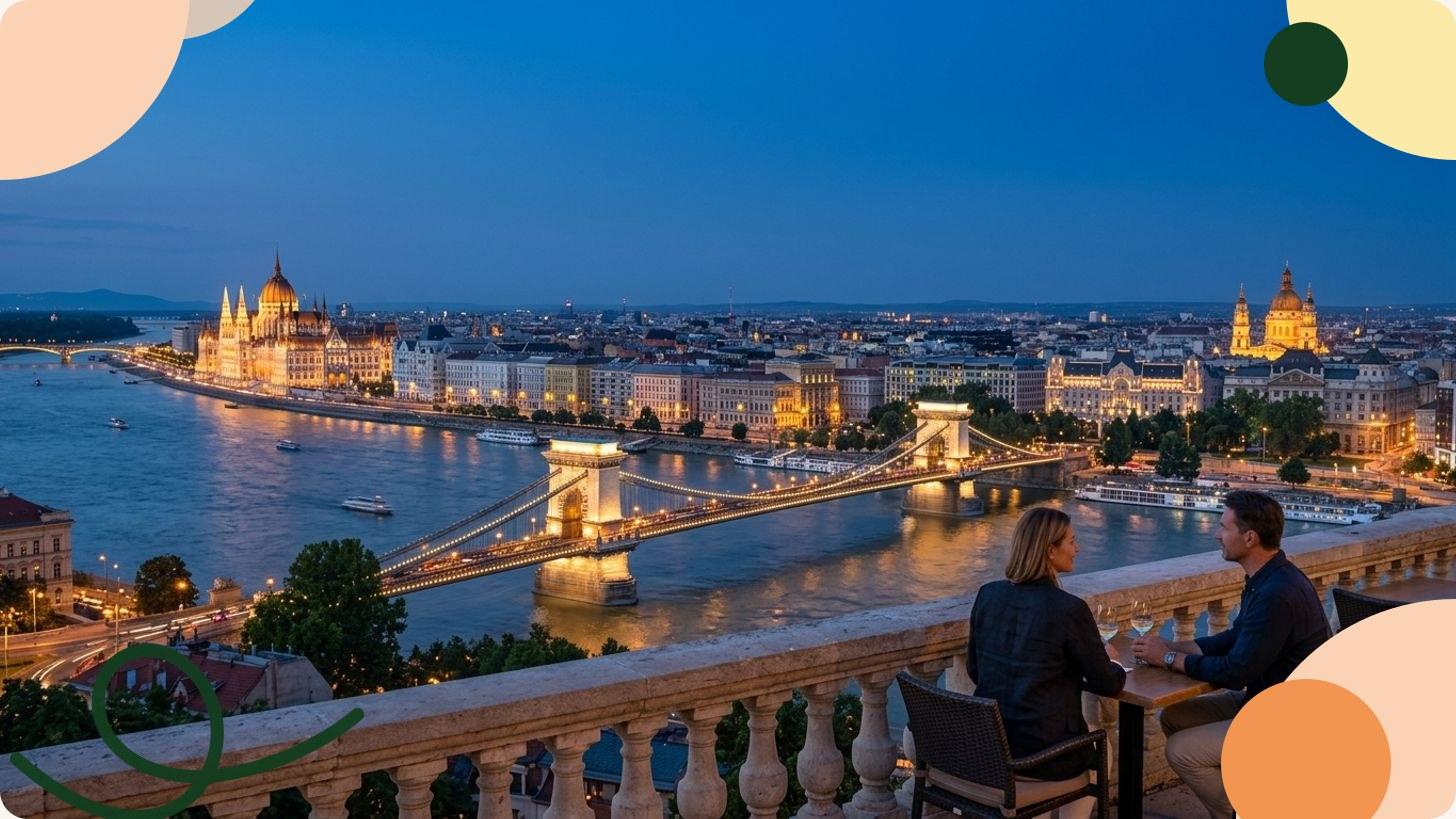
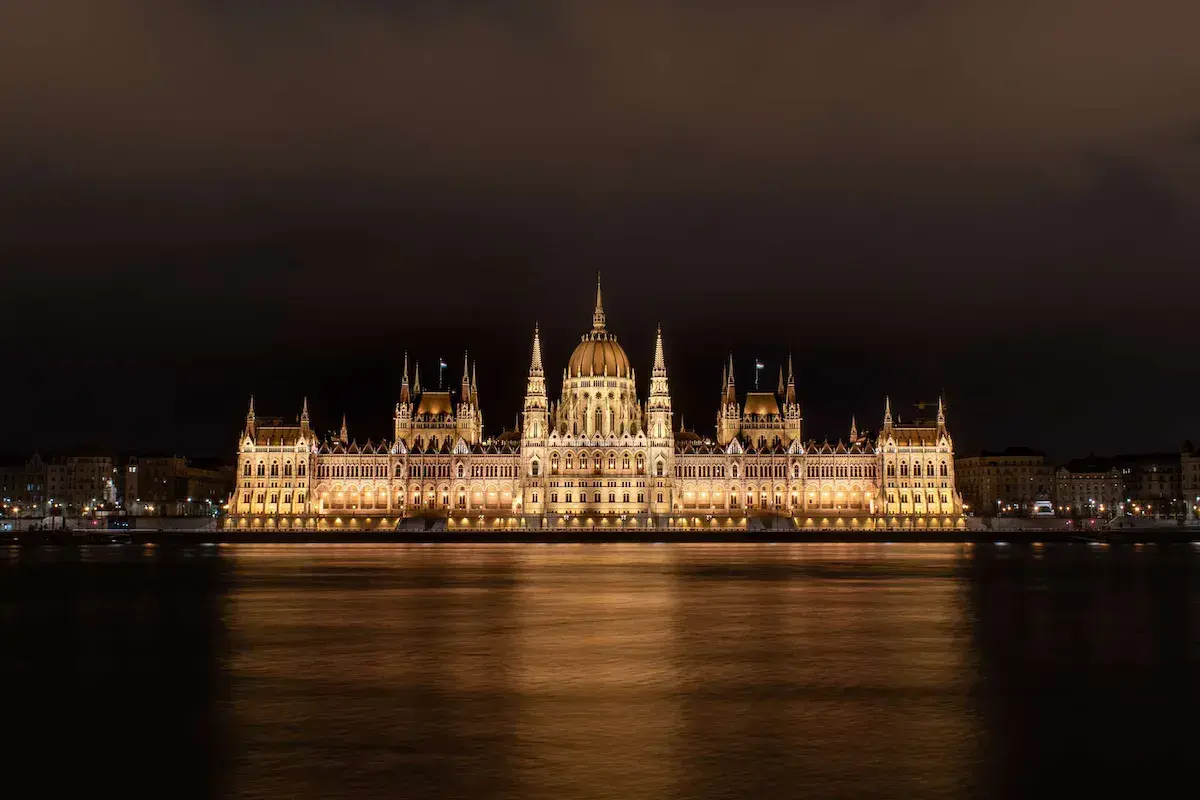
Budapest divides between Buda (the castle hill) and Pest (the flat, lively city), joined by bridges spanning the Danube. After dark, the floodlit Parliament on the Pest bank and the Fishermen’s Bastion on the Buda side create one of Europe’s most striking urban panoramas.
The Castle District on Buda hill brings together the Royal Palace, the Hungarian National Gallery and Matthias Church with its distinctive coloured ceramic tiles, all walkable across limestone cobblestones.
On the Danube embankment, the Shoes on the Danube memorial pays tribute to Jewish victims of 1944-45: cast-iron shoes lined along the riverbank, a simple and deeply moving tribute.
Budapest is also the thermal bath capital of Europe. Historic establishments such as the Széchenyi, the Gellért and the Lukács offer indoor and outdoor pools year-round: an ideal way to unwind after a long day of sightseeing.
All three countries on this circuit (Czech Republic, Hungary, Austria) are EU members: the European Health Insurance Card (EHIC) is valid and grants access to public healthcare at local rates. It does not cover medical repatriation or trip cancellation. For detailed cover and practical information on Hungary, visit the Hungary travel insurance page.
Plan my summer tripHortobágy National Park
Two hours east of Budapest, Hortobágy National Park stretches across a vast Pannonian steppe inscribed as a UNESCO World Heritage Site in 1999. Przewalski’s horses, Hungarian grey cattle and centuries-old pastoral traditions make for a striking contrast with the bustle of the capital.
Visegrád Fortress
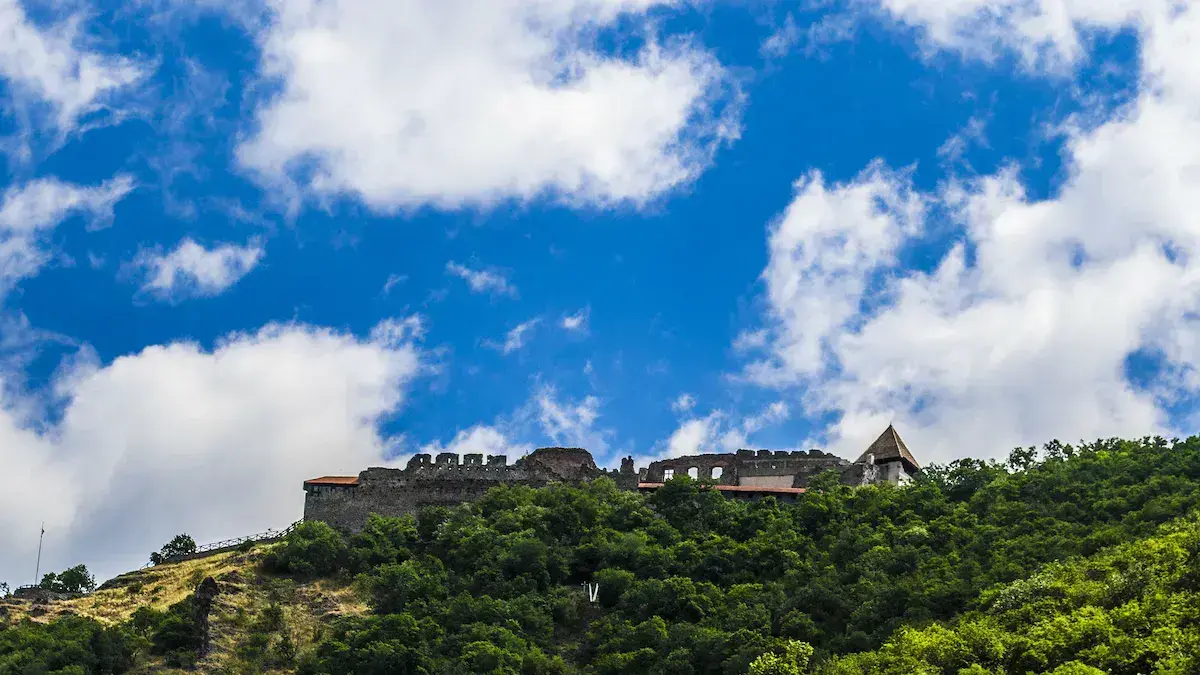
Thirty kilometres north of Budapest, Visegrád Fortress looks down over the Danube from around 350 metres. Built to control river traffic, it withstood Ottoman attacks thanks to its commanding position. The view over the great Danube bend is worth every step of the climb.
Austria: imperial palaces and alpine landscapes
Between Vienna and the Alps, Austria packs several UNESCO sites into a two-hour radius. Baroque palaces, alpine villages and wine-growing valleys make it one of the most experience-rich destinations in Central Europe.
Vienna: the art of living, perfected
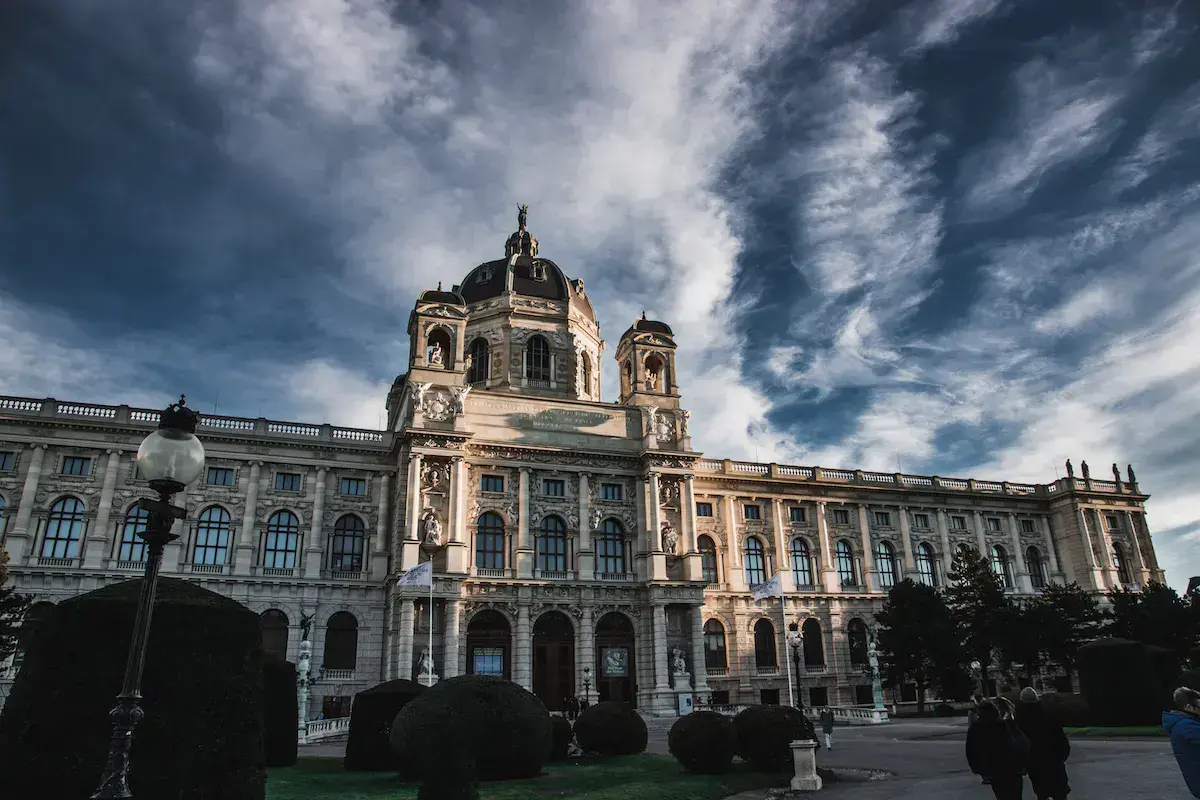
Vienna bears the imprint of the Austro-Hungarian Empire on every corner. Schönbrunn Palace, the former Habsburg summer residence and a UNESCO-listed monument, has 1,441 rooms, a portion of which are open to visitors. The baroque park, the Gloriette and the Tiergarten – founded in 1752 and recognised as the oldest zoo still in operation in the world – easily fill half a day.
St Stephen’s Cathedral, the Kunsthistorisches Museum and the MuseumsQuartier complete a rich cultural itinerary. The historic coffeehouses (Café Central, Café Schwarzenberg) are Viennese institutions more than a century old: ordering a Wiener Melange feels like a ritual you cannot skip.
Hallstatt: the alpine village on the lake
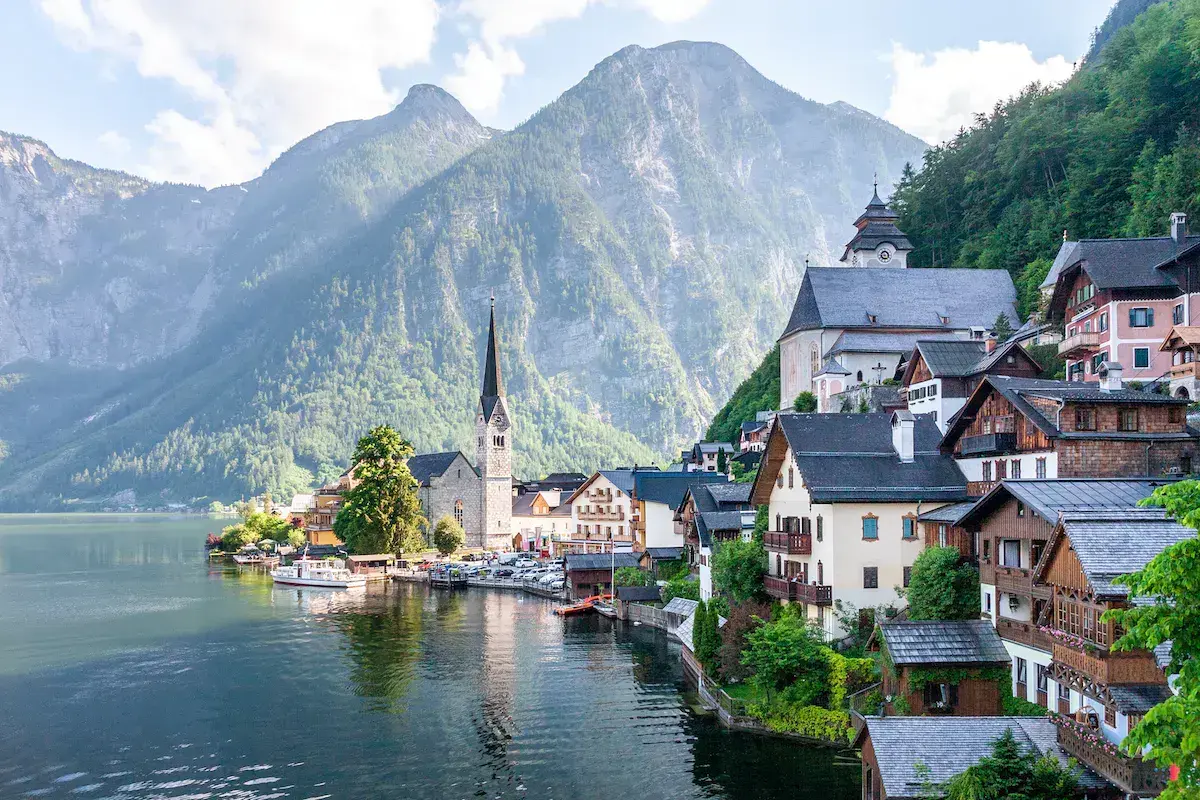
Hallstatt, a UNESCO World Heritage village since 1997, is one of the most photographed places in Europe. Wedged between cliff and lake, its pointed church spire and colourful houses form a setting that almost defies belief.
A boat trip on the lake lets you take in the village from the water, with forested mountains as a backdrop. The salt mine – one of the oldest in the world, worked since the Bronze Age – can be visited in combination with the local prehistoric museum.
As with Český Krumlov, the village fills up quickly in high season: arriving early in the morning or staying overnight transforms the experience entirely.
The Wachau Valley
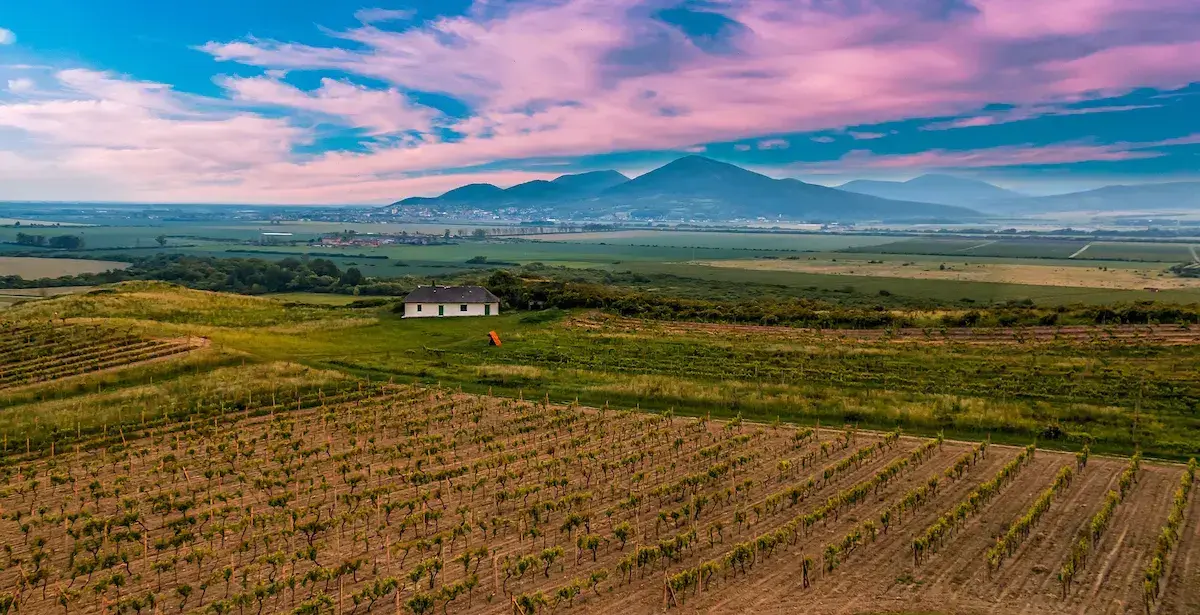
An hour west of Vienna, the Wachau is a wine-growing valley inscribed on the UNESCO World Heritage List. The Danube winds through slopes planted with Grüner Veltliner and Riesling vines, flanked by medieval villages and ruined hilltop fortresses.
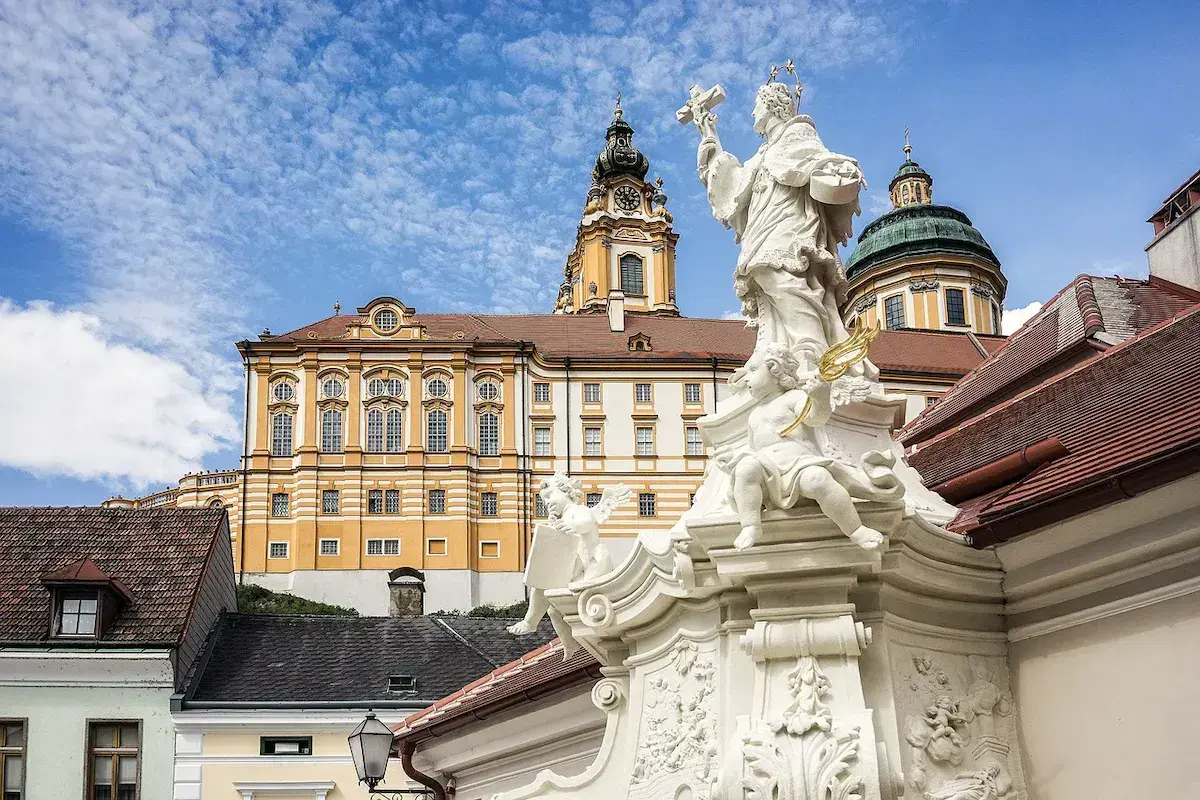
Melk Abbey, perched on its rock above the river, is the valley’s signature landmark: this baroque Benedictine monastery, with its ochre facade and gilded dome towers, is visible from the cruise boats making their way upstream.
Cycling or taking a boat along the Wachau between Melk and Krems is one of the most enjoyable day trips from Vienna.
A 10-to-14-day Central Europe itinerary
Prague, Vienna and Budapest are connected by train: around 4 hours between Prague and Vienna, around 2.5 hours between Vienna and Budapest. The Prague-Vienna-Budapest sequence is widely recommended for practical and ticketing reasons.
Suggested breakdown:
- 3 to 4 days in Prague, with a day trip to Český Krumlov
- 3 to 4 days in Vienna, with a day in the Wachau or at Hallstatt
- 3 to 4 days in Budapest, with a day trip to Visegrád or Hortobágy
For more summer travel ideas across Europe, the articles Summer Travel: Greece, Cyprus, Iceland and Summer Travel: Portugal, Croatia, Norway offer further itineraries for this summer.
FAQ
Are Czech Republic, Hungary and Austria safe summer destinations?
All three countries are EU members with a high level of safety. The usual precautions against pickpocketing apply in busy historic centres, particularly in Prague and Budapest. For entry requirements and specific health recommendations, check our destination pages.
When is the best time to visit these countries in summer?
June and September offer pleasant temperatures and smaller crowds. July and August are the busiest months, especially in Prague and Český Krumlov. The long summer evenings make it easy to linger on terraces and take in illuminated landmarks well into the night.
Is the EHIC enough for travel in Czech Republic, Hungary and Austria?
The European Health Insurance Card (EHIC) gives access to public healthcare at local rates in these three EU member states. It does not cover medical repatriation, trip cancellation or treatment in private facilities. Supplementary travel insurance covers these risks and spares you from having to pay large sums upfront in the event of hospitalisation.
How do you travel between Prague, Vienna and Budapest?
The train is the most convenient option: around 4 hours between Prague and Vienna, around 2.5 hours between Vienna and Budapest. Tickets can be booked online through the national rail operators’ websites. The Prague-Vienna-Budapest order is generally preferred by independent travellers.
How long does this Central Europe circuit take?
A minimum of 10 days allows for 3 days in each capital with one day trip included. To add Český Krumlov, Hallstatt, the Wachau and Visegrád, allow 12 to 14 days.