


The moment you notice your bag hasn’t appeared on the carousel, do not leave the airport without reporting it at the airline’s desk and filling in a PIR (Property Irregularity Report). This document is the cornerstone of everything that follows: tracking, reimbursement of emergency expenses, and any formal compensation claim.
Insure my trip before I goStep 1: report the loss before leaving the airport
Head straight to the lost luggage desk or your airline’s ground-handling office. The carrier that operated your last flight is responsible for your checked baggage, even if you connected through other airlines along the way.
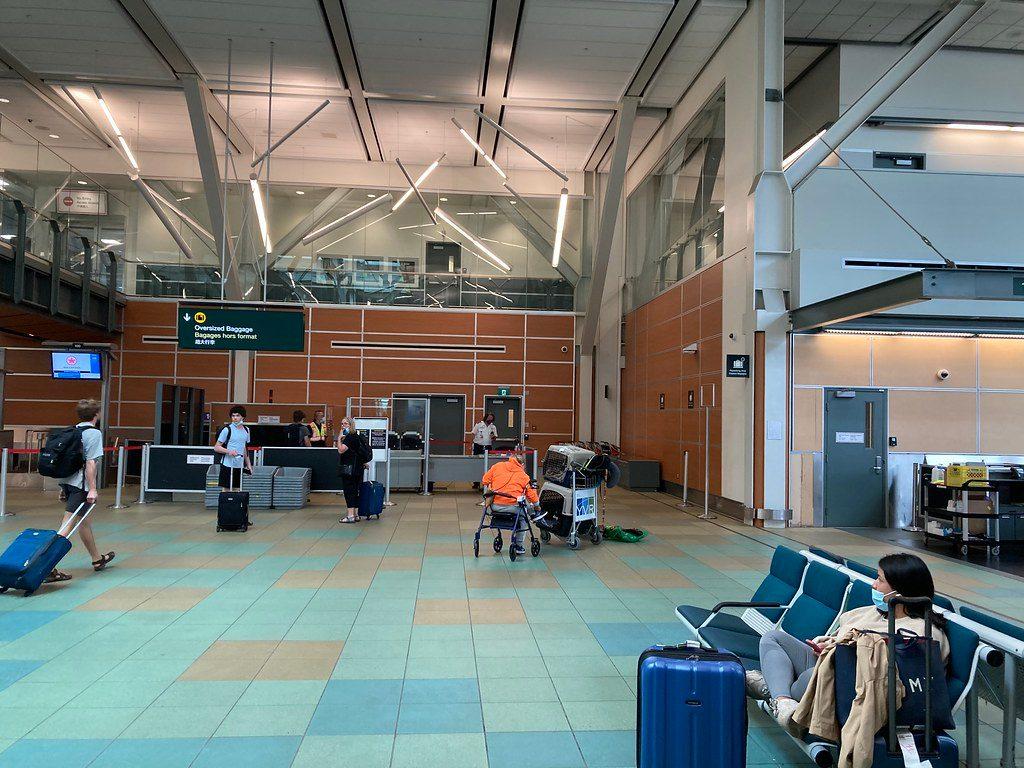
Credit: c3049 doorway to the Lufthansa office (who handle lost luggage) is NOT by roland, CC CC0 1.0, via Openverse.
What to have with you
- Boarding pass and luggage tags (keep them until you’re safely home)
- Passport or photo ID
- Flight number and full itinerary
Describe your bag as precisely as possible: colour, brand, size, and any distinguishing features (stickers, coloured straps, a distinctive lock). The more detail you give, the better the chances of a swift recovery.
Step 2: fill in the PIR (Property Irregularity Report)
The PIR is the official luggage irregularity form. Without it, the airline can legitimately refuse any future compensation claim. Ask for a signed copy or make a note of the file reference number you’re assigned.
That reference number gives you access to the airline’s online tracking system, usually connected to WorldTracer, the global database for mishandled baggage. Make sure you provide contact details that are reachable around the clock: a local phone number, an email address, and a delivery address if you’re already at your destination.
Step 3: request an emergency kit and keep all receipts
Many airlines offer an emergency kit (toiletries, underwear) or a cash advance to cover your immediate needs. Ask about this at the desk – it’s rarely advertised but well worth requesting.
Whatever happens, hold on to every receipt: clothing, toiletries, essential medication. The airline may reimburse these costs within the limits of its own policy, and your travel insurance can pick up whatever the airline doesn’t cover.
Step 4: track your claim and notify your insurer
Check the airline’s tracking portal regularly using your PIR reference number. If your bag is found, it’s typically delivered to the address you provided within 24 to 72 hours.
At the same time, notify your travel insurer as soon as possible – ideally from the airport itself: most policies require you to report a claim within a short window. Your insurer may also be able to contact the airline on your behalf or advance certain costs.
When a bag is officially declared lost
Under the Montreal Convention, which applies to the vast majority of international flights, your luggage is considered definitively lost in one of two situations:
- The airline expressly acknowledges the loss
- The bag has not been returned within 21 days of the date it should have been delivered to you
Once that threshold is crossed, you can open a formal claim for total loss.
Getting your compensation
The Montreal Convention cap
The carrier’s liability is legally capped at 1,288 SDRs per passenger (Special Drawing Rights), equivalent to roughly €1,667 at current rates. This ceiling applies per traveller, not per bag. If your actual loss is less than that figure, reimbursement will be limited to the damage you can prove.
Without proof of purchase, the airline may offer a flat-rate settlement based on weight (around €26 per kg under some tariffs). Keep your receipts.
Worth knowing: if you’re travelling with valuables, you can make a special declaration of value at check-in, for an additional fee, to go above the legal cap.
Submitting a written claim
Send your claim to the airline by recorded delivery, including:
- The PIR and your file reference number
- A detailed list of the bag’s contents with estimated values and proof of purchase where available
- Receipts for any expenses incurred as a direct result of the loss
Deadlines to keep in mind
For flights governed by the Montreal Convention, you have 2 years from the date of arrival (or the scheduled date of arrival) to bring a claim. For damaged baggage – rather than lost – the deadline for a written complaint is 7 days from the date of collection.
If the airline refuses or doesn’t respond
If the airline fails to respond within 2 months or rejects your compensation claim, you can refer the matter free of charge to the Médiateur du Tourisme et du Voyage (MTV) – the French Travel and Tourism Mediator – provided the airline is a signatory to its mediation charter. This out-of-court procedure often leads to a settlement without ever going to trial.
As a last resort, taking the matter to court remains an option within the 2-year limitation period.
Travel disruptions rarely come alone: if your flight itself is affected, see our practical guides on what to do if your flight is delayed and what to do if your flight is cancelled, where your passenger rights apply just as firmly.
How travel insurance helps when luggage goes missing
The payout from the airline doesn’t always reflect the true value of your belongings, especially when receipts are hard to come by. The right travel insurance policy can:
- Top up the airline’s legal payout to match your declared baggage value (subject to your policy terms)
- Cover urgent expenses faster, without waiting for the airline’s decision
- Protect carry-on and personal items that aren’t covered by the Montreal Convention in the same way as checked bags
Always check your policy conditions before you travel: per-item limits, excesses, excluded items (jewellery, electronics, cash) and the claim notification deadlines your insurer requires.
FAQ
How long before a bag is officially declared lost?
Under the Montreal Convention, a bag is considered lost if the airline expressly acknowledges it or if it hasn’t been returned within 21 days of the scheduled delivery date. Once that deadline passes, you can file a total loss claim.
How much compensation can I expect for a lost bag?
The Montreal Convention caps the airline’s liability at 1,288 SDRs per passenger, roughly €1,667. Reimbursement is limited to the actual loss you can back up with receipts. Without proof of purchase, the airline may fall back on a flat per-kilo rate (around €26 per kg).
What if the airline refuses to compensate me?
If the airline refuses or fails to respond within 2 months, you can refer your case free of charge to the Médiateur du Tourisme et du Voyage (MTV), the French Travel and Tourism Mediator, provided the airline is a signatory to its mediation charter. Taking the matter to court is also possible within the 2-year limitation period.
Is the PIR really compulsory?
In practice, yes. Without a PIR filed at the airport, the airline can dispute or reject your claim outright. It is your proof that you flagged the problem at the time it occurred.
Does travel insurance cover lost luggage?
It depends on your policy. Some travel insurance plans cover lost baggage and supplement the airline’s own payout. Check the limits, exclusions (valuables, electronics) and claim notification deadlines in your policy before you travel.
Can I still claim without receipts for the bag’s contents?
Yes, but your payout is likely to be significantly lower. The airline may apply a flat per-weight rate. To maximise your reimbursement, put together a detailed list of contents with estimated values and any supporting documents you can find – photos, bank statements showing past purchases.